
The secret to an authentic romantic atmosphere is not adding more ‘romantic’ items, but intentionally engineering a multi-sensory experience that guides your guests’ emotions.
- Lighting temperature and quality dictate mood more than any other element; warm, high-CRI light is non-negotiable for intimacy.
- Subtle, layered scents and textures have a powerful subconscious effect on perceived warmth and comfort.
Recommendation: Shift your focus from decorating a space to choreographing an atmosphere. Think like an ambiance architect, focusing on how each sensory detail contributes to the feeling you want to create.
Every couple wants their wedding day to feel romantic. But for many, the very idea of “romance” conjures a cringeworthy parade of clichés: generic red roses, overplayed ballads, and a sea of predictable fairy lights. The fear is creating a day that feels like a copy-pasted Pinterest board rather than a true reflection of your unique love story. Couples are often told the solution lies in adding more—more candles, more flowers, a more elaborate color palette. This approach tackles the look, but completely misses the feeling.
The conventional wisdom focuses on decoration, treating ambiance as a visual layer to be applied. But what if the key wasn’t in the objects themselves, but in the deliberate and subtle manipulation of the entire sensory environment? This is the core of sensory engineering. It’s a shift from being a decorator to becoming an ambiance architect. Instead of just making a room *look* romantic, you choreograph an atmosphere that *feels* intimate, authentic, and deeply personal. It’s about understanding the psychology of light, the memory-triggering power of scent, the emotional weight of texture, and the subtle energy of sound.
This guide moves beyond the superficial to give you the principles of atmospheric design. We will deconstruct the elements of mood-setting, showing you how to layer sensory details to create an environment that is not just seen but felt. You will learn to orchestrate a cohesive experience that guides your guests through a story, making the romance an organic outcome of the environment, not a theme forced upon it.
To help you master this approach, we have broken down the essential components of atmospheric design. This summary provides a roadmap to the key strategies for engineering a truly memorable and authentic wedding mood, from the science of lighting to the art of creating organic social moments.
Summary: How to Engineer an Authentic Wedding Atmosphere
- Why Cool White Bulbs Kill the Romance and How to Fix It Immediately
- Scenting Your Wedding: How to Diffuse Fragrance Without Triggering Allergies
- Live Strings or DJ: Choosing the Right Sound for the Cocktail Hour
- Velvet or Silk: Which Texture Creates a Warmer Atmosphere in a Cold Venue?
- The Risk of Over-Scripting Moments That Makes Guests Feel Awkward
- Warm White to Cool Colors: When to Switch the Lighting Temperature?
- Cold-Air Diffusers vs. Candles: How to Scent a Ballroom Evenly?
- How to Create a Whimsical Vibe That Doesn’t Look Like a Child’s Birthday Party
Why Cool White Bulbs Kill the Romance and How to Fix It Immediately
Lighting is the single most powerful tool in your atmospheric arsenal, yet it’s often the most misunderstood. The quickest way to sabotage an intimate mood is with the wrong color temperature. Cool white or bluish light (typically 4000K and above) is biochemically associated with daylight, triggering alertness and focus. It’s the light of offices and hospitals—environments antithetical to romance. A warm, golden, or amber-toned light (between 2200K and 3000K) mimics the tones of candlelight and sunset, promoting relaxation and intimacy. This isn’t just an aesthetic preference; it’s a physiological trigger.
Beyond color temperature, the quality of light is paramount. This is measured by the Color Rendering Index (CRI), a scale from 0 to 100 indicating how accurately a light source reveals the true colors of objects. A low-CRI bulb can make beautiful floral arrangements look dull, expensive linens appear washed out, and skin tones look unnatural. For an event where every detail matters, you must insist on high-CRI lighting. In fact, lighting experts confirm that a CRI of 90 and above is preferred for spaces where true-to-life color is essential. This ensures that the deep reds of your florals and the warm tones of your decor are rendered beautifully, not flattened by poor-quality light.
To fix this, have a direct conversation with your venue or lighting designer. Specify your desired color temperature range and ask for their lights’ CRI rating. If the venue has harsh overhead lighting, the solution isn’t just to turn it off but to replace it with a layered, warm-toned lighting plan. This could involve bringing in amber uplights, pin-spotting tables with warm beams, and, of course, integrating the soft, dynamic flicker of candlelight. This is your first step in active atmospheric choreography.
Scenting Your Wedding: How to Diffuse Fragrance Without Triggering Allergies
Scent is the most primal sense, directly linked to memory and emotion. A signature scent can make your wedding unforgettable, but it can also be a disaster if not handled with care. The goal is a subtle ambiance, not an overwhelming cloud of perfume that triggers headaches or allergies. The key to sophisticated wedding scenting is diffusion and zoning, using hypoallergenic methods to create an immersive yet considerate experience. Forget spraying perfume in the air; modern techniques offer far more control and elegance.
This is where the concept of “scent zoning” becomes invaluable. Instead of a single, uniform fragrance, you assign different, complementary scents to specific areas. This creates a journey for the guests and keeps any one area from becoming overpowering. For example, a light, fresh scent in the entrance hall can transition to a warmer, more intimate fragrance in the dining area. It’s a technique used by high-end venues to create a premium experience.
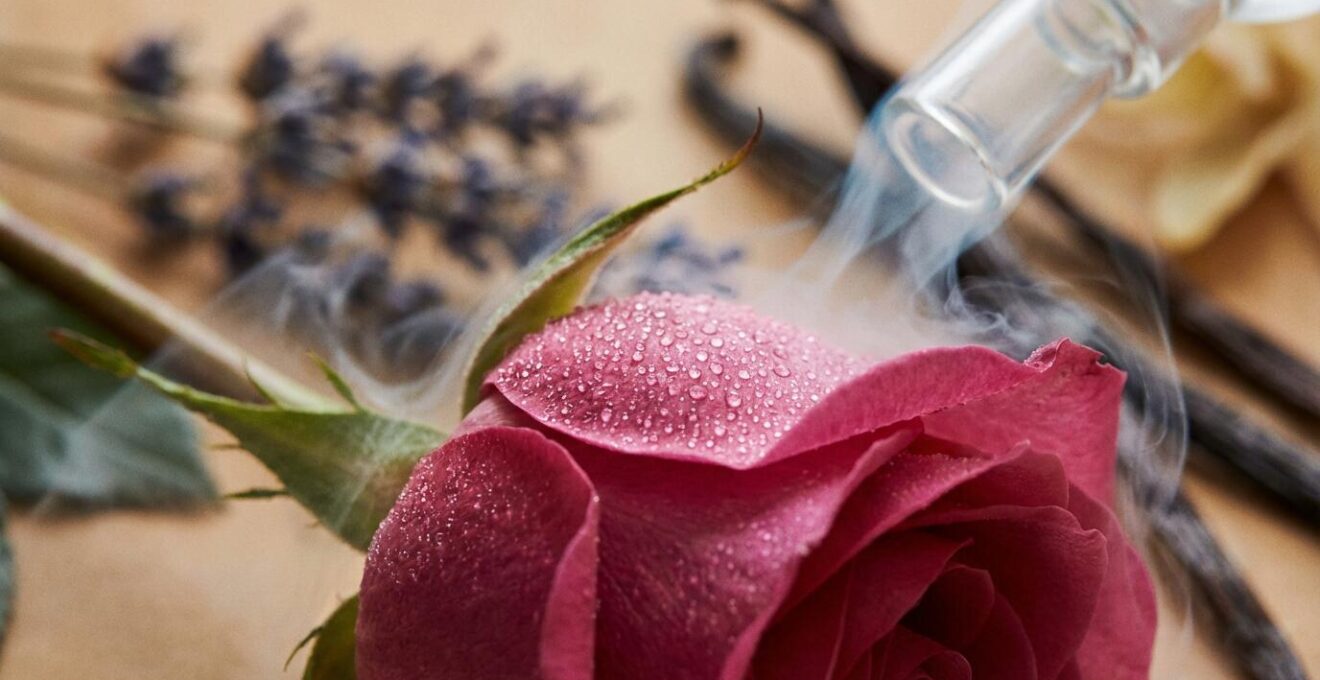
This strategy of scent zoning is not just theoretical. It’s a proven method for enhancing the guest experience without the risks associated with overpowering fragrances.
Case Study: Scent Zoning at Elmore Court
The wedding venue Elmore Court masterfully implements scent zoning by using high-quality scented candles to fill specific areas like entranceways and lounges with distinct, delicious aromas. This creates a sophisticated sensory journey where guests experience a narrative of complementary scents as they move through the space. The added benefit is the powerful emotional resonance created; the venue notes that this strategy transports couples right back to their wedding day each time they light a similar candle at home, anchoring the memory in a tangible scent.
To avoid allergic reactions, opt for methods with low allergy risk. Cold-air nebulizers are a professional choice that breaks down essential oils into a micro-mist without heat or water, preserving the integrity of the scent and diffusing it evenly without creating heavy, irritating particles. For smaller, more intimate zones, high-quality soy or beeswax candles, reed diffusers, or even scented ribbons tied to chairs can provide a delicate hint of fragrance that is personal and controlled.
Live Strings or DJ: Choosing the Right Sound for the Cocktail Hour
During a cocktail hour, music’s primary role is not to be the main event, but to act as “sonic wallpaper” that facilitates connection and conversation. The choice between live music, like a string quartet, and a DJ isn’t just about genre; it’s about controlling the energy and flow of the room. Both have their place, but they serve different atmospheric functions. The goal is to create a soundscape that encourages mingling, not one that forces guests to shout over the music.
Live music, particularly instrumental, offers an unparalleled level of organic elegance. It adds a visual element and a sense of occasion. As the team at Junebug Weddings notes, it creates an emotional foundation before the main events even begin.
Music helps to set the tone for the ceremony. If you’re wanting a passionate, emotional ceremony, a live band will help set the mood even before you walk down the aisle.
– Junebug Weddings Editorial Team, 9 Fairytale Inspired Romantic Wedding Ideas
A DJ, on the other hand, offers versatility and precision. They can seamlessly control the tempo and volume, creating a very specific energy curve. For a cocktail hour, a skilled DJ won’t be playing dance hits. Instead, they’ll curate a sophisticated mix of down-tempo electronic, instrumental funk, or classic soul that feels vibrant yet unintrusive. The key is to instruct them to focus on BPM (beats per minute) and progression, starting slow and building energy as the reception approaches. Regardless of your choice, the guiding principle is that the music should support, not suppress, social interaction.
Action Plan: Your Sonic Wallpaper Audit
- Positioning: Map speaker or musician locations to create an immersive and even sound field, avoiding dead zones or overwhelming hotspots where conversation is impossible.
- Curation: Inventory your music selection, focusing on instrumental versions or lyric-free genres to ensure the soundscape complements, rather than competes with, guest conversation.
- Calibration: Audit the music’s tempo and volume. Start with a relaxed 60-70 BPM and test that normal conversation is possible from 3 feet away to ensure the sound supports intimacy.
- Progression: Design a dynamic sonic arc by programming a gradual tempo increase from 70 BPM to 90 BPM over the hour, creating a subconscious sense of rising energy.
- Transition Plan: Schedule a noticeable 10-minute tempo shift just before the dinner announcement to act as a natural, non-verbal cue for guests to move to the next part of the event.
Velvet or Silk: Which Texture Creates a Warmer Atmosphere in a Cold Venue?
Texture is the unsung hero of ambiance. While guests may not consciously notice the difference between velvet and silk, their subconscious minds absolutely will. This is the essence of textural psychology: the principle that different materials evoke specific emotional and even physical responses. In a cold or cavernous venue—a stone-walled castle, an industrial loft, or a large ballroom—your choice of textiles can literally make guests feel warmer and the space feel more intimate. The key is understanding how different textures interact with light and perception.
Velvet is the undisputed champion of warmth. Its plush pile absorbs light rather than reflecting it, which creates a sense of depth and eliminates harsh glare. This light absorption translates into a perception of coziness and intimacy. Raw, natural fibers like linen and unpolished wood also contribute to a feeling of warmth and groundedness. Conversely, materials like silk, satin, or metallics have a high sheen that reflects light. This creates a sleek, formal, and cool feeling. While beautiful for accents, overuse of reflective textures in a cold space can make it feel even more stark and chilly.
The following table breaks down the psychological and physical impact of key textures, providing a clear guide for your design choices. As confirmed by a comparative analysis of decor materials, these effects are consistent and predictable.
| Texture Type | Psychological Effect | Light Interaction | Temperature Perception | Best Application |
|---|---|---|---|---|
| Velvet | Cozy, Intimate, Luxurious | Absorbs light, creates depth | Warm (+3°C perceived) | Chair covers, draping, cushions |
| Raw Linen | Organic, Authentic, Casual | Diffuses light softly | Neutral to warm | Table runners, napkins |
| Silk | Elegant, Formal, Cool | Reflects light, creates shine | Cool (-2°C perceived) | Flowing drapes, accent pieces |
| Unpolished Wood | Rustic, Grounding, Natural | Matte finish, no reflection | Warm (+2°C perceived) | Chargers, centerpiece bases |
The strategic layering of these textures can produce remarkable results, transforming a space’s perceived temperature and mood.
Case Study: Successful Texture Layering in a Winter Wedding
A December wedding detailed by The Knot successfully combated a cold venue with an 18°C (64°F) ambient temperature by implementing a multi-texture strategy. By layering velvet table runners with raw linen napkins, placing wooden chargers under plates, and adding plush velvet cushions to guest chairs, they created a cocoon of perceived warmth. Guests reported feeling significantly warmer and more comfortable than the actual temperature suggested, with the matte textures absorbing and radiating the warmth from strategically placed candlelight.
The Risk of Over-Scripting Moments That Makes Guests Feel Awkward
In the quest for a “perfect” wedding, there’s a dangerous temptation to over-script every moment. Forced fun—like mandatory group photos with props, awkward icebreaker games at dinner tables, or a rigidly scheduled garter toss—rarely feels authentic. It puts guests on the spot and creates a sense of performance rather than genuine celebration. True emotional resonance comes from organic, unforced interactions. The ambiance architect’s job is not to script these moments, but to design spaces and scenarios that encourage them to happen naturally. This is the art of structured spontaneity.
Instead of forcing a moment, create an invitation. A beautifully designed and lit “photo moment” nook, complete with flattering lighting and a stunning backdrop, is far more effective than a coordinator herding people for a group shot. Guests will naturally gravitate towards it when they feel comfortable and ready. The same principle applies to social interaction. Rather than assigned seating games, create comfortable lounge areas with plush seating and ambient lighting. These pockets of comfort become natural hubs for conversation, allowing guests to mingle at their own pace.
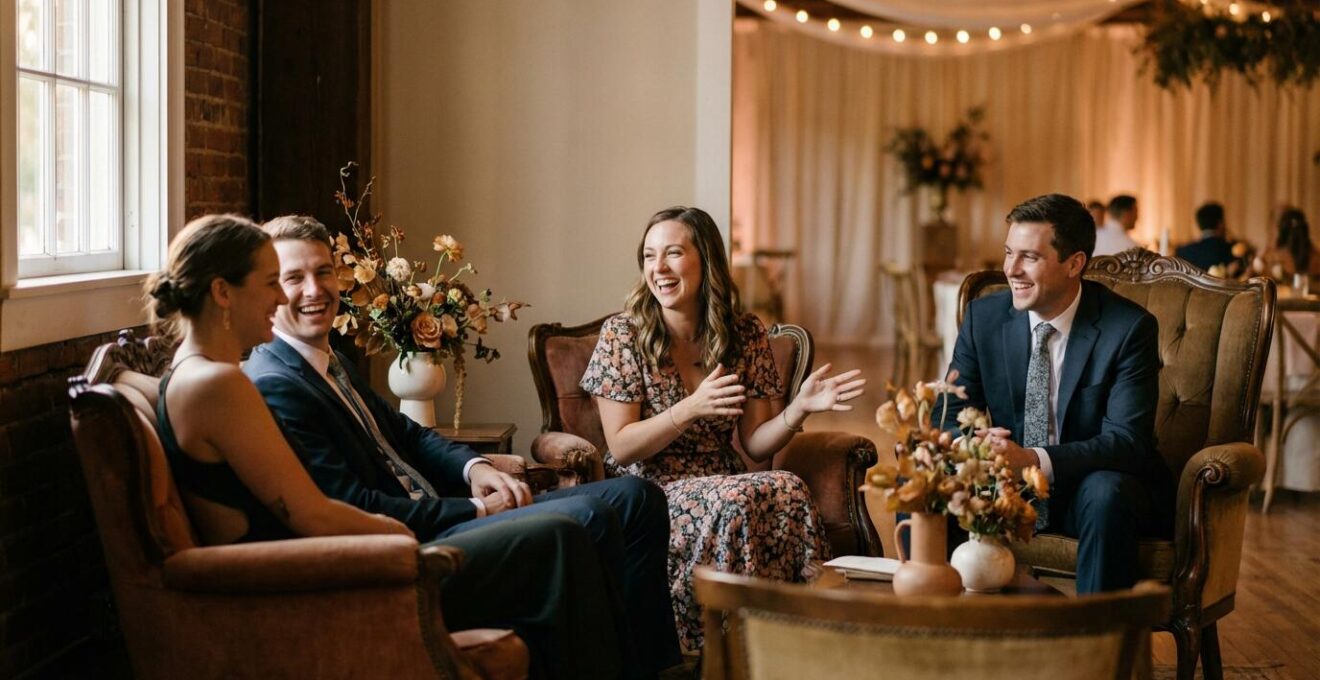
The goal is to use sensory cues to guide guest flow and behavior, rather than verbal commands. A subtle shift in lighting, a change in music tempo, or the opening of an interactive food station can signal a transition or encourage movement far more elegantly than an announcement over a microphone. Here are some techniques for engineering structured spontaneity:
- Design comfortable lounge areas with conversation-starting decor rather than imposing assigned seating games.
- Use sensory cues, like lighting shifts and music tempo changes, to guide the flow of the evening naturally.
- Set up interactive food or drink stations (e.g., a whiskey tasting bar, a build-your-own dessert station) that encourage mingling.
- Replace dated traditions like the garter toss with inclusive activities like a couple’s trivia game where guests can choose to participate.
- Install a wish tree or a message-in-a-bottle station where guests can leave heartfelt notes organically throughout the event.
Warm White to Cool Colors: When to Switch the Lighting Temperature?
If static warm lighting is the foundation of a romantic mood, then dynamic lighting is the advanced technique that tells a story. This is atmospheric choreography in its purest form: using gradual shifts in light color and intensity to guide the energy of the room throughout the evening. This isn’t about suddenly flipping a switch to “party mode”; it’s a subtle, programmed transition that mirrors the emotional arc of the event. It’s a sophisticated move, and according to The Knot’s 2023 wedding survey, the majority of couples are now embracing this trend, with 56% incorporating planned lighting transitions into their day.
The key is to program distinct “scenes” that align with the major phases of your reception. Each scene should have a defined purpose, color temperature, and intensity. For example, the cocktail hour might be a soft, golden 3000K, followed by a transition to an even warmer, more intimate 2700K (the color of candlelight) for dinner service. For speeches, a subtle brightening with a focused spotlight ensures visibility without breaking the mood. The most critical transition is from dinner to dancing. This should not be an abrupt change but a slow crossfade over 15 to 30 minutes, synchronized with the DJ’s music, moving from warm white into cooler tones and colored accents.
This level of control prevents the jarring “disco moment” that can shatter an elegant atmosphere. A professional lighting designer can program these transitions to be almost imperceptible, yet guests will subconsciously feel the shift in energy, encouraging them to move from their tables to the dance floor. This is the difference between simply lighting a room and truly designing an experience.
Example of Professional Lighting Scene Programming
A common professional strategy involves programming three core scenes. The ‘Dinner Scene’ features warm, static 2700K lighting dimmed to 70% intensity to create intimacy. When it’s time to dance, this fades into the ‘Dancing Scene,’ which introduces cooler 4000K light and dynamic colored accents that can pulse subtly with the music’s beat. For key moments like the cake cutting, a ‘Cake Scene’ is activated, using a bright but warm 3000K spotlight at full intensity to draw focus. The transition from dinner to dancing is the most crucial, ideally happening over a 15-30 minute period to feel organic and seamless.
Cold-Air Diffusers vs. Candles: How to Scent a Ballroom Evenly?
Scenting an intimate dinner is one thing; creating a consistent and elegant ambient scent across a large ballroom is another challenge entirely. While a room filled with candles is visually romantic, it’s an inefficient and often unsafe way to scent a large space. The heat from candles can alter the fragrance oils, and their scent throw is limited, creating overpowering “hotspots” near the candles and leaving vast areas unscented. For even, safe, and sophisticated scenting in a large venue, professionals turn to a combination strategy led by cold-air diffusion technology.
As a wedding design expert advises, the best approach is layered. You use different tools for different goals: one for broad, consistent coverage and another for localized, visual romance.
Use professional-grade cold-air diffusers for the overall, even, and consistent ‘base note’ ambient scent. Use candles for the visual romance and the intimate, localized ‘top note’ scent on tables or in lounges.
– Wedding Design Expert, Professional Wedding Planning Guide
A cold-air nebulizer or an HVAC scenting system provides the “base note.” These systems atomize fragrance oil into a dry, invisible nanoparticulate mist that hangs in the air for hours, ensuring a perfectly even and consistent scent level throughout the entire space. This is the workhorse of your scent strategy. Candles then become the “top note”—used sparingly on tables or in lounge areas for their visual beauty and the intimate, localized fragrance they provide. This hybrid approach gives you the best of both worlds: consistent, elegant ambient scent and the romantic flicker of real flames, all while maintaining control and safety.
The choice of method depends on coverage, consistency, and safety, as outlined in a comparison of professional scent distribution methods. For a large-scale event, relying on candles alone is simply not a viable strategy for achieving a high-end sensory experience.
| Method | Coverage | Consistency | Safety Rating | Cost per 1000 sq ft | Best Use Case |
|---|---|---|---|---|---|
| Cold-Air Nebulizers | 5000+ sq ft | 95% even distribution | Excellent (no flame) | $150-200 | Base ambient scent |
| Pillar Candles | 100-150 sq ft | Variable by location | Moderate (open flame) | $75-100 | Table centerpieces |
| HVAC Integration | Entire venue | 100% even | Excellent | $300-500 | Large ballrooms |
| Strategic Combination | Full coverage | Layered experience | Good | $200-250 | Premium events |
Key Takeaways
- Authentic mood is engineered, not just decorated. It’s an intentional choreography of sensory details.
- Every sense matters. The temperature of your lighting and the texture of your linens have a subconscious impact on how guests perceive the atmosphere.
- The ultimate goal is structured spontaneity. Design environments that invite organic connection rather than forcing scripted “fun” moments.
How to Create a Whimsical Vibe That Doesn’t Look Like a Child’s Birthday Party
“Whimsical” is a beautiful wedding concept, but it’s a creative tightrope walk. Lean too far one way, and it can quickly descend into the territory of a children’s birthday party, with overly bright colors and kitschy decor. The key to sophisticated, adult whimsy is grounding the fantastical elements in natural reality and subtle complexity. It’s about evoking a sense of wonder and enchantment, not novelty. This is achieved by applying the principles of sensory engineering we’ve discussed: sophisticated palettes, layered textures, and atmospheric lighting.
First, abandon primary colors. Mature whimsy lives in complex, nature-inspired palettes. Think deep moss greens, dusty lavenders, midnight blues, and subtle iridescent touches that catch the light. It’s no surprise that recent wedding trend data shows couples are choosing sophisticated nature-inspired color palettes, with green shades being a particularly popular choice. These colors feel organic and mysterious, not childish. Second, incorporate surrealism with a light touch. Instead of obvious fantasy props, project a dappled light pattern onto a wall to mimic a forest canopy, or place a single, unexpected object—like a vintage clock or a tiny brass animal—within a classical floral arrangement.
Finally, focus on creating moments of discovery. Whimsy is most powerful when it’s found, not announced. Hide details for guests to find throughout the evening: a line of poetry inscribed on the back of a menu, constellation names for tables that are meaningful to you, or fairy lights woven intricately through tree branches rather than simply strung along a wall. The goal is a layered experience that rewards curiosity. Here are some core principles for achieving adult whimsy:
- Use Complex Palettes: Opt for deep, earthy tones like moss green and dusty lavender, accented with iridescent touches, instead of bright primary colors.
- Incorporate Subtle Surrealism: Use projected light patterns or place single, unexpected objects within classical arrangements to create a sense of wonder.
- Employ Personal Mythology: Integrate elements unique to your story, such as naming tables after constellations if you’re stargazers or using literary quotes in the decor.
- Layer Natural Textures: Ground the fantastical elements with organic materials like raw wood, preserved moss, and dried flowers.
- Create Discovery Moments: Design hidden details that guests can find throughout the evening, fostering a sense of enchantment and personal connection.
By applying this framework of sensory engineering, you can create a deeply personal and authentically romantic atmosphere for any wedding theme. The next step is to begin thinking like an ambiance architect, analyzing your own venue and vision through this multi-sensory lens to build an experience that truly reflects you.