The secret to a memorably scented wedding is not adding more fragrance, but strategically controlling it with professional technology and a guest-centric mindset.
- Heat from candles damages fragrance and creates overwhelming “hot spots,” while cold-air diffusion ensures a subtle, even, and safe experience.
- Layering scent—from ceremony to reception and even onto stationery—creates a sophisticated narrative that guides guest emotions.
Recommendation: Ditch the scented candles on dinner tables and invest in a zoned, cold-air diffusion strategy that prioritizes subtlety and guest comfort above all.
You want your wedding day to be unforgettable, an experience that lingers in the memories of your guests for years to come. While visual details and music are meticulously planned, the most powerful and primitive sense is often an afterthought: smell. The right fragrance can elevate an atmosphere, anchor memories, and tell a story. Yet, this ambition is paired with a valid fear—the fear of a scent that is overpowering, clashes with the catering, or worse, triggers headaches and allergies among your loved ones. Many couples default to scented candles or potent floral arrangements, hoping for the best.
However, what if the solution wasn’t about choosing the “right” scent, but about adopting an entirely different philosophy? The key to a sophisticated and inclusive olfactory experience lies in what experts call architectural scenting. This isn’t about simply perfuming a room; it’s a design discipline. It involves controlling a scent’s intensity, location, and timing to create a subtle, evolving narrative that enhances the environment without ever dominating it. It’s the difference between a shout and a whisper, ensuring your wedding smells incredible to everyone, without discomforting anyone.
This guide will walk you through the principles of architectural scenting for your wedding. We will dismantle common mistakes, explore professional-grade technology, and provide a clear framework for designing a fragrant experience that is both memorable for you and considerate of every single guest.
Contents: A Strategic Guide to Wedding Scent Design
- Why you should never use scented candles on dinner tables?
- Cold-air diffusers vs. Candles: how to scent a ballroom evenly?
- Citrus vs. Woodsmoke: matching the fragrance to the weather outside
- The low-pollen flowers to choose if you want scent without sneezing
- How to pre-scent napkins so the aroma is released upon use?
- Scenting your wedding: how to diffuse fragrance without triggering allergies?
- Why changing the scent from ceremony to reception resets the mood?
- How to Design an Immersive Wedding Experience That Engages All 5 Senses?
Why you should never use scented candles on dinner tables?
The romantic flicker of a candle is undeniable, but placing a scented one on a dinner table is a fundamental mistake in sensory design. The primary issue is olfactory interference. The complex aromas of food and wine are a critical part of the dining experience. A strong, synthetic fragrance like vanilla or sandalwood actively competes with and masks these delicate notes, effectively ruining the culinary journey your caterer has crafted. Instead of savoring the rosemary-crusted lamb, your guests are tasting cherry blossom. This creates a jarring disconnect between taste and smell, which can be unpleasant and confusing.
Beyond the food, there is a significant guest comfort factor. Scented candles create intense, localized “hot spots” of fragrance. A guest seated directly in front of a candle is inundated with aroma, while someone at the other end of the table smells nothing. This uneven distribution is the primary cause of headaches and discomfort. It’s important to remember that fragrance sensitivity is not a niche issue; recent studies show that over 30.5% of the general population report irritation from scented products. Placing a potent scent source directly in their personal space during a meal is a recipe for a negative experience.
Finally, the heat from a candle’s flame fundamentally alters the fragrance oil. The high temperature burns and degrades the delicate top and mid-notes, leaving behind a heavier, often distorted version of the intended scent. You are not getting the pure, composed fragrance, but a crude, heated rendition. For these reasons, unscented candles can provide the ambiance without compromising the food or your guests’ well-being.
Cold-air diffusers vs. Candles: how to scent a ballroom evenly?
To scent a large, open space like a ballroom effectively and evenly, the technology you choose is paramount. While dozens of candles might seem like a solution, they create an inconsistent and hazardous environment. The superior alternative used by luxury hotels, retailers, and event designers is cold-air diffusion. This technology uses filtered air, not heat or water, to transform liquid fragrance oil into a dry, invisible mist of nano-particles. These particles are incredibly light (less than a single micron), allowing them to remain suspended in the air for extended periods and travel uniformly throughout a large space, often via the existing HVAC system.
This method solves every problem posed by candles. Because there is no heat, the fragrance’s integrity is perfectly preserved, ensuring the scent is experienced exactly as the perfumer intended. The distribution is remarkably even, eliminating the “hot spots” and “dead zones” characteristic of candles. This creates a subtle, ambient aroma that is perceived as part of the environment itself, rather than an intrusive source. Famously, the wedding of Kate Middleton and Prince William was scented with Jo Malone’s Orange Blossom, a feat achieved not with thousands of candles but through strategic, large-scale diffusion that made the entire abbey feel naturally fragrant.
The level of control is another significant advantage. Professional systems are programmable, allowing you to set precise schedules and intensity levels. You can have the scent gently build as guests arrive, maintain a low level during dinner, and then increase it slightly for the reception. This dynamic control is impossible with candles, which have a fixed output until they are extinguished.
This comparison highlights why professionals opt for a technological approach to achieve a truly high-end and considerate scent experience.
| Feature | Cold-Air Diffusers | Traditional Candles |
|---|---|---|
| Coverage | Up to 15,000 sq ft with HVAC integration | 5-10 sq ft radius per candle |
| Scent Distribution | Even throughout space via nano-particles | Localized hot spots and dead zones |
| Safety | No fire hazard, waterless technology | Open flame risks |
| Residue | Zero residue on surfaces | Soot and wax accumulation |
| Control | Programmable intensity and timing | Fixed output until extinguished |
Citrus vs. Woodsmoke: matching the fragrance to the weather outside
Once you’ve chosen the right technology, the next step is selecting a scent that harmonizes with your wedding’s overall environment. A fragrance shouldn’t exist in a vacuum; it should feel like a natural extension of the season, time of day, and venue. The goal is to create a sense of olfactory coherence, where the scent supports the visual and tactile atmosphere rather than clashing with it. A heavy, spicy amber scent on a hot summer afternoon can feel cloying and oppressive, while a light, breezy citrus might feel thin and out of place at a cozy winter lodge reception.
Think of fragrance notes in terms of temperature and texture. For a spring or summer wedding, especially outdoors, lean into bright, effervescent scents. Citrus notes (like bergamot, grapefruit, or neroli) and green notes (like green tea, basil, or mint) feel refreshing and clean. They cut through humidity and complement the natural surroundings. They evoke feelings of energy, joy, and new beginnings, perfect for a daytime ceremony.
Conversely, for an autumn or winter celebration, you want scents that create a feeling of warmth and intimacy. Rich, resinous wood notes (like sandalwood, cedar, or oud), spices (cardamom or clove), and amber create a cozy, enveloping atmosphere. These scents have more weight and depth, making them ideal for evening receptions where you want to encourage guests to relax and settle in. A touch of fig can be a beautiful transitional scent for early fall, while a hint of frankincense adds a spiritual, serene quality to a winter ceremony. Always test your chosen scent in a similar environment, as humidity can significantly amplify a fragrance’s perceived intensity.
Your Guide to Seasonal Fragrance Selection
- Spring Weddings: Layer fresh florals like peony or lilac with crisp green tea notes to evoke a garden in bloom.
- Summer Outdoor Events: Use bright, citrus-forward scents like grapefruit or bergamot with cooling mint or basil undertones.
- Fall Celebrations: Blend the warmth of fig and spicy cardamom for transitional warmth that feels sophisticated and cozy.
- Winter Receptions: Choose rich amber and smooth sandalwood as base notes to create an inviting and luxurious atmosphere.
- Humidity Test: Always test your scent in the venue beforehand; in humid conditions, you may need to reduce the diffusion intensity by up to 30%.
The low-pollen flowers to choose if you want scent without sneezing
While diffusion technology handles the primary ambient scent, flowers remain a vital part of the wedding’s visual and olfactory landscape. However, for many guests, floral arrangements are a primary source of allergens. The key to creating stunning, fragrant bouquets that don’t cause sneezing and itchy eyes is to understand that not all flowers are created equal. The culprits are typically flowers with light, airborne pollen designed to be spread by the wind. Fortunately, many of the most beautiful and fragrant wedding flowers are “self-pollinating” or rely on insects, meaning their pollen is heavy, sticky, and unlikely to become airborne.
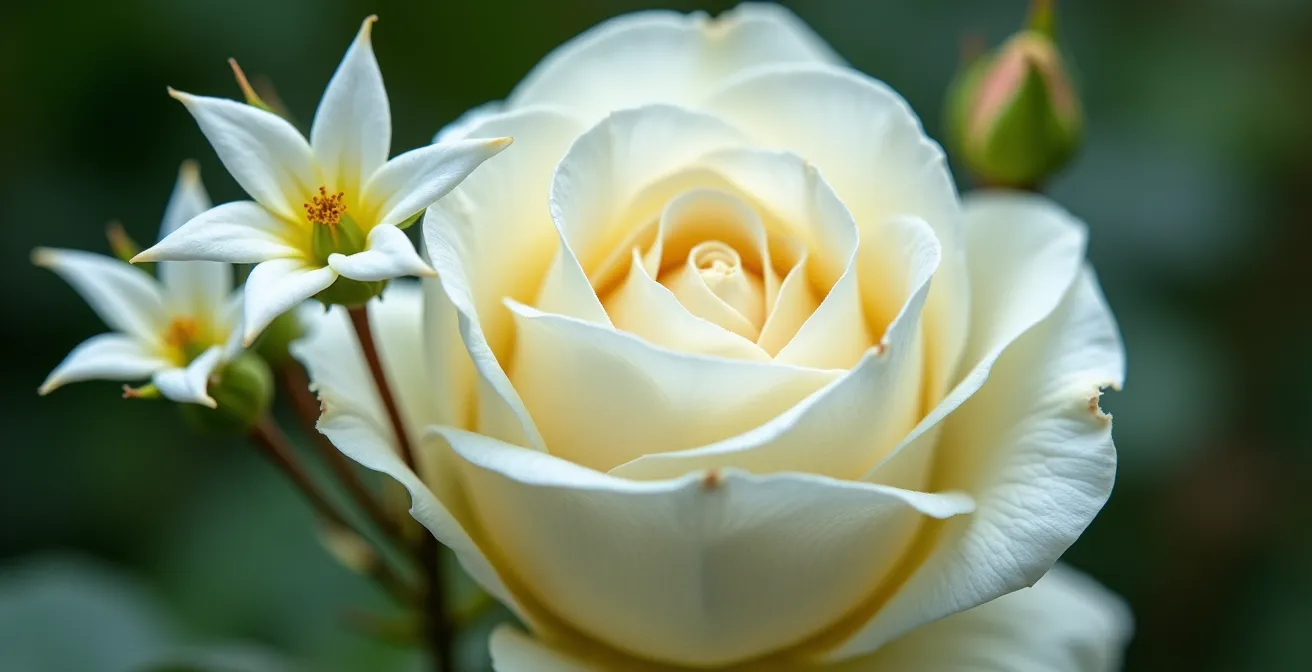
Roses are a classic and safe choice. Their pollen is too heavy to travel far, yet they offer a wide range of incredible scents, from the sweet, classic aroma of garden roses to the lighter, fruitier notes of modern hybrids. Peonies, another wedding favorite, are similarly low-pollen and deliver a lush, romantic fragrance. For a delicate, star-like flower with a beautiful, sweet scent, consider stephanotis. Orchids, hydrangeas, and tulips are other excellent options that provide visual impact with minimal allergy risk. The goal is to build your floral decor around these “hypoallergenic” choices.
Conversely, you should actively avoid high-pollen flowers like lilies (especially Stargazer lilies), daisies, chamomile, and sunflowers, which are notorious for triggering allergic reactions. It’s a critical conversation to have with your florist. This isn’t just a minor detail; data from health departments reveals that fragrance is one of the most common environmental allergens, affecting a significant portion of the population. By making informed, low-pollen floral choices, you demonstrate a deep level of care for your guests’ comfort, ensuring everyone can enjoy the beauty of your day without reaching for the antihistamines.
How to pre-scent napkins so the aroma is released upon use?
Layering scent is an advanced technique that creates moments of surprise and delight. While the ambient scent sets the overall mood, micro-scents on personal items can create an intimate, memorable experience. Scenting your invitations or using fragranced petal confetti are wonderful ways to introduce your wedding’s olfactory theme. However, one of the most elegant and impactful methods is to pre-scent the dinner napkins. The magic of this technique lies in its subtlety: the scent is dormant until the guest unfolds the napkin, releasing a gentle, personal puff of fragrance. It’s a sensory secret shared with each guest at the start of the meal.
The execution must be flawless to avoid staining the linens or overwhelming the palate. Never spray fragrance directly onto the napkins. Instead, the professional method relies on scent transfer. The safest technique involves scenting acid-free tissue paper. Lightly mist several sheets of tissue paper with a high-quality linen spray (one that matches or complements your ambient scent), and allow them to air dry completely. Once dry, layer these scented papers between the folded linen napkins inside an airtight container or bag. Let them sit for 48-72 hours.
This process allows the volatile aroma molecules to transfer to the fabric fibers without any direct liquid contact, eliminating the risk of staining. The resulting scent will be extremely subtle—a mere hint that blossoms for a moment and then quickly dissipates, so it won’t interfere with the aroma of the food. It’s crucial to use a light, food-complementary scent for this, such as a delicate citrus, a soft herbal note like thyme, or a very faint white tea. Always test the method on a single napkin first to ensure the intensity is perfect. This small, meticulous detail elevates the dining experience from standard to truly bespoke.
Scenting your wedding: how to diffuse fragrance without triggering allergies?
The core promise of a perfectly scented wedding is to create delight, not distress. Achieving this hinges on a two-part strategy: choosing the right scent composition and, most importantly, the right diffusion method. Many people associate “allergies” with “natural” versus “synthetic” fragrances, but this is a common misconception. Allergens can be present in both natural essential oils and synthetic fragrance molecules. The key to a hypoallergenic scenting strategy is minimizing the concentration of known irritants and ensuring the delivery method doesn’t create overwhelming airborne particles.
First, work with a reputable scent company that can provide safety data sheets for their fragrances. Opt for oils specifically designed for public spaces, as these are often formulated to be low in common allergens like limonene, linalool, and geraniol. Avoid heavy, cloying florals or overly sweet gourmand scents, which are more frequently associated with sensitivity. Instead, choose clean, airy compositions built around light woods, gentle citrus, or aqueous notes. The principle is simple: less complex, less potential for irritation.
Second, and most critically, is the diffusion method. As discussed, cold-air diffusion is inherently safer than methods involving heat or water. It doesn’t alter the molecules and produces nano-particles that are so fine they create a homogenous, low-concentration atmosphere. The goal is to scent a space to the olfactory detection threshold—the point at which a scent is just barely noticeable and perceived as part of the room itself. This is far below the concentration level that typically triggers sensitivity. A considerate host aims for a scent level that a guest might not consciously register upon entering, but would notice if it were suddenly gone. This level of subtlety is the ultimate sign of a successful and inclusive scent design.
Why changing the scent from ceremony to reception resets the mood?
Scent is a powerful tool for narrative and emotional guidance precisely because it bypasses the rational parts of our brain. It travels directly to the limbic system, the seat of memory and emotion. As Christine Luby, co-founder of fragrance brand Pinrose, aptly stated in an interview with *Into The Gloss*, ” When you smell something, your brain doesn’t think—your brain feels.” This direct emotional pathway is what allows you to use scent to define different chapters of your wedding day. Shifting the fragrance from the ceremony to the reception isn’t just a novelty; it’s a psychological reset button.
This technique, known as scent zoning, helps to subconsciously signal a transition to your guests. For the ceremony, you might choose a scent that is serene, spiritual, and uplifting. Notes of frankincense, neroli, or a light white floral can create an atmosphere of reverence and quiet joy. It focuses the emotional energy of the room on the gravity and beauty of the moment. When guests then move to the cocktail hour or reception space, introducing a completely different scent acts as a “palate cleanser” for the nose and the mind.
For the celebratory phases, switch to a fragrance that is more vibrant and social. Bright, bubbly citrus or gin-inspired botanical scents are perfect for a cocktail hour, encouraging mingling and conversation. For the main reception, a warmer, more enveloping scent with notes of amber, vanilla, or sandalwood can create a feeling of comfort, intimacy, and celebration. This transition helps close the “ceremony” chapter and opens the “party” chapter, re-energizing the space and your guests. If the spaces are connected, allowing for a 30-minute unscented “buffer period” or using separate, zoned diffusers can make the transition even more distinct and effective.
Key Takeaways
- Prioritize Technology: Cold-air diffusion provides a safer, more even, and more controllable scent experience than traditional candles, which damage fragrance and irritate guests.
- Think Like an Architect: Layering different scents across time (ceremony vs. reception) and space (ambient vs. personal items) creates a sophisticated and immersive narrative.
- Design for Everyone: A guest-centric approach, using hypoallergenic-rated scents and low-pollen flowers, ensures your wedding is remembered for its beauty, not for causing discomfort.
How to Design an Immersive Wedding Experience That Engages All 5 Senses?
A truly immersive wedding is one that is considered from every sensory angle. While your olfactory strategy is a powerful emotional driver, its impact is magnified exponentially when it is in harmony with what guests are seeing, hearing, touching, and tasting. This is the pinnacle of event design: creating a cohesive sensory world where every element reinforces the others. Your scent should not just be in the room; it should feel like it belongs to the color palette, the texture of the linens, and the rhythm of the music.
Start by creating a sensory mood board. If your scent is a warm, cozy amber and sandalwood, your visual palette might lean into deep burgundies, gold accents, and soft, warm lighting. The soundtrack might feature soulful jazz or acoustic artists. For touch, you could incorporate velvet ribbons, heavy linen, or warm wood textures in the decor. The signature cocktail could be a spiced old-fashioned, its aromatic bitters echoing the notes in the air. This sensory alignment makes the entire experience feel more profound and intentional.
Finally, make the memory tangible. The sense of smell is powerfully tied to memory, and you can give your guests the ultimate gift by allowing them to take the memory of your day home with them. As noted by the custom fragrance house Olfactory NYC, a powerful trend is to ” bottle up your love story with a fragrance your guests can take home.” This can be a small vial of the wedding day scent attached to their place card, a custom-scented candle as a favor, or a linen spray. When they use it weeks or months later, they will be instantly transported back to the joy of your celebration. It transforms a fleeting moment into a lasting, personal keepsake.
Checklist for a Complete Sensory Wedding Design
- Visual: Does your color palette and lighting design complement the mood of your fragrance (e.g., warm colors for spicy scents, cool tones for fresh scents)?
- Sound: Does the music’s tempo and genre match the energy of the scent profile for each part of the day (e.g., serene music for calming scents, upbeat for citrus)?
- Touch: Have you selected fabrics and textures that align with the fragrance’s “weight” (e.g., light silks for airy scents, plush velvet for rich ones)?
- Taste: Can you create a signature cocktail or a menu item that subtly hints at one of the notes in your wedding fragrance?
- Scent: Can you develop a “Post-Wedding Scent Memory Kit,” like a small candle or room spray, as a unique and memorable guest favor?
Ultimately, designing your wedding’s scent is an act of storytelling. By moving beyond simple perfuming and embracing a strategic, considerate, and multi-sensory approach, you craft an invisible layer of beauty and emotion that will resonate long after the last dance. Begin planning your olfactory journey by considering not just what you want to smell, but how you want your guests to feel.