Details & Staging
When guests walk into a wedding reception, they don’t consciously catalog every decision you’ve made. They don’t notice the specific height of your centerpieces or the absence of visual clutter. What they feel instead is an atmosphere—a cohesive, intentional environment that either invites them to relax and celebrate, or leaves them vaguely uncomfortable without knowing why. This is the power of details and staging.
Details and staging encompass every tangible element that transforms a blank venue into an immersive experience: the materials you choose, how you arrange furniture, the way tables are set, and countless invisible decisions about safety and flow. Unlike broader design concepts, this discipline focuses on the execution—the practical, tactical choices that determine whether your vision translates into reality or falls flat. For couples planning their celebration and professionals refining their craft, understanding these fundamentals means the difference between a beautiful concept and a truly memorable event.
The Foundation: What Details & Staging Actually Means
Details and staging isn’t simply decoration—it’s the strategic orchestration of physical elements to support both aesthetic goals and guest comfort. Think of it as the difference between furnishing a room and creating a living space. The former focuses on acquiring items; the latter considers how people will move, interact, and feel within that environment.
This discipline operates on three interconnected levels. The macro level addresses spatial planning: furniture count per guest, curved versus straight seating layouts, and capacity versus comfort trade-offs. A venue might technically accommodate 150 guests, but staging professionals know that fitting that many bodies into a space and creating an environment where 150 people actually enjoy themselves are entirely different challenges.
The micro level focuses on individual touchpoints: napkin placement psychology, the way crystal catches light, ensuring taper candles fit securely in their holders. These granular decisions accumulate into an overall impression. When executed thoughtfully, they become invisible; when neglected, they create friction—a wobbly glass, a napkin that slides off a lap, a candle that tips precariously.
Between these extremes lies the thematic level—selecting key elements that anchor your vision. This might mean choosing between runners and bare wood tables, determining whether to use ghost chairs or acrylic tables, or deciding if antique brass candelabras align with your aesthetic better than modern metallics. Each choice doesn’t exist in isolation; it reverberates through every subsequent decision.
Material Selection & Surface Finishes That Shape Experience
Materials communicate before guests consciously register them. The cool smoothness of acrylic creates a completely different sensory experience than the organic texture of rattan, which in turn feels worlds apart from the luxury weight of velvet. Understanding these material languages helps you compose a coherent visual and tactile story.
Understanding Material Hierarchies
Not all materials carry equal visual weight. Metals establish perceived value instantly: gold reads as more expensive than silver in most contexts, but only if the quality withstands scrutiny. The weight test for cutlery reveals cheap imitations immediately—lightweight flatware announces “budget rental” no matter how convincing the finish looks from a distance. Similarly, mixing metals on the table can look intentionally eclectic or carelessly mismatched depending on whether you’re combining finishes with similar depth and quality.
Wood surfaces bring warmth but demand preparation for dining service. The romantic appeal of bare wood tables comes with practical considerations: the risk of splinters snagging expensive fabrics, water staining from condensation, and the decision between runners and leaving the grain exposed. Each choice cascades into others—if you choose gauze runners for that effortless flowing aesthetic, you’ll need strategies for managing wrinkles during setup and addressing fire safety hazards with candles.
Transparent Materials & Space Manipulation
Acrylic structures and mirrors serve a specific strategic purpose: creating space illusions in venues that feel cramped. Ghost chairs functionally disappear, making a room feel less crowded even when guest count remains unchanged. Acrylic tables achieve similar effects while offering opportunities for customization with vinyl decals. The trade-off? These materials require meticulous cleaning and prepping—every fingerprint, every streak shows mercilessly under event lighting.
The choice between ghost chairs and acrylic tables often comes down to focal points. If your tablescape is the star, transparent tables showcase it from every angle. If you’re working with standard linens or want to draw eyes upward to tall centerpieces, ghost chairs provide the minimalist frame without competing for attention.
Tablescape Design: Balancing Aesthetics With Dining Functionality
A tablescape that photographs beautifully but prevents guests from comfortably eating accomplishes nothing. This tension between visual impact and practical usability defines successful table staging. The goal is finding the equilibrium where design enhances rather than hinders the dining experience.
The Architecture of Place Settings
Layering plates creates dimension and sophistication, but only if the stack remains stable. Each additional layer—charger, dinner plate, salad plate—increases instability and reduces usable space. The same principle applies to centerpiece height: arrangements positioned at the wrong elevation create conversation barriers, forcing guests to lean awkwardly around blooms to make eye contact with their table companions. Research on reception dynamics shows that centerpieces exceeding 14 inches without a narrow stem base measurably reduce cross-table interaction.
Space allocation follows predictable mathematics. Each guest requires a minimum placement width to avoid elbow collisions, but table width requirements must also accommodate glassware (typically multiple glasses throughout service), centerpieces, and any intermediate serving pieces. Applying minimalist principles to table clutter isn’t about removing elements arbitrarily—it’s about editing ruthlessly to preserve only what serves the guest experience.
Tableware As Sensory Design
Crystal glassware elevates the drinking experience through physics, not snobbery. Rim thickness affects how liquid flows onto the palate—thinner rims create a more refined tasting experience because they interfere less with the beverage. This matters for signature cocktails and wine service but less so for water glasses, allowing you to invest strategically rather than uniformly.
Gold cutlery styling demands attention to finish compatibility. Matte gold reads as contemporary and understated; shiny finishes evoke traditional opulence but risk looking cheap if the plating appears thin or uneven. The key is ensuring style compatibility with china—warm gold tones harmonize with cream and ivory dinnerware, while cooler metallics complement stark white porcelain.
Spatial Planning & the Guest Experience Beyond the Table
What happens between seated moments often determines how guests remember an event. The design of circulation paths, lounge areas, and interactive zones requires as much intention as tablescape composition, yet these elements frequently receive minimal planning until setup day.
Creating Functional Zones
Designing lounge corners that actually get used demands understanding traffic patterns and guest psychology. Furniture positioned too close to high-activity areas (bars, dance floors, restrooms) becomes uncomfortable due to constant traffic. Pieces tucked too far into corners go unused because they feel isolated from the party’s energy. The sweet spot is visible from main gathering areas but acoustically separated enough for conversation.
The modular sofas versus armchairs flexibility check matters for venues hosting multiple events. Modular pieces reconfigure for different layouts but often sacrifice comfort—guests sink awkwardly between sections or find seams uncomfortable. Armchairs provide superior individual comfort but limit spatial arrangement options. Many experienced designers blend both, using statement armchairs as anchor pieces with modular elements filling gaps as needed.
Navigation & Intuitive Wayfinding
Guests shouldn’t need to search for essentials. Designing intuitive navigation signage means placing directional cues at decision points—where hallways branch, where multiple doors appear identical, where outdoor and indoor spaces connect. Optimizing sign placement for intuitive navigation follows the principle that effective signage becomes almost invisible; guests follow cues without consciously registering they’re being guided.
Bathroom amenities represent a strategic opportunity to demonstrate thoughtfulness. Adding items guests actually need—individual hand lotion bottles, breath mints, stain removal wipes, hair ties—transforms a functional space into a moment of pleasant surprise. Selecting a refreshment station strategy based on weather extends this same guest-centric thinking: outdoor summer events need shaded hydration stations positioned throughout the space, while winter celebrations might feature hot beverage stations near entrances as guests arrive from the cold.
Personalization Without Compromising Professional Polish
The desire to infuse celebrations with personal meaning often conflicts with the need for cohesive, elevated aesthetics. Integrating personal stories into decor without looking DIY requires understanding where handmade elements enhance authenticity versus where they undermine sophistication.
Balancing professional rentals with DIY personal touches starts with honest material assessment. Hand-calligraphy on quality cardstock for a welcome sign reads as intentional; printed-at-home signs in mismatched frames communicate budget constraints rather than personality. Setting the tone early with stationery establishes quality expectations—if your invitation suite exhibits professional printing and thoughtful paper selection, every subsequent DIY element gets measured against that standard.
Designing monograms that look like a brand rather than a doodle means treating them as design elements, not afterthoughts. Professional monograms consider negative space, letterform balance, and scalability across applications. They work equally well on a 2-inch favor tag and a 4-foot acrylic welcome sign. The difference between charming personalization and amateurish decoration often comes down to this level of design rigor.
Sourcing authentic props versus buying reproductions presents both budget and aesthetic implications. Authentic vintage pieces carry patina and character that reproductions can’t replicate, but they also come with challenges: modernizing vintage elements for today’s comfort standards (adding cushions to antique chairs, stabilizing wobbly legs), ensuring adequate quantity, and managing condition inconsistencies. Reproductions offer predictability and availability but require careful sourcing to avoid the plastic-fantastic trap where items read as costume pieces rather than design elements.
The Invisible Layer: Safety & Logistics
The best staging decisions are often those guests never notice because they prevent problems rather than create visual moments. This invisible layer of safety considerations and logistical planning separates amateur execution from professional-grade events.
Fire safety hazards with runners and candles require specific protocols. Flame and fabric proximity creates obvious risks, but less apparent dangers include wax drip management on rentals (damage fees) and heat transfer to table surfaces. Using fire-retardant materials for draped fabrics and maintaining minimum distances between open flames and any combustible materials aren’t optional considerations—they’re fundamental requirements.
Weight calculations for freestanding structures matter more than most couples realize. That dramatic floral installation suspended over the dance floor or the elaborate backdrop anchoring the ceremony space must account for not just static weight but dynamic forces—wind for outdoor elements, movement vibrations, and safety margins for unexpected contact. Distributing weight for safety often means visible structural elements that then need draping or styling to maintain aesthetic cohesion.
The logistics of preparation create the foundation for flawless execution. Polishing schedules before the event ensure brass candelabras and gold cutlery achieve maximum sparkle without last-minute panic. Cleaning dust from crystal and acrylic requires timing—too early and surfaces accumulate new dust; too late and you’re wiping glassware as guests arrive. Understanding these practical rhythms separates concepts that work on paper from events that execute seamlessly in reality.
Details and staging ultimately exists in service of human experience. Every material choice, every spatial decision, every logistical consideration should answer the question: does this make guests more comfortable, more engaged, more delighted? Master these fundamentals, and you create not just beautiful spaces, but environments where celebration feels effortless—even when you know exactly how much meticulous effort made that possible.
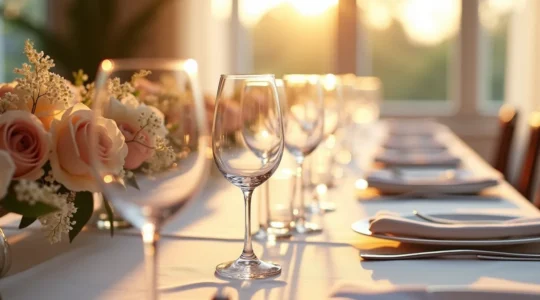
How to Choose Crystal Glassware That Enhances the Wine and the Table?
The perfect crystal glassware for your wedding does more than just sparkle; it functions as sensory architecture, elevating the wine’s character and completing your table’s story. A thin, laser-cut rim delivers wine more precisely to the palate, significantly improving the…
Read more
How to Choose Gold Cutlery That Looks Expensive (and Isn’t Secretly Cheap)
The secret to luxurious gold cutlery isn’t the color, but the tangible weight and the science behind its finish. Heavier cutlery, especially a dinner fork over 80 grams, is scientifically perceived as higher quality and can increase guests’ willingness to…
Read more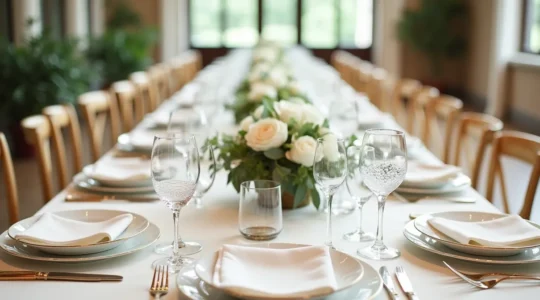
How to Design a Tablescape That Is Beautiful But Still Functional for Eating?
Many visually stunning tablescapes fail the most basic test: being comfortable for dining. The secret to a design that is both beautiful and functional lies in shifting focus from pure aesthetics to dining ergonomics. By prioritizing the guest’s physical experience—ensuring…
Read more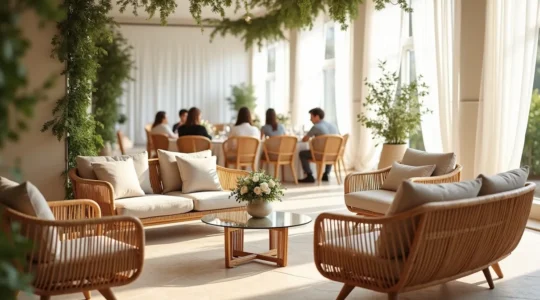
Beyond the Boho: How to Style Rattan Furniture for a Truly Modern Wedding
The secret to a modern rattan look isn’t more pampas grass; it’s the intentional contrast between natural texture and sleek, transparent materials. Vintage rattan requires a hands-on safety check to protect guests and their attire. The right transparent material (acrylic…
Read more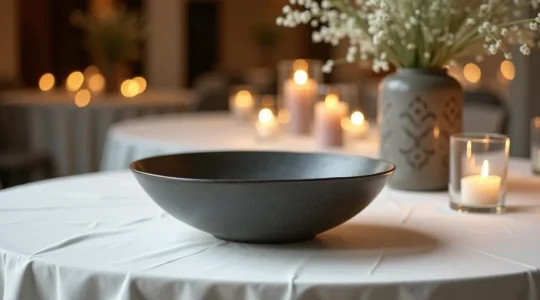
Ikebana for Weddings: The Art of Sculpting Space on Your Table
Many couples desire a minimalist wedding aesthetic but find their tables look sparse rather than sophisticated. The solution lies beyond simply using fewer flowers. True Ikebana is a rigorous artistic discipline where the unseen mechanics holding a single branch, the…
Read more
How to Style Antique Brass Candelabras for a Moody, Elegant Wedding
In summary: Embrace patina as a stylistic choice for depth and mood, rather than aggressively polishing it away. Use professional tricks like “Stick-Um” or museum gel to ensure every taper candle is perfectly stable and upright in antique holders. Adhere…
Read more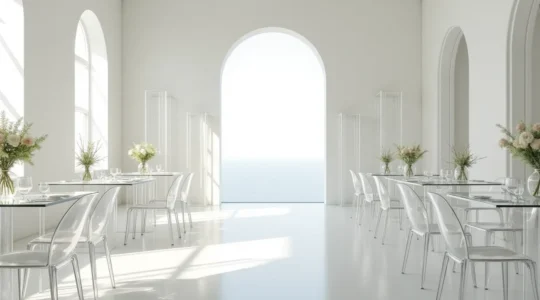
How to Use Acrylic Decor to Make a Small Venue Feel Bigger?
In summary: Embrace transparency to reduce “visual weight,” making your venue feel open and uncluttered. Master the practical details: proper cleaning, strategic lighting, and careful transport are key to a flawless look. Use acrylic not just for seating, but for…
Read more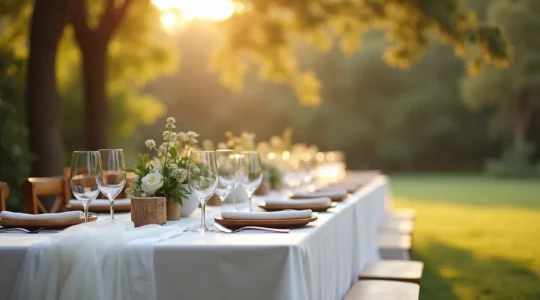
How to Style Gauze Runners So They Look Flowy, Not Messy?
The key to transforming a gauze runner from a messy bunch of fabric into an elegant, flowy feature is not luck, but technique. It’s about understanding fabric physics—how to manipulate its weight, texture, and folds with intention. This guide provides…
Read more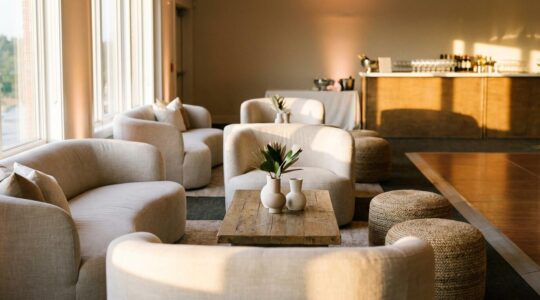
How to Position a Lounge Corner So Guests Actually Use It?
That beautiful, expensive lounge corner often sits empty because it’s treated like decoration, not a strategic social hub. Its failure isn’t about the style of the sofa, but its placement. By understanding the invisible forces of social gravity—positioning it within…
Read more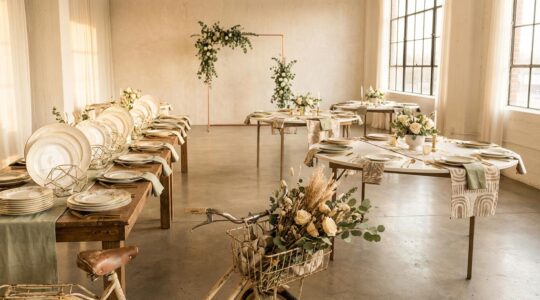
How to Weave Your Love Story into Custom Styling Without Looking Tacky?
The secret to chic wedding personalization is not adding more details, but creating a cohesive design language that tells your story with subtlety and intention. Effective personalization focuses on 2-3 core narrative touchpoints, not a chronological scrapbook of your relationship….
Read more