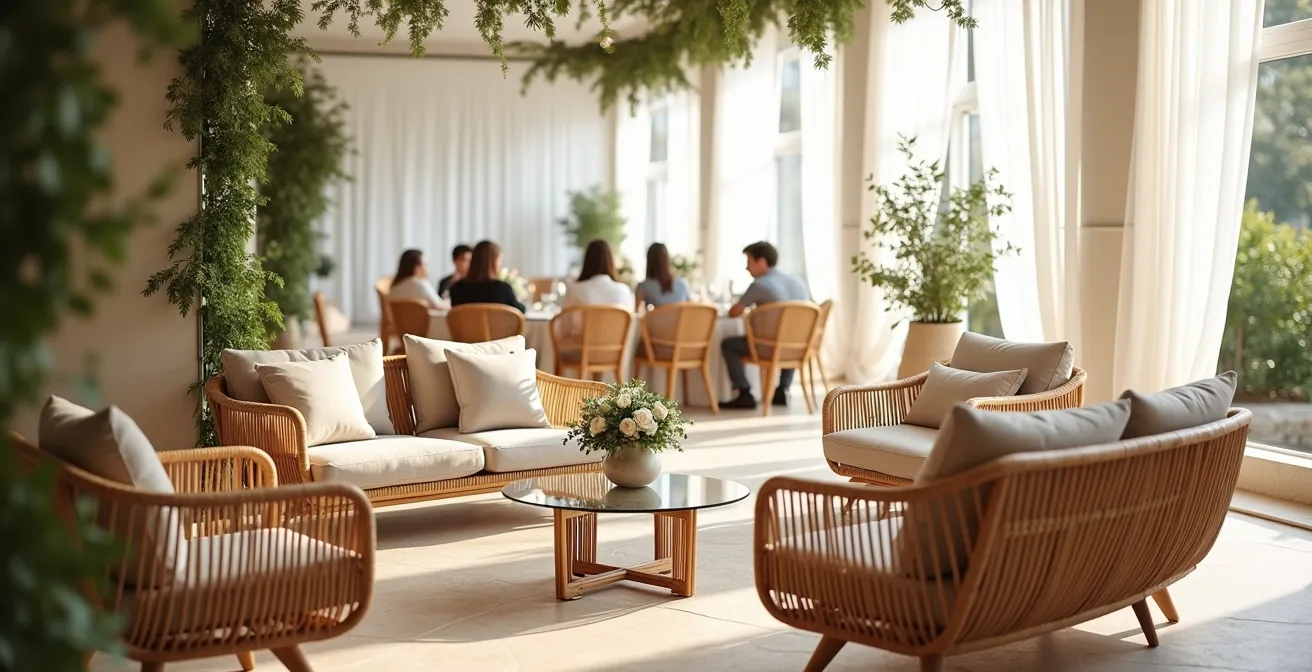
The secret to a modern rattan look isn’t more pampas grass; it’s the intentional contrast between natural texture and sleek, transparent materials.
- Vintage rattan requires a hands-on safety check to protect guests and their attire.
- The right transparent material (acrylic vs. glass) depends on your budget and desired “invisible” effect.
Recommendation: Focus on creating a textural dialogue between your rattan pieces and their surroundings to elevate the entire aesthetic from trendy to timeless.
Rattan furniture has gracefully woven its way back into the heart of wedding design, promising a touch of organic warmth and laid-back elegance. For many couples, it’s the cornerstone of a modern bohemian aesthetic. Yet, a nagging fear often lingers: how do you embrace this trend without your reception looking like a scene from a 1970s basement? The internet is flooded with images of rattan paired with macrame and dried florals, a look that can quickly feel overplayed rather than refreshingly modern.
The common advice is to simply “add rattan pieces” to create a lounge area. But this approach misses the nuance that separates a cliché from a curated masterpiece. The real challenge isn’t finding rattan furniture; it’s integrating it with a sophisticated, contemporary vision. It’s about understanding the material itself—its strengths, its weaknesses, and its potential to engage in a beautiful dialogue with other elements in your decor.
But what if the key to a modern look wasn’t in the rattan itself, but in what you pair it with? This guide moves beyond the standard boho recipe. We’ll explore a curatorial approach where rattan’s natural texture is amplified by sleek transparency, where guest comfort dictates form, and where strategic placement transforms a simple seating area into an interactive social hub. We will delve into the practicalities that ensure both beauty and safety, from inspecting vintage finds to selecting fire-safe lighting.
This article provides a detailed roadmap for mastering rattan in a wedding context. You will discover the practical checks every piece needs, how to balance opposing materials for a stunning visual effect, and how to create a lounge space that is not only beautiful but truly inviting and functional for all your guests.
Summary: Beyond the Boho: How to Style Rattan Furniture for a Truly Modern Wedding
- The pantyhose test: checking vintage rattan before guests sit down
- Transparency and Texture: how to balance these two opposing materials?
- Wattage limits: avoiding fire hazards with basket-style light fixtures
- Will rain ruin your rental rattan furniture in 20 minutes?
- Why you need firm cushions to make low rattan seats usable for elders?
- Which transparent element gives the best “invisible” effect for the price?
- Why separate armchairs are better for guest interaction than one long sofa?
- How to Position a Lounge Corner So Guests Actually Use It?
The Pantyhose Test: Checking Vintage Rattan Before Guests Sit Down
Opting for vintage rattan can add a layer of history and character to your wedding decor that new pieces simply can’t replicate. However, these charming finds come with a critical caveat: their structural integrity and finish may have degraded over time. A beautiful peacock chair that looks perfect in photos could be a disaster waiting to happen, with the potential for splintering, snagging expensive attire, or worse, collapsing. Before committing to a vintage rental, a hands-on inspection isn’t just recommended; it’s essential for your guests’ safety and comfort.
The “pantyhose test” is a simple yet incredibly effective method. By running your hand, covered in a pair of pantyhose, along all surfaces your guests might touch, you can instantly detect any hidden snags or splinters that could ruin a silk dress or tailored suit. This is the first step in a more profound quality check. Beyond the surface, you must assess the furniture’s core strength. Any creaking, wobbling, or visible weakness in the joints under firm pressure is a major red flag. Remember that rental furniture for an event can be a significant investment, as most couples in the U.S. spend between $425 to $1,000 on these items, so ensuring their quality is paramount.
Finally, look for signs of past water damage, a common issue with natural rattan. Dark discoloration or a musty smell, especially at the base of the legs or in deep crevices, often indicates mold or rot that has compromised the material’s strength. A piece with such damage is not just an aesthetic issue; it’s a structural liability. Performing this tactile and visual audit ensures your vintage choice contributes charm, not chaos, to your special day.
Your 3-Point Rattan Safety Inspection Checklist
- The Pantyhose Pass: Run your hand covered in pantyhose along all seating surfaces and armrests to check for hidden snags and splinters that could damage formal attire.
- The Pressure Test: Apply firm, steady pressure to the center of the seat and rock the piece gently, checking all joints for creaking, separating, or wobbling that indicates structural weakness.
- The Damage Detective: Examine the base of the legs and deep crevices for dark, blackish discoloration or a musty odor, which signals past water damage, mold, or rot.
Transparency and Texture: How to Balance These Two Opposing Materials?
The true key to elevating rattan from a simple bohemian staple to a modern design statement lies in the principle of curatorial balance. This is achieved by creating a deliberate and sophisticated dialogue between opposing materials. Rattan, with its organic, woven, and visually complex texture, finds its perfect counterpart in materials that are smooth, solid, and transparent. This juxtaposition is what prevents the “dated” look and ushers in a contemporary, high-design feel.
Think of it as a textural dialogue. The rustic honesty of rattan is amplified when placed against the clean, almost invisible lines of a glass coffee table or the sleek surface of an acrylic side table. This contrast allows each material to shine. The rattan appears more richly textured, while the transparent element adds a layer of modern sophistication and lightness, preventing the lounge area from feeling heavy or cluttered. This approach is central to the “laid-back luxury” aesthetic, where comfort and high style coexist beautifully.
The goal is to let the materials speak for themselves. Instead of overwhelming the scene with more and more natural textures like macrame or jute, introduce a ‘negative space’ with transparency. This visual break is restful to the eye and highlights the craftsmanship of the rattan pieces. A single, well-placed ghost chair or a thick glass tabletop can do more to modernize a rattan set than a dozen bohemian accessories, proving that sometimes, the most impactful design choice is the one you can see right through.
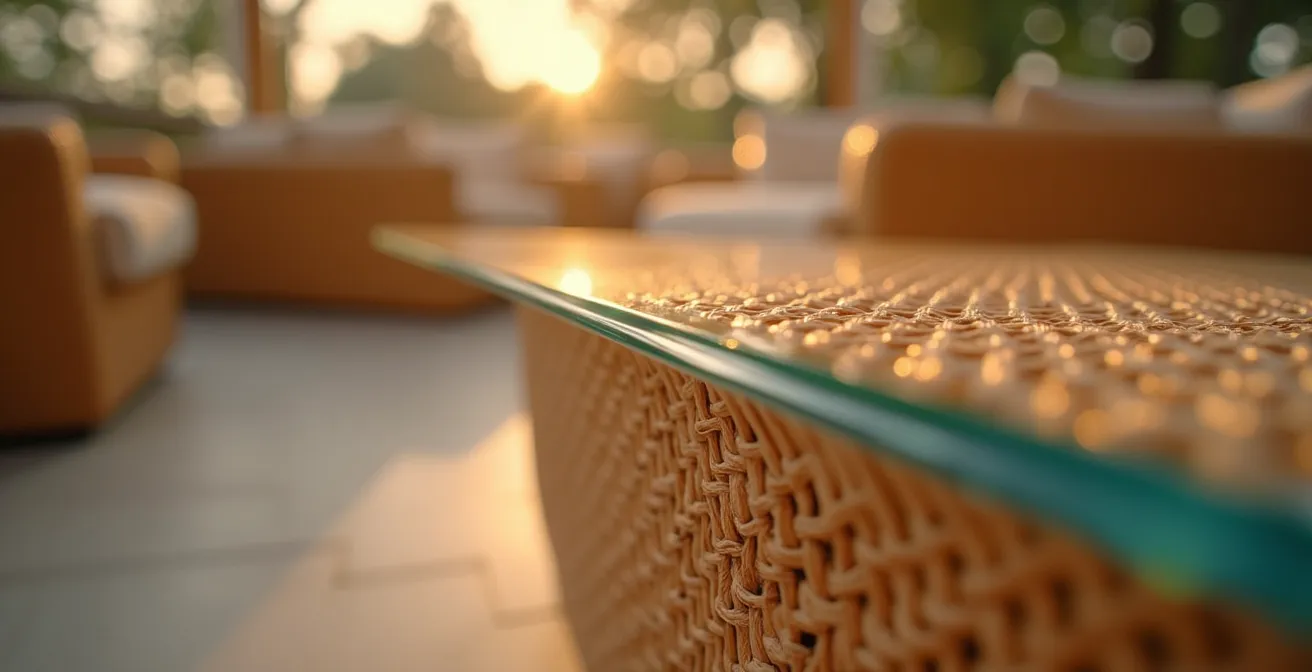
As you can see in this interplay of materials, the intricate weave of the rattan becomes a focal point against the pristine edge of the glass. This balance is what creates a dynamic, visually interesting composition that feels both organic and chic. It’s a sophisticated strategy that celebrates the inherent qualities of each material, resulting in a space that is both inviting and impeccably styled.
Wattage Limits: Avoiding Fire Hazards With Basket-Style Light Fixtures
Woven rattan or wicker pendant lights are a stunning way to define a space and cast a warm, inviting glow over a lounge corner or dining area. Their basket-style construction creates beautiful, diffused light and intricate shadow patterns. However, their natural, combustible material makes them a significant fire hazard if paired with the wrong type of light bulb. The heat generated by traditional incandescent and halogen bulbs can easily build up within the enclosed shade, leading to scorching, smoldering, and potentially a fire—a catastrophic risk at any event.
The solution is a strict adherence to low-heat lighting technology. LED bulbs are the only safe and responsible choice for any enclosed natural-fiber fixture. They produce a fraction of the heat of their incandescent counterparts, making the fire risk minimal. To maintain the warm, romantic ambiance associated with wedding lighting, it’s crucial to select LED bulbs with a specific color temperature. Look for a range between 2700K and 3000K, which perfectly mimics the soft, golden glow of a traditional incandescent bulb without any of the dangerous heat output.
Beyond bulb choice, a curator’s eye for detail extends to safety certifications. Always insist that your rental company provides fixtures that are UL Listed. This certification ensures the product has been tested and meets stringent national safety standards. Before the event, test the fixtures in a dark room to observe the shadow patterns they create. A tight weave produces a soft, uniform glow, while a very open weave can cast distracting, stripe-like shadows on guests and walls. This foresight ensures your lighting is not only safe but also contributes positively to the overall atmosphere.
This comparative table clearly shows why LED is the only viable option for rattan fixtures. As highlighted in a guide to rattan care, managing heat is as critical as managing moisture.
| Bulb Type | Heat Output | Fire Risk | Recommended |
|---|---|---|---|
| LED | Cool to touch | Minimal | Yes |
| Incandescent | Very hot | High | No |
| Halogen | Extremely hot | Very high | Never |
Will Rain Ruin Your Rental Rattan Furniture in 20 Minutes?
The dream of an elegant outdoor lounge can quickly turn into a nightmare with a sudden downpour. A common question that arises is whether that beautiful rattan furniture will be ruined by an unexpected 20-minute shower. The answer depends entirely on a crucial distinction: is the furniture made from natural rattan or synthetic PE rattan? This material knowledge is non-negotiable for anyone planning an outdoor event.
Natural rattan is a vine-like palm, and like any untreated wood product, it is highly susceptible to moisture. When exposed to rain, its fibers absorb water, causing them to swell, weaken, and become a breeding ground for mold and mildew. A mere 20 minutes in the rain is enough to begin this damaging process. If left wet, the furniture can become discolored, brittle, and structurally unsound. Therefore, natural rattan furniture should be considered for indoor use only or for outdoor settings with a guaranteed, solid overhead cover.
In stark contrast, modern outdoor “rattan” furniture is typically made from Polyethylene (PE) rattan, a synthetic resin woven over an aluminum frame. This material is engineered specifically for outdoor use. As industry sources confirm, synthetic PE rattan is completely waterproof and designed to withstand the elements, including heavy rain and strong sun exposure, without rotting, molding, or fading. So, if your rental furniture is specified as all-weather or PE rattan, a 20-minute rain shower is of no concern to the furniture itself (though your cushions will need to be brought inside!). Always confirm the material with your rental company before placing it in an uncovered outdoor space.
Why You Need Firm Cushions to Make Low Rattan Seats Usable for Elders?
Rattan lounge furniture, especially pieces with low-slung frames like Papasan chairs or deep-seated sofas, exudes a relaxed, bohemian vibe. While this is visually appealing, it can present a significant comfort and accessibility challenge, particularly for older guests. The soft, plush cushions that often accompany these pieces can sink deeply, making it extremely difficult for anyone, but especially elders or those with mobility issues, to stand up gracefully. This is where the concept of ergonomic elegance becomes crucial.
The solution is to swap out the default soft cushions for ones with a high-density foam core. Firm cushions provide the necessary support to prevent guests from sinking into the chair. This not only makes sitting more comfortable for extended periods but, more importantly, provides a stable base from which it is much easier to rise. It’s a thoughtful detail that transforms a potentially awkward experience into a comfortable and dignified one. This consideration for all guests is a hallmark of truly great hospitality and design. As the Homestyler design platform notes in their guide, the goal is creating inclusive spaces for multi-generational gatherings.
Rattan’s soft, rounded designs are safer for younger guests and comfortable for all ages. In contrast to rigid, angular furniture, rattan couches promote relaxation. Incorporating floor cushions and woven baskets enhances inclusivity, creating spaces perfect for multi-generational gatherings.
– Homestyler Design Platform, Rattan Wedding Decor Guide 2025
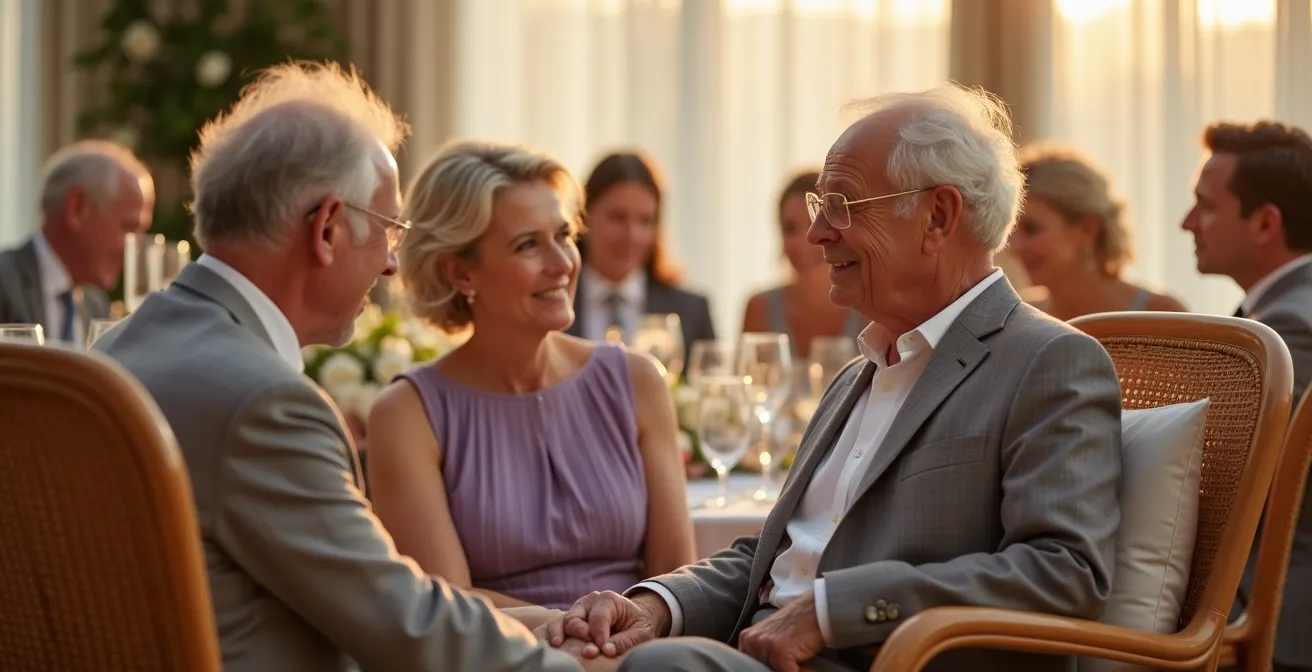
In addition to firm seat cushions, consider providing chairs with adequate back support. Many stylish rattan armchairs offer a more upright posture than slouchy sofas. Providing a mix of seating heights and styles ensures that every guest, from the youngest to the oldest, can find a comfortable spot to relax and enjoy the celebration. This focus on inclusive comfort is the ultimate expression of modern, thoughtful luxury.
Which Transparent Element Gives the Best “Invisible” Effect for the Price?
To achieve the sophisticated textural dialogue between rattan and transparency, you need to choose the right transparent material. The goal is to create an “invisible” effect that lightens the visual load and highlights the rattan’s texture. The main contenders in the event rental market are acrylic, glass, and polycarbonate, each with a distinct profile of cost, clarity, and durability. The best choice for you depends on balancing your budget with your aesthetic priorities.
Acrylic, often known by the brand name Plexiglas, is the most budget-friendly option. It offers good clarity and is lightweight, making it easy to move and arrange. However, its major drawback is its softness; it scratches very easily. For a one-day event, this may not be a major concern, but inspect rental pieces carefully for pre-existing scuffs that could mar the “invisible” effect. It’s an excellent choice for budget-conscious couples who want the look without a hefty price tag.
Glass provides perfect, distortion-free clarity and a satisfying sense of weight and quality. Its surface is hard and scratch-resistant, maintaining a pristine look. However, glass is heavy, making it difficult to reposition, and it carries an inherent risk of shattering, which can be a safety concern at a lively event. It is best used for stationary pieces like coffee tables or console tables that won’t be moved. Polycarbonate, used in iconic pieces like the “ghost chair,” offers the best of both worlds: it has excellent clarity, is virtually unbreakable, and is incredibly durable. This premium performance, however, comes at the highest cost, making it a choice for events with a more generous decor budget.
This table, based on an analysis from event experts like Chicago Style Weddings, breaks down the key trade-offs.
| Material | Cost Range | Clarity | Durability | Best For |
|---|---|---|---|---|
| Acrylic | $400+ | Good | Scratches easily | Budget-conscious couples |
| Glass | $500-800 | Perfect | Heavy, breakage risk | Stationary displays |
| Polycarbonate | $800+ | Excellent | Highly durable | Premium ghost chairs |
Why Separate Armchairs Are Better for Guest Interaction Than One Long Sofa?
When designing a lounge area, the intuitive choice might be a large, comfortable sofa as the centerpiece. It seems like the most efficient way to seat multiple people. However, from a social dynamics perspective, a single long sofa can often stifle interaction. Guests who don’t know each other are hesitant to sit in close proximity, often leaving the middle seats awkwardly empty. This creates physical and psychological barriers to conversation. A more effective strategy for fostering connection is to use multiple separate armchairs.
A collection of individual armchairs, arranged in a circular or semi-circular “pod” around a central coffee table, inherently encourages conversation. This layout orients guests towards each other rather than in a straight line facing one direction. It respects personal space while creating a sense of a shared, intimate zone. Experts in event design suggest spacing chairs about 18-24 inches apart—close enough to talk without shouting, but far enough to feel comfortable. This modularity is key; guests feel more empowered to subtly shift a chair to better join a conversation, a flexibility a heavy sofa doesn’t allow.
From a budget and design perspective, armchairs also offer superior flexibility. A single high-end rental sofa can be a significant cost, whereas you can create multiple, smaller conversational pods with more affordable individual chairs. This allows you to dot several intimate seating areas throughout your venue instead of concentrating everyone in one spot. Mixing different but complementary styles of rattan armchairs can also add more visual interest and a more curated feel than a monolithic sofa. By prioritizing individual seats, you are designing not just a lounge area, but an engine for social interaction.
Key Takeaways
- A modern rattan look hinges on balancing its natural texture with sleek, transparent materials like glass or acrylic.
- Prioritize guest experience through practical choices: check vintage pieces for safety, use firm cushions for accessibility, and choose low-heat LED bulbs for woven fixtures.
- Foster social interaction by opting for modular arrangements of individual armchairs over a single large sofa.
How to Position a Lounge Corner So Guests Actually Use It?
You can curate the most beautiful collection of rattan furniture, but if it’s poorly positioned, it will remain an untouched vignette. The final, crucial step in mastering the modern rattan lounge is intentional placement. The goal is to create a space that feels like a natural and magnetic destination, not an afterthought tucked away in a forgotten corner. This requires a bit of psychological design to draw guests in and invite them to stay.
The ideal location is along a main traffic path but slightly recessed from it. This allows guests to see the inviting area as they move through the venue, but it’s set back just enough to offer a sense of refuge and an opportunity for people-watching without being in the way. You must visually define the space. A large, distinctive area rug is the most effective tool for this; it acts as a visual anchor, creating a “room within a room” and signaling that this is a designated zone for relaxation. Without a rug, the furniture can feel like it’s floating aimlessly.
Finally, give the lounge a purpose beyond just seating. Add a “magnet” feature—something that gives guests a reason to gather there. This could be a dedicated cocktail bar, a polaroid camera station with a guestbook, or even a dessert display. This feature initiates the first visit, and the comfortable, well-designed seating encourages them to linger. Enhance this sense of an intimate enclave with dedicated lighting, such as soft string lights overhead or a few stylish floor lamps. These layers of strategy transform a collection of furniture into a living, breathing part of your wedding reception that guests will naturally gravitate towards and enjoy all night long.
By applying these curatorial principles—from tactile safety checks to the psychology of placement—you can confidently use rattan to create a wedding aesthetic that is modern, sophisticated, and memorable for all the right reasons.