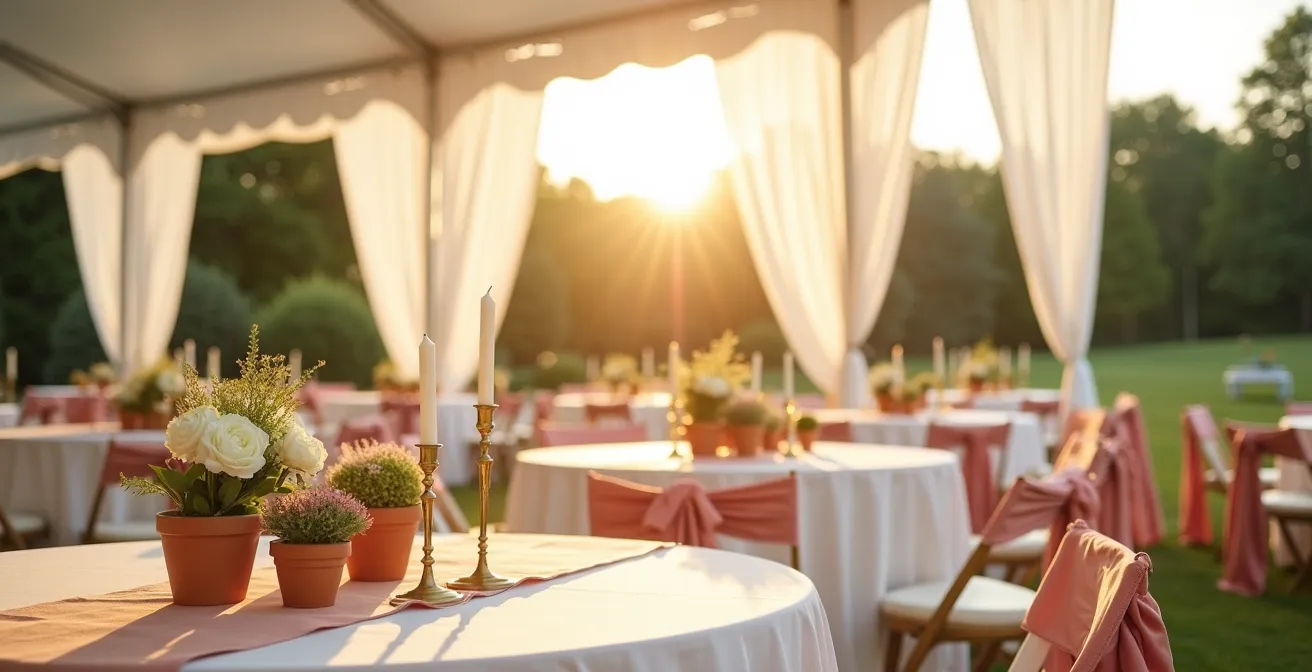
Contrary to popular belief, the key to using velvet in summer isn’t to minimize it, but to master its unique physical properties.
- Velvet’s value lies in its tactile luxury and light-absorbing depth, which can create intimacy even in an airy, open venue.
- Strategic lighting, textural counterpoints (like clay), and smart handling techniques negate any sense of heaviness.
Recommendation: Shift your mindset from hiding velvet to showcasing it. Use its weight and texture as a deliberate design tool to craft unforgettable, multi-sensory moments for your guests.
The very mention of velvet in a summer wedding context often conjures images of heavy, hot, and out-of-place opulence. For decades, the unwritten rule for couples has been to banish this plush fabric to the colder months, fearing it will clash with the light, airy aesthetic of a June or July celebration. Conventional wisdom dictates that if you must use it, do so in tiny, apologetic doses: a ring box, a shoe accent, or a thin ribbon. The prevailing fear is that its richness will absorb all the light and warmth, weighing down the entire design. But this approach treats velvet as a liability to be managed rather than an asset to be leveraged.
What if the problem isn’t the fabric, but our understanding of it? What if, instead of diluting its character, we could harness its inherent properties to our advantage? The secret to successfully using velvet in summer is not to make it something it’s not. It is to act as a master designer, understanding its relationship with light, its tactile power, and its psychological effect. By embracing its depth and texture, you can create pockets of incredible luxury and intimacy that actually enhance, rather than detract from, a summer atmosphere.
This guide will deconstruct the old rules and provide a new framework. We will explore how to handle velvet’s unique pile, analyze its cost-versus-impact, reveal how to maintain its pristine look, and master the lighting that makes it glow. We’ll also dive into sophisticated texture pairings that feel both modern and timeless, proving that velvet isn’t just for winter—it’s for any season, as long as you know its secrets.
To guide you through this elegant rebellion against outdated decor norms, we’ve structured this article to answer your most pressing questions. Follow along as we unpack the strategies that turn velvet from a winter staple into a summer showstopper.
Summary: A Modern Guide to Summer Velvet Wedding Decor
- Why standard folds fail with velvet napkins and what to do instead?
- Velvet sofa vs. Velvet tablecloth: which has more impact for the price?
- Keeping dark velvet clean: the lint roller strategy for the reception
- Why velvet makes a room look darker and how to compensate with lighting?
- Is renting velvet worth 3x the price of polyester for the guest experience?
- Velvet or Silk: which texture creates a warmer atmosphere in a cold venue?
- Can you mix rough clay with soft velvet without a texture clash?
- How to Use Silk Accents to Elevate Your Wedding Design Instantly?
Why standard folds fail with velvet napkins and what to do instead?
The frustration of a beautifully folded napkin turning into a crushed, lackluster square is a common pitfall when working with velvet. Unlike crisp linen or cotton, velvet’s beauty lies in its pile—the dense, upright fibers that give it a soft hand and deep color. Standard folding techniques, such as the classic pyramid or fan, compress this pile, creating unsightly creases and destroying the fabric’s signature light-catching quality. The goal with velvet is not to create sharp, architectural shapes, but to encourage soft, graceful drapes that showcase its texture.
Instead of fighting the fabric’s nature, work with it. The most elegant solutions are often the simplest, focusing on showcasing the material’s inherent luxury rather than forcing it into a rigid form. Here are a few alternative techniques that honor the fabric’s properties:
- The Drape and Cinch: Loosely drape the napkin over the plate and secure it at the center with an acrylic or metallic napkin ring. This creates an effortless, elegant look that allows the velvet to fall naturally.
- The Cascading Waterfall: Position the napkin so it cascades off the table’s edge. This technique showcases the full length of the texture and color without creating bulk on the plate itself.
- The Simple Knot: Create a single, loose knot in the center of the napkin. This method is sophisticated yet relaxed, perfect for a summer presentation where formality is softened.
- The Soft Roll Technique: Gently roll the napkin without compressing it and place it beside the plate, perhaps tied with a delicate silk ribbon, to preserve the pile and avoid any flattening.
These methods ensure the velvet remains plush and touchable, contributing a key sensory element to your tablescape. The close-up view below demonstrates how a simple drape-and-cinch technique allows light to play across the velvet’s surface, creating depth and visual interest.
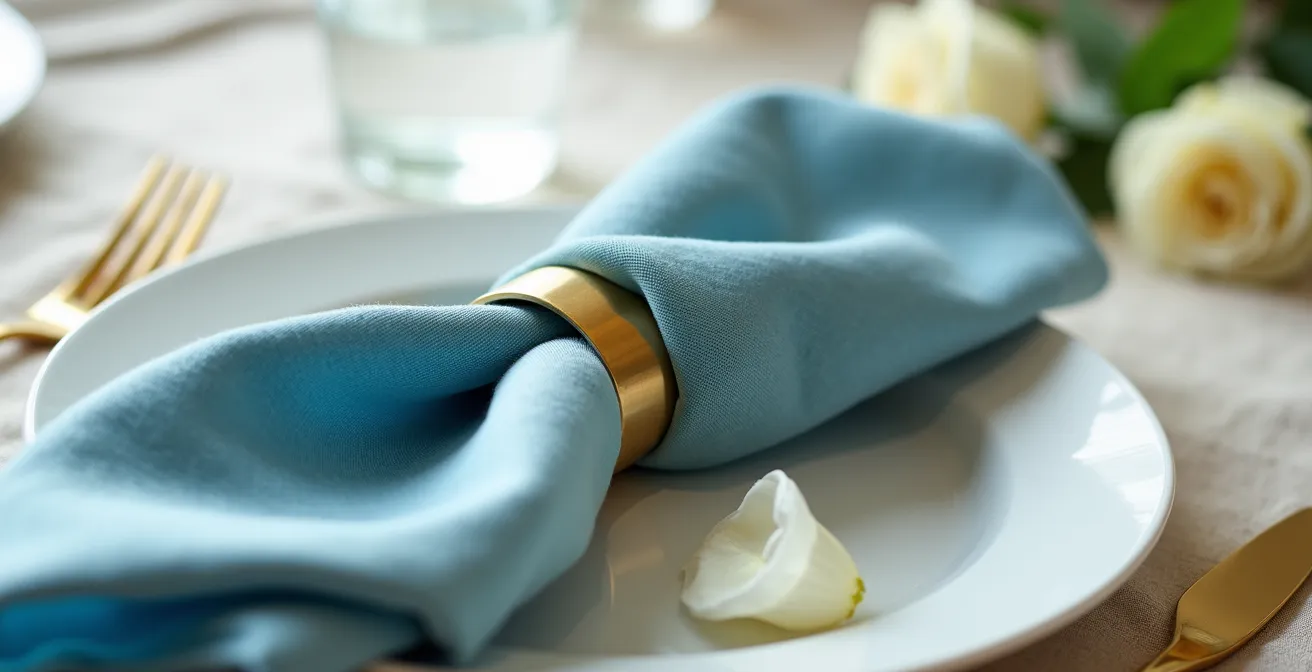
As you can see, the focus shifts from complex folds to the inherent beauty of the material itself. The metallic ring provides a point of contrast, but the velvet remains the star, its texture fully visible and inviting. This approach turns a simple napkin into a small moment of curated luxury for each guest.
Velvet sofa vs. Velvet tablecloth: which has more impact for the price?
When budgeting for decor, every choice is a calculation of cost versus impact. With a premium fabric like velvet, this question becomes even more critical. Two of the most popular large-scale velvet applications are the statement lounge sofa and full tablecloths. While both add luxury, they serve different functions and offer a different return on investment in terms of guest experience and photo opportunities.
A velvet sofa creates a concentrated “hero” moment. It’s a designated photo-op zone, a magnet for guest portraits, and a comfortable, intimate space for a small group. Its impact is deep but narrow, primarily affecting the 15-20 guests who use the lounge area. A velvet tablecloth, conversely, offers a distributed, atmospheric impact. It elevates every single place setting, providing a tactile experience for every guest at the table and transforming the entire reception’s visual landscape. The choice depends on your priority: creating an iconic focal point or elevating the overall ambiance.
To make an informed decision, it’s helpful to break down the return on investment for each, as shown in a recent comparative analysis of wedding decor rentals.
| Factor | Velvet Sofa | Velvet Tablecloth |
|---|---|---|
| Average Rental Cost | $350-500 | $25-40 per table |
| Guest Impact | 15-20 guests (lounge area) | 8-10 guests per table |
| Photo Opportunities | Hero shots, portraits | Reception ambiance shots |
| Logistics Cost | $150+ delivery/setup | $0-25 cleaning fee |
| Weather Resistance | Requires protection from sun/dew | More resilient, easier to replace |
| Best Use | Evening lounge zones | Full reception coverage |
A successful strategy can also involve a hybrid approach. For instance, a 150-guest summer wedding in California rented one statement emerald velvet sofa for the cocktail hour, creating that sought-after photo vignette. For the reception, they used light gray crushed velvet runners on half the tables, alternating with plain linen. The sofa generated the iconic couple portraits, while the runners elevated the dining atmosphere without the cost or visual weight of full tablecloths. This illustrates that the best choice is about strategic placement, not just quantity.
Keeping dark velvet clean: the lint roller strategy for the reception
Dark velvets—like emerald, navy, or black—offer unparalleled richness, but they also act as magnets for lint, dust, and pollen, especially at an indoor-outdoor summer wedding. The fear of a pristine velvet sofa or tablecloth looking fuzzy and untidy by the time of the reception is a valid concern. However, with a proactive maintenance strategy and the right tools, you can ensure your velvet elements look flawless from the first photo to the last dance. The key is preparation, not just reaction.
The first line of defense is choosing the right material. Investing in a high-quality fabric can significantly reduce your workload, as high-quality velvet with a 50,000+ double rub count lasts 3x longer and requires 60% less maintenance than standard grades. Beyond material choice, a well-thought-out grooming schedule is essential. It’s not about constant cleaning, but about targeted touch-ups at key moments throughout the event.
Your wedding planner or a designated bridal party member should be equipped with a “Velvet First-Aid Kit.” This isn’t just a lint roller; it’s a small arsenal designed for quick, effective grooming. Here’s a timeline and kit list for flawless execution:
- Pre-Reception (2 hours before): Gently steam all velvet pieces with a handheld steamer, keeping it at least six inches from the fabric to raise the pile and avoid water spots.
- First-Aid Kit Contents: Pack a soft-bristle brush (for restoring pile), a high-quality lint roller, the handheld steamer, clean microfiber cloths, and a velvet-safe spot cleaner for emergencies.
- Strategic Placement: Position dark velvet items more than 10 feet from grassy entrances, away from flower arrangements known to shed pollen (like lilies), and at a safe distance from appetizer stations where crumbs are likely.
- Grooming Schedule: Plan for quick, 5-minute touch-ups. The most critical times are just before cocktail hour photos, again before the main reception entrance, and one final pass before the cake cutting.
- Pattern Strategy: For high-traffic items like lounge seating, consider using crushed or patterned velvet. The varied texture of crushed velvet is brilliant at naturally camouflaging minor lint or imperfections.
This proactive approach transforms velvet maintenance from a source of stress into a manageable part of the day’s logistics. A quick brush or roll at the right time is all it takes to maintain that luxurious, deep-color impression all evening long.
Why velvet makes a room look darker and how to compensate with lighting?
One of velvet’s defining characteristics is its ability to absorb light. The fabric’s deep pile traps light waves rather than reflecting them, which creates the rich, saturated color it’s famous for. While this quality is perfect for creating a cozy, intimate atmosphere, it can also make a space feel darker and smaller if not managed correctly, a significant concern for an airy summer wedding. The solution is not to avoid dark velvet, but to become a master of light, using strategic illumination to turn this “problem” into a dramatic design feature.
Compensating for velvet’s light absorption requires a multi-layered lighting strategy. Instead of flooding the room with uniform, flat light, the goal is to “paint” with light, creating contrast, depth, and glow. This involves using different types of lighting to highlight the velvet itself and to bounce light around the room using other surfaces.
A June outdoor tent wedding featuring navy velvet lounge furniture and burgundy runners perfectly illustrates this. The design team solved the light absorption challenge with a three-part strategy:
- Grazing with Uplights: They installed LED uplights set to a warm 2700K temperature along the tent poles. The lights were angled to “graze” the surface of the velvet, highlighting its texture and creating dramatic shadows within the pile. This gave the fabric depth and a subtle glow.
- Pin-Spotting for Focus: Each centerpiece and key velvet element was targeted with a narrow-beam pin-spot from above. This created pools of bright, focused light, ensuring these elements stood out as intentional features rather than dark spots.
- Leveraging Reflective Surfaces: They paired the velvet with materials that do the opposite: reflect light. Mirrored charger plates, crystal stemware, and metallic cutlery were used to catch the ambient and spot lighting, scattering it around the space and creating points of sparkle that balanced the velvet’s matte finish.
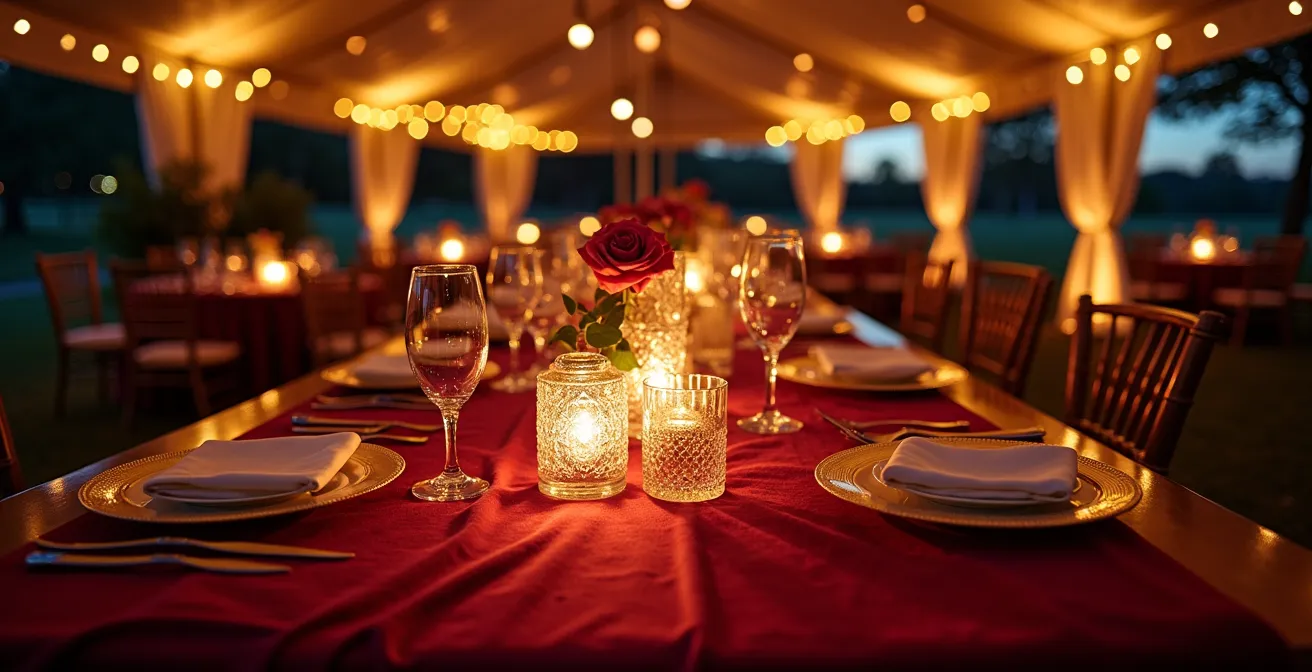
The result was a space that felt both intimate and brilliantly alive. Guests described the atmosphere as having a “magical glow,” and the photographer noted that the velvet, rather than being a challenge, actually enhanced the photos by providing a rich, non-reflective background that made skin tones and other details pop. This proves that velvet doesn’t make a room dark; poor lighting does.
Is renting velvet worth 3x the price of polyester for the guest experience?
On a spreadsheet, the choice seems obvious. Polyester linens are functional, affordable, and come in every color imaginable. Velvet, by contrast, can cost three times as much to rent. This stark price difference leads many couples to question if the splurge is truly worth it. The answer lies in shifting the evaluation from a purely visual comparison to a holistic, sensory one. Polyester is a visual prop; velvet is an experience.
The primary difference is tactile value. Guests may not consciously register the fabric of their tablecloth, but their hands will. The feel of a soft, plush velvet napkin or the cushion of a velvet chair communicates a level of thoughtfulness and luxury that synthetic fabrics simply cannot replicate. As the Kennedy Blue Bridal Design Team notes in their guide, this sensory input is a powerful, if subconscious, element of the guest experience.
The guest experience isn’t just visual. Polyester is purely visual. Velvet provides a superior tactile experience. The feel of a velvet napkin or cushion signals luxury, quality, and thoughtfulness in a way polyester cannot.
– Kennedy Blue Bridal Design Team, Best Velvet Bridesmaid Dresses Guide 2025
Beyond the tactile, there is a tangible photographic benefit. Polyester has a synthetic sheen that can create unflattering hotspots and reflections in flash photography, cheapening the look of your decor. Velvet’s matte, light-absorbing surface does the opposite. It provides a rich, saturated canvas that makes colors appear deeper and more vibrant. According to industry feedback, professional photographers report that velvet photographs with 40% richer color depth and eliminates the synthetic sheen that can cheapen photos. This means your investment pays dividends in the quality of your wedding album—the most lasting memento of your day.
Ultimately, the decision rests on your priorities. If your goal is simply to cover tables in a specific color, polyester is a sensible choice. But if your aim is to curate a multi-sensory experience, communicate a standard of quiet luxury, and ensure your photos have a timeless, high-end feel, the premium for velvet becomes a justifiable investment in atmosphere and memory.
Velvet or Silk: which texture creates a warmer atmosphere in a cold venue?
When decorating a venue that feels inherently cold—such as a stone hall, an industrial loft, or a museum with marble floors—fabric choice is your most powerful tool for injecting warmth. The two primary luxury contenders, velvet and silk, both add elegance but create “warmth” in fundamentally different ways. The right choice depends on whether you want to create visual warmth through light or psychological warmth through texture and sound.
Silk creates warmth through its interaction with light. Its smooth surface reflects light, creating a shimmer and glow that can make a space feel brighter and more ethereal. Paired with fairy lights or ambient uplighting, silk drapes and tablecloths can cast a warm, golden hue across a room, creating a fairytale-like atmosphere. It’s a visual effect that feels light, airy, and celebratory.
Velvet, on the other hand, creates warmth through psychological and physical insulation. Its light-absorbing pile creates a sense of intimacy and enclosure, making a large space feel more like a sanctuary. This effect is not just visual but also acoustic; heavy velvet drapes are excellent at dampening echo in cavernous rooms, making the space feel quieter and more comfortable. Even in a cool summer color like dusty blue, the texture of velvet has a cozy, enveloping quality that silk lacks. It invites touch and suggests comfort.
This table breaks down their distinct atmospheric contributions, helping you choose the right fabric for your desired effect, even when adapting for a summer event.
| Aspect | Velvet | Silk |
|---|---|---|
| Visual Effect | Absorbs light, creates intimacy | Reflects light, creates shimmer |
| Psychological Impact | Cozy, enveloping, sanctuary-like | Elegant, ethereal, fairytale |
| Sound Properties | Dampens echo, improves acoustics | No acoustic benefit |
| Best Lighting | Warm spotlighting, candles | Ambient uplighting, fairy lights |
| Ideal Venue | Stone halls, museums, lofts | Gardens, tents, modern spaces |
| Summer Adaptation | Use in cool colors (dusty blue) | Layer with sheer fabrics |
In a cold venue, silk makes the space feel brighter, while velvet makes it feel cozier. For a summer wedding in such a space, velvet in a cool tone can be the perfect solution, offering psychological comfort without the visual “heat” of a warm color palette.
Can you mix rough clay with soft velvet without a texture clash?
Mixing rough, earthy clay pottery with soft, luxurious velvet might seem like a recipe for a jarring textural clash. One speaks of rustic simplicity, the other of refined opulence. However, when executed with intention, this very contrast can create a stunningly sophisticated and modern aesthetic, perfectly suited for a summer wedding. This is the art of textural counterpoint: using opposing textures not to compete, but to highlight each other’s unique qualities. The softness of the velvet feels even more plush against the roughness of the clay, and the clay’s handmade character grounds the velvet, preventing it from feeling overly formal or wintry.
The key to success is creating a visual bridge between these two disparate materials. Without a connecting element, the pairing can look accidental. A cohesive color story, metallic accents, or thoughtful scaling are essential for making the combination feel curated and intentional. A Tuscan-inspired outdoor wedding successfully merged these textures by using large terracotta pots as centerpiece vessels on dusty rose velvet runners. The unifying element was a strict color palette of earth tones and cream accents, making the contrast feel deliberate.
This approach “summerizes” velvet, tying it to a sun-drenched, Mediterranean aesthetic that feels completely at home in the warmer months. It’s a bold move that breaks away from the traditional soft-on-soft layering of wedding design.
Your Action Plan: Successfully Pairing Clay and Velvet
- Create Color Bridges: Match the undertones of the fabrics and materials. For example, pair a blush velvet with a terracotta pot that has pink undertones, or a sage green velvet with gray-green ceramics to ensure they speak the same color language.
- Incorporate Metallic Connectors: Use brass, copper, or gold elements as a neutral third party that complements both earth tones and luxury. Think copper-rimmed chargers, brass cutlery, or gold-leaf details on the clay pots.
- Scale Contrast Intentionally: Create a clear hierarchy of textures. Use large, statement clay vessels accented with delicate velvet ribbon ties, or place small, handmade ceramic details (like place card holders) on expansive velvet runners.
- Build Textural Gradients: Don’t just jump from rough to smooth. Layer textures for a natural progression. For instance, a rough clay vase, followed by a mid-weight linen napkin, culminating in a soft velvet accent creates a pleasing sensory journey.
- Embrace Mediterranean Styling: Fully lean into the aesthetic by using handmade, irregular pottery, sprigs of olive branches, and light-colored velvet in coastal tones like dusty blue or sandy beige to firmly root the design in a summer context.
By following these principles, the combination of clay and velvet is elevated from a potential clash to a sophisticated dialogue between textures, proving that even the most unlikely pairings can create magic with a strategic vision.
Key takeaways
- Stop trying to make velvet less “heavy” and instead master its properties of light absorption and tactile depth to create intentional intimacy.
- Justify the higher rental cost of velvet over polyester by considering its superior tactile experience for guests and its tangible value in photography.
- Successfully pair velvet with contrasting textures like clay by using color bridges, metallic connectors, and intentional scaling to create a sophisticated, modern aesthetic.
How to Use Silk Accents to Elevate Your Wedding Design Instantly?
While velvet provides depth, weight, and intimacy, silk introduces the complementary elements of light, movement, and ethereal grace. Using them together is the ultimate masterclass in textural layering, allowing you to get the best of both worlds. The key is not to mix them haphazardly, but to create a sensory hierarchy, assigning a specific role to each fabric based on its physical properties. This approach prevents the design from feeling busy and instead creates extraordinary visual depth and sophistication.
Think of velvet as your anchor. Its weight and light-absorbing qualities make it perfect for grounding the design. Use it for foundational elements like tablecloths, lounge furniture, or substantial ceremony drapes. Its static, plush nature creates a rich, stable base. Silk, with its light-reflecting and flowing properties, then becomes your dynamic element. Use it to add movement and to “lift” the design, preventing the velvet from feeling too heavy.
A summer mountain wedding in Colorado provided a stunning example of this principle in action. The designers masterfully combined deep plum velvet with sunset-ombré silks to create depth without heaviness:
- Anchoring with Velvet: The ceremony featured dramatic, deep plum velvet drapes, which provided a rich, solid backdrop against the mountain view.
- Creating Movement with Silk: These heavy drapes were tied back with voluminous, hand-dyed silk ribbons. The wind caught the lightweight silk, creating beautiful movement against the static velvet.
- Balancing Light: In the reception, a massive 30-foot silk ceiling installation hung above the dance floor. It caught and bounced the LED uplighting, actively compensating for the light absorbed by the crushed velvet cloths on alternating tables.
- Micro-Level Contrast: At each place setting, a small but impactful detail brought the theme together: delicate silk menu cards were placed on heavy velvet chargers, providing a textural surprise for every guest.
This layered approach—heavy velvet anchoring the space, flowing silk creating movement and reflecting light—is the secret to an elevated design. It’s a deliberate strategy that engages the senses on multiple levels, creating a space that feels both grounded and magical, perfectly embodying a luxurious summer celebration.
By moving beyond outdated rules and embracing a more strategic, sensory-based approach to design, you can confidently use velvet to create a summer wedding that is not only beautiful but also deeply and unforgettably luxurious. To apply these concepts, the next logical step is to begin curating a palette of textures and colors that tells your unique story.