In summary:
- The luxury of silk and velvet is not just in their appearance, but in mastering their specific material behaviors to prevent common issues like water spots and creasing.
- A steamer is superior to an iron for safely removing wrinkles from delicate silks like charmeuse and chiffon.
- The true cost of fabrics involves a “Total Cost of Ownership” analysis, comparing purchase/resale value against rental fees and potential damage costs.
- Fabric weight (momme) and cut (bias-cut) are critical technical details that dictate how a fabric will drape for photos and create a “puddled” effect.
- Premium textiles like velvet elevate the guest experience through tactile sensation and improved acoustics, justifying their higher price point over polyester.
For couples dedicated to crafting an unforgettable wedding, the pursuit of luxury extends far beyond the venue or menu. It resides in the details—the subtle touchpoints that engage the senses and communicate a story of quality and intention. Among these, the choice of fabric is paramount. While many guides suggest using silk ribbons or runners, they often stop at the surface, leaving couples unprepared for the practical realities of these exquisite materials. The common advice overlooks the nuances that separate an amateur attempt from a professional execution.
The truth is, working with high-end textiles like silk and velvet is a craft. It’s about understanding their unique material behavior. It’s knowing why a simple water spill can become a permanent stain on a silk runner, or how the weight of a fabric determines whether it floats gracefully or pools with intention. Simply choosing silk is not enough; the magic lies in the mastery of its properties to create a cohesive and flawless aesthetic that translates both in person and in photographs. This is where true luxury is found—not just in the material itself, but in the precision of its application.
This guide moves beyond generic inspiration. We will delve into the technical expertise required to wield these fabrics with confidence. We’ll explore the science behind a perfect ribbon drape, the crucial differences between caring for various silks, and how to make informed financial decisions between buying and renting. By understanding the professional approach to handling these textiles, you can prevent costly mistakes and ensure every silk and velvet accent contributes to an atmosphere of effortless elegance and a memorable tactile experience for your guests.
For a dose of inspiration on how different elements can be combined to create stunning focal points, the following video offers ideas on centerpiece structures. While the materials shown are for budget-friendly concepts, imagine these forms elevated with the luxurious silks and velvets discussed in this guide, using the centerpieces as anchors for your elegant runners.
To help you navigate these expert considerations, we have structured this guide to address the most critical questions. From photographic impact to practical on-the-day challenges, you’ll find the detailed answers needed to execute your vision flawlessly.
Summary: A Professional’s Guide to Wedding Silk and Velvet
- Why the way ribbon drapes on the bouquet matters for photos?
- The “spotting” issue: why silk runners are dangerous near water glasses?
- Iron vs. Steamer: how to remove creases without burning the expensive fabric?
- Is buying raw silk cheaper than renting polyester linens?
- How to keep light silk runners from blowing into the food?
- Which fabric holds a fold better for that “puddled” look on the floor?
- Is renting velvet worth 3x the price of polyester for the guest experience?
- How to Use Velvet Decor in Summer Without It Feeling Heavy or Hot?
Why the way ribbon drapes on the bouquet matters for photos?
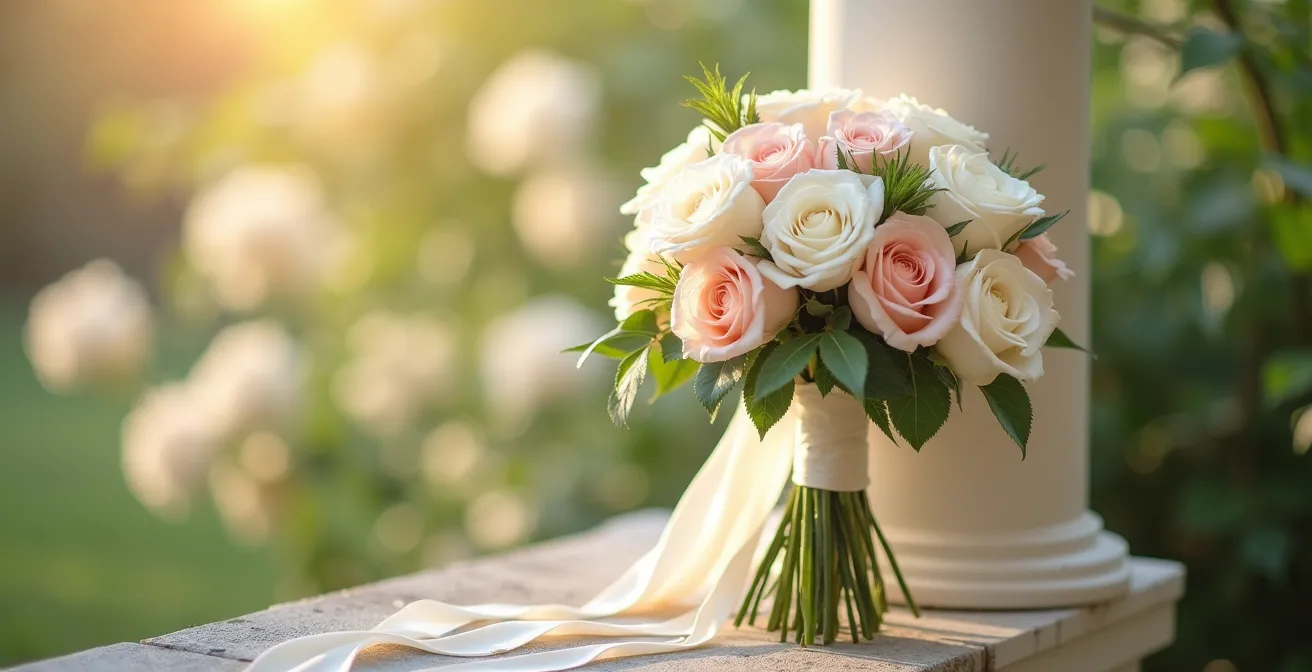
The silk ribbon on a bridal bouquet is more than a simple accessory; it’s a dynamic element that contributes significantly to the visual narrative of your wedding photos. Its movement, texture, and drape interact with light and motion, creating a sense of romance and elegance that static elements cannot replicate. A poorly chosen or styled ribbon can appear stiff or lifeless, but a well-executed one adds a layer of softness and artistry. The key is understanding that the material behavior of the ribbon is as important as its color.
The length and cut of the ribbon are critical. For a graceful, flowing effect in photographs, many professional florists recommend using ribbon that’s at least 2 times the bouquet’s length. This allows for a natural cascade that catches the breeze and creates beautiful lines. Furthermore, the type of cut affects its movement. A bias-cut ribbon, cut diagonally across the fabric’s grain, will have more natural stretch and twist, creating dramatic drapes effortlessly. A hand-torn ribbon, by contrast, offers delicate frayed edges but requires more interaction or a breeze to achieve movement.
To ensure your ribbons are picture-perfect, a few on-the-day tricks are essential. Professionals often wrap the bouquets on-site to prevent the ribbons from getting crushed or water-damaged during transport. One of the most effective pro secrets is to bring a hair straightener to the venue. It can be used on a low setting to quickly and easily flatten any unexpected kinks or creases in the silk right before the photos, ensuring a flawless drape. For smaller applications like boutonnieres, a standard 0.5-inch ribbon provides the right scale and finish.
The “spotting” issue: why silk runners are dangerous near water glasses?
One of the most common and heartbreaking mistakes with luxury wedding decor involves silk and water. A simple spilled water glass on a silk table runner can leave a noticeable, permanent-looking ring or “spot,” even after it dries. This happens because silk is a protein fiber, and water interacts with it in a unique way. Unlike synthetic fabrics, water can displace the silk’s fibers and, as it evaporates, leave behind trace minerals and salts that were present in the water. This residue forms a visible mark, altering the fabric’s sheen and color.
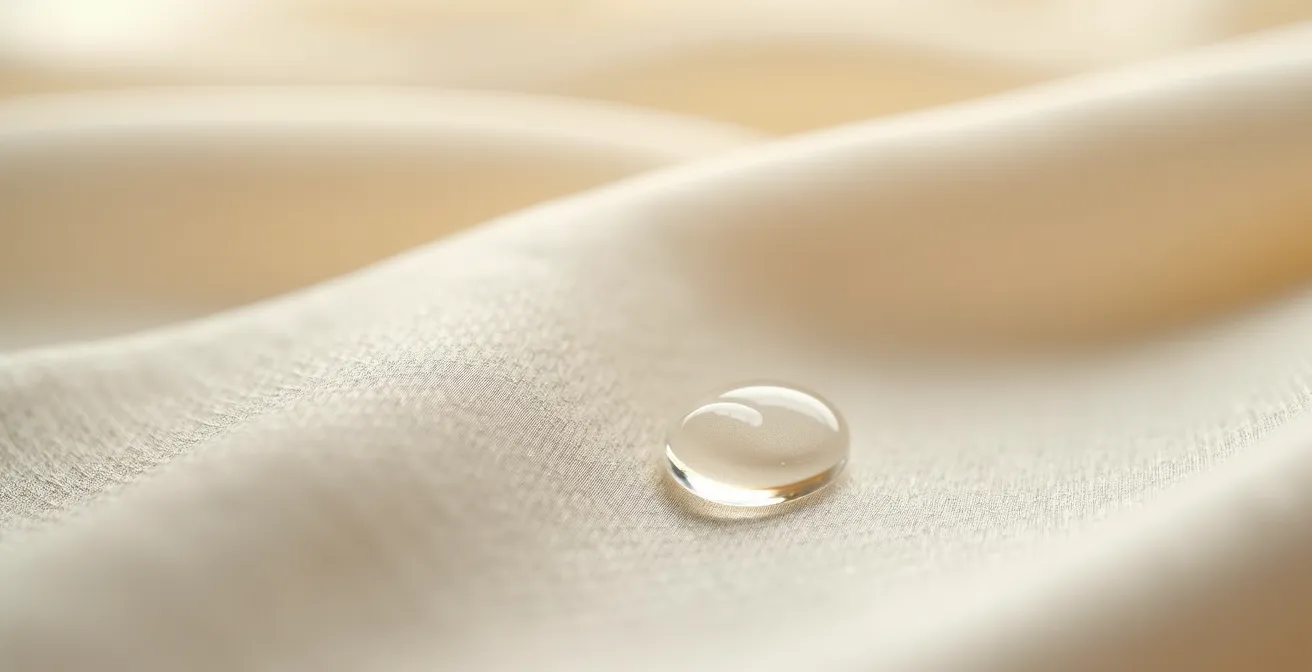
As the close-up image reveals, moisture disrupts the delicate weave of the silk, creating a darker ring as it spreads. Attempting to fix this on your own by dabbing it with more water or a detergent often worsens the problem, expanding the stain or stripping the fabric’s natural luster. According to a case study on professional water stain removal from silk, the only reliable solution involves targeted treatment with gentle solvents and controlled steaming by a professional dry cleaner. This underscores the importance of prevention.
When planning your tablescape, strategic placement is your best defense. Position water glasses and flower vases with wide, stable bases away from the center of the silk runner. Consider placing them on chargers or placemats that create a physical barrier. For outdoor events, be mindful of condensation on chilled bottles or pitchers. By understanding the scientific reason for water spotting, you can design your tables to be both beautiful and practical, protecting your investment in high-end textiles from accidental damage.
Iron vs. Steamer: how to remove creases without burning the expensive fabric?
Transporting silk linens inevitably leads to creases and wrinkles, and removing them requires a gentle touch to avoid scorching the expensive fabric. While an iron might seem like the obvious tool, it carries a significant risk. Direct, high heat can easily burn silk fibers, leaving a shiny, melted patch that is impossible to repair. The choice between an iron and a steamer isn’t just a matter of preference; it’s a crucial decision based on the type of silk and the level of risk you’re willing to accept.
A handheld garment steamer is widely considered the safest and most effective tool for most silks, especially delicate varieties like charmeuse and chiffon. The steamer works by using gentle, moist heat to relax the fibers, allowing them to fall back into their natural, smooth state. As experts from Columbia Pike Laundry explain in their guide:
The combination of gentle heat and moisture helps the silk fibers relax and settle back into their original weave, which can make that water ring vanish. A handheld garment steamer is the perfect tool for this job.
– Columbia Pike Laundry, Professional Laundry Tips Guide
An iron should only be considered for heavy raw silks and always with extreme caution: on the lowest heat setting and with a protective press cloth between the iron and the silk. Direct contact should be avoided at all costs. For high-value silks used in a wedding, investing in a professional-grade steamer is a wise decision. The following table breaks down the best use cases and risks for each method.
| Method | Best For | Risk Level | Key Precautions |
|---|---|---|---|
| Steaming | All silk types, especially delicate charmeuse and chiffon | Low | Use distilled water only to prevent mineral deposits |
| Iron with Press Cloth | Heavy raw silks only | High | Lowest heat setting, protective press cloth mandatory, never direct contact |
| Professional Steamer | High-value wedding silks | Very Low | Jiffy or similar professional-grade equipment recommended |
This comparison from a guide on silk stain removal clearly shows that steaming offers the best balance of effectiveness and safety, making it the superior choice for preserving the beauty and integrity of your wedding silks.
Is buying raw silk cheaper than renting polyester linens?
The decision between buying silk and renting standard polyester linens often comes down to a simple price comparison, but this approach is misleading. While the upfront cost of purchasing raw silk is undeniably higher than renting polyester, a more sophisticated analysis of the Total Cost of Ownership (TCO) reveals a different picture. Buying silk should be viewed as an investment, not just an expense, with value that extends far beyond the wedding day.
Renting polyester is a one-time transaction. You pay a fee, use the linens, and return them. However, this rental fee can come with hidden costs, such as damage fees for stains or tears. Buying silk, on the other hand, gives you a tangible asset. After the wedding, high-quality silk linens and runners can be resold on wedding forums or marketplaces, often recouping a significant portion of the initial investment. A pricing guide from Rinlong Flower shows that a similar dynamic exists in florals, where a DIY silk bouquet can cost between $50-$150, compared to $250-$400 for a florist-made one, highlighting the value of ownership.
Moreover, purchased silk can be repurposed into cherished heirloom items, such as decorative pillows for your home or even a christening gown for a future child, adding sentimental value that renting can never offer. To make an informed decision, you must conduct a proper TCO analysis.
Your Action Plan: Total Cost of Ownership Analysis for Wedding Silk
- Calculate the full purchase price of the silk you need and research its potential resale value on platforms like Facebook Marketplace or Wedding Bee’s classifieds.
- Factor in the “soft costs” of labor, including the hours required for steaming, transporting, setting up, and packing the DIY silk linens.
- Compare this net cost (Purchase Price – Resale Value + Labor) against the total rental quote for polyester, including delivery, setup, and any potential damage waiver fees.
- Consider the long-term heirloom potential: can the silk be transformed into a keepsake? Assign a personal value to this possibility.
- Note that the quality of silk matters; high-grade silk flowers or fabrics can sometimes be more expensive upfront than fresh or rented alternatives, but offer longevity and reusability.
By shifting your perspective from a simple expense comparison to a comprehensive TCO evaluation, you can see if investing in silk aligns with both your budget and your long-term values.
How to keep light silk runners from blowing into the food?
Outdoor weddings offer breathtaking scenery, but they also introduce an element of unpredictability: the wind. A gentle breeze can turn a beautifully draped, lightweight silk runner into a chaotic mess, blowing it into food, drinks, or candle flames. The key to preventing this is not to avoid delicate fabrics, but to secure them with an intentional and aesthetic anchoring strategy. The goal is to integrate the anchors into your tablescape design so they appear as deliberate decor choices rather than clumsy afterthoughts.
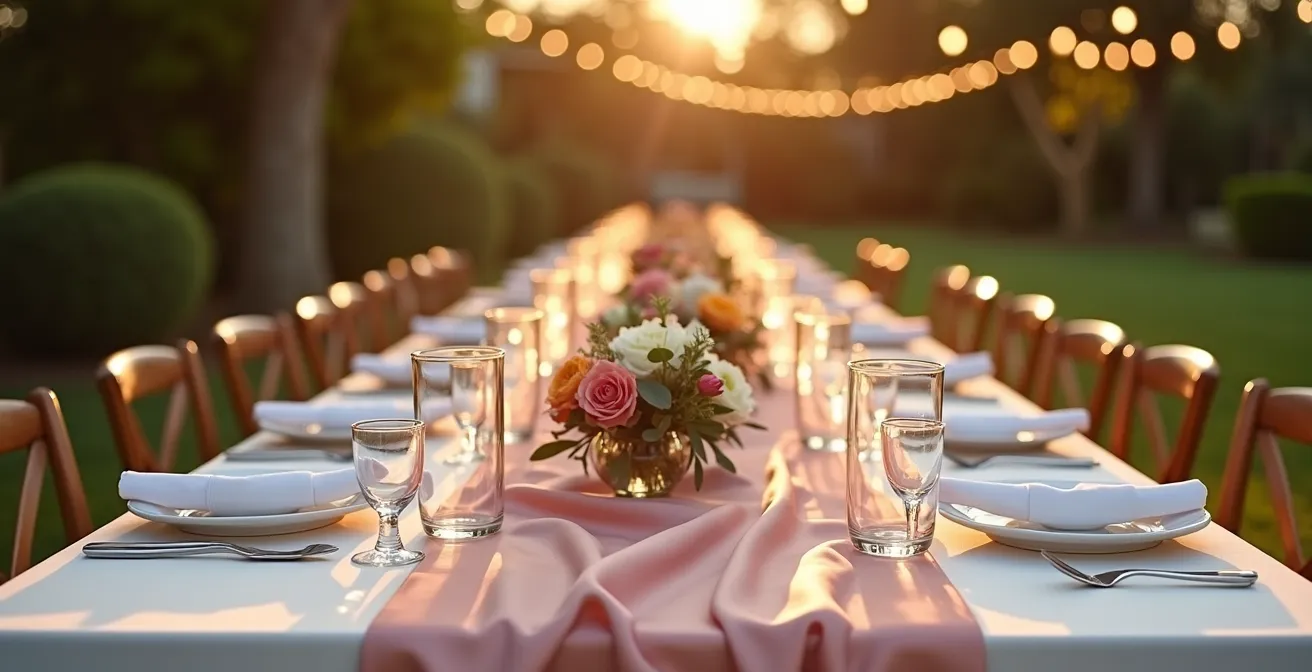
As illustrated above, one of the most effective methods is to use the weight of your centerpieces. Low, heavy floral arrangements or clusters of hurricane lanterns with candles can be placed strategically along the runner to hold it in place. Instead of stretching the runner taut, allow it to pool and drape elegantly around the base of these heavy objects. This creates a romantic, “puddled” look while ensuring the fabric remains secure. The natural movement of a bias-cut silk ribbon can also be a guide here; its tendency to twist and drape can be mimicked with a larger runner for a cohesive look.
Other professional techniques for securing light fabrics include:
- Table Clips: Discreet, clear clips can be attached under the lip of the table to hold the ends of the runner, though this works best for less windy conditions.
- Decorative Weights: Small, elegant weights designed for tablecloths (often in crystal or polished stone) can be clipped to the ends of the runner hanging off the table.
- Intertwining with Greenery: A light garland of eucalyptus or other greenery can be woven over the runner, adding both weight and a layer of textural interest.
By planning for the wind and incorporating your anchors into the overall design, you can maintain that light, airy silk aesthetic without compromising the functionality and safety of your tablescape.
Which fabric holds a fold better for that “puddled” look on the floor?
The “puddled” or “pooled” look, where fabric is gathered luxuriously on the floor at the base of a table or altar, is a hallmark of high-end event design. It communicates opulence and a sense of abundance. However, not all fabrics can achieve this effect. The ability to hold a soft, sculptural fold depends almost entirely on two factors: the fabric’s weight and its cut. A fabric that is too light will look flimsy and flat, while one that is too stiff will create harsh, unnatural angles.
For the ideal puddle effect, the key is to use a silk with sufficient weight, or “momme.” Momme is a unit of weight used for silk, and a higher number indicates a denser, more substantial fabric. While light silks like chiffon are beautiful for airy drapes, they lack the body to puddle effectively. According to fabric experts, 22+ momme silk charmeuse creates the ideal puddle effect. This heavier weight allows the fabric to settle into deep, soft folds that hold their shape and catch the light beautifully, creating the desired look of liquid elegance.
The cut of the fabric also plays a crucial role. As noted by the experts at Of The Earth Seattle Studio, the way a fabric is cut from the bolt influences its drape.
Bias cut ribbon gives dramatic drape. Because of the bias cut, there is a seam every two yards in the continuous spool and the raw unfinished edges will naturally soften with wear.
– Of The Earth Seattle Studio, Earth Silk Professional Guidelines
This principle applies to larger pieces of fabric as well. A bias-cut piece of heavy silk charmeuse will have a natural fluidity and stretch that allows it to be sculpted into a perfect puddle, far more effectively than a fabric cut straight on the grain. Therefore, achieving this specific look requires technical knowledge: specifying not just the fabric type (silk charmeuse), but also its minimum weight (22+ momme) and ideally its cut.
Is renting velvet worth 3x the price of polyester for the guest experience?
When budgeting for linens, the price difference between premium materials like velvet and budget options like polyester can be stark. It’s easy to see the higher cost of velvet as an extravagance, but framing it this way ignores its profound impact on the overall guest experience. The value of velvet goes far beyond its visual appeal; it engages multiple senses and fundamentally alters the atmosphere of a space in ways that a flat, synthetic fabric cannot.
The choice of fabric is a powerful tool for creating a specific mood. As the tastemakers at Silk & Willow, with over a decade of experience, note, premium textiles transform ordinary wedding elements into extraordinary, memorable tactile experiences. This is where velvet truly shines. Its plush, deep pile does more than just look luxurious. It absorbs light, creating rich, saturated colors that appear stunning in photos, whereas the synthetic sheen of polyester can look cheap under flash photography. This light absorption contributes to a more intimate and visually warm environment.
Furthermore, velvet has a tangible effect on the room’s acoustics. The thick pile helps to absorb sound, reducing the clatter of cutlery and plates and softening ambient chatter. This creates a more intimate and conversation-friendly atmosphere. The most direct impact, however, is tactile. The moment a guest sits at a table draped in velvet or rests their arm on a velvet-covered lounge chair, they receive a sensory cue of quality and comfort. This luxurious feel is an immediate and powerful signal of high-end hospitality. The table below outlines the distinct differences in impact.
| Aspect | Velvet (Premium) | Polyester (Budget) | Guest Impact |
|---|---|---|---|
| Light Absorption | Deep pile creates rich, saturated colors | Synthetic sheen can appear cheap | Instagram-worthy photos |
| Acoustic Properties | Absorbs sound, reduces clatter | No sound absorption | More intimate atmosphere |
| Tactile Experience | Plush, luxurious feel | Basic synthetic texture | Memorable sensory experience |
| Perceived Value | Reads as high-end immediately | Obviously budget-conscious | Elevates overall event perception |
This comparative analysis shows that while velvet costs more, it delivers a multi-sensory return on investment that elevates the entire event, making it a worthwhile consideration for a truly luxury-focused wedding.
Key Takeaways
- Mastering luxury fabrics requires understanding their specific properties, like how a 22+ momme silk charmeuse is needed for a “puddled” look.
- Prevention and professional handling are key; a steamer is safer than an iron for silk, and water spots require expert removal.
- The value of a fabric is not just its price but its impact on the guest experience, from the tactile feel of velvet to its acoustic-dampening properties.
How to Use Velvet Decor in Summer Without It Feeling Heavy or Hot?
Velvet is traditionally associated with autumn and winter weddings, its plush texture and deep tones evoking warmth and coziness. This has led to a common misconception that it is too heavy or hot for a summer celebration. However, a skilled designer knows that any material can be adapted for any season with the right strategy. Using velvet in summer is a mark of true design confidence, creating an unexpected layer of texture and luxury without overwhelming the senses.
The secret to successful seasonal adaptation lies in two key areas: color palette and application scale. Instead of the typical jewel tones of winter (burgundy, emerald, navy), opt for a lighter, more summery velvet palette. Colors like dusty rose, sage green, French blue, or even a surprising marigold feel fresh and appropriate for the season. These softer hues retain the luxurious texture of velvet while reflecting more light, making them feel less visually heavy.
Equally important is the scale of application. A full velvet tablecloth in July would indeed feel oppressive. Instead, use velvet as a carefully placed accent to create textural contrast with lighter, airier fabrics like silk or linen. This “less is more” approach ensures the velvet adds a touch of opulence without dominating the decor. Effective strategies include:
- Using velvet as accent ribbons on napkins or bouquets, in narrower widths of 1-2 inches.
- Applying it to small, contained touchpoints, like cushion covers in a lounge area.
- Using it as a table runner on a bare wood table, allowing the natural material to balance the richness of the velvet.
- Mixing it with breezy silk fabrics to create a dynamic interplay of textures.
By thoughtfully selecting your colors and using velvet sparingly as a high-impact accent, you can defy seasonal expectations and incorporate its unique luxury into a summer wedding in a way that feels both sophisticated and surprisingly light.
By moving beyond inspiration and embracing the technical craft of using luxury textiles, your wedding decor can achieve a level of sophistication that is both visually stunning and deeply felt. True elegance lies not in the materials themselves, but in the precision and care with which they are handled. To bring this level of execution to your own event, the next logical step is to consult with a design professional who understands these nuances.