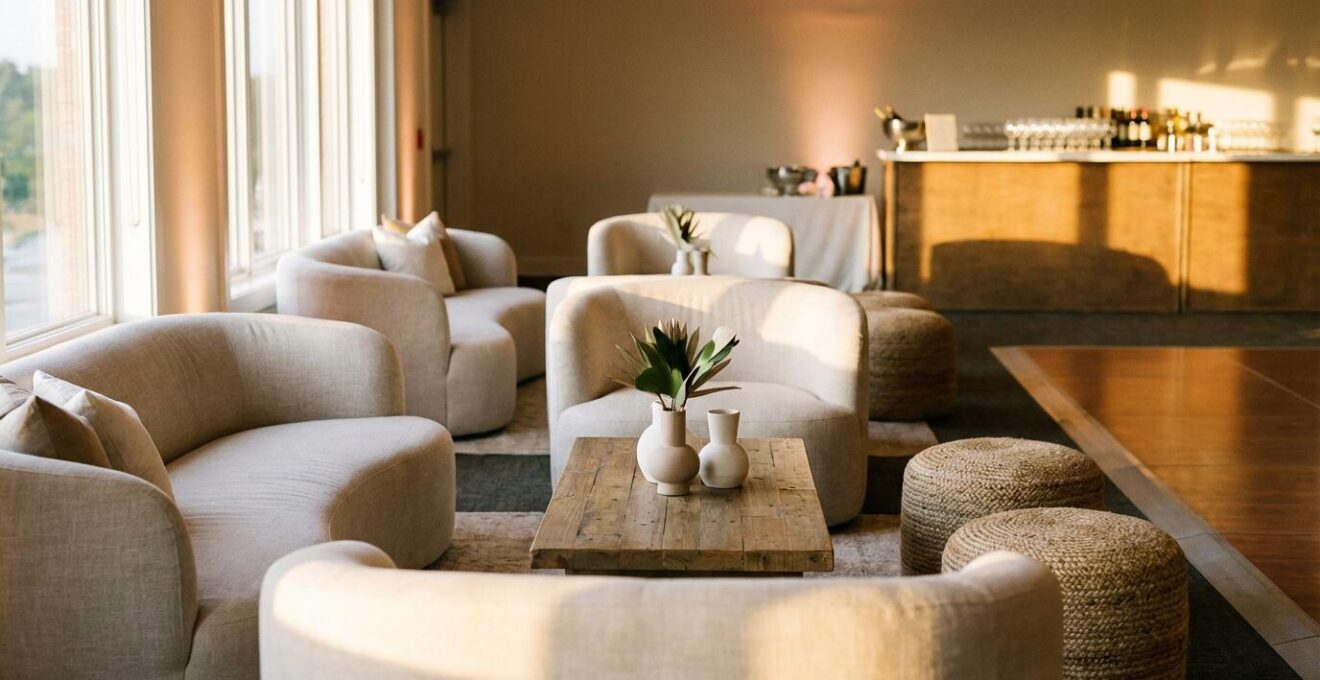
That beautiful, expensive lounge corner often sits empty because it’s treated like decoration, not a strategic social hub. Its failure isn’t about the style of the sofa, but its placement. By understanding the invisible forces of social gravity—positioning it within a 15-second walk of the bar and in the sightline of the dance floor—you transform a costly prop into the most magnetic spot at your reception, guaranteeing a return on your investment through guest experience.
You’ve seen the photos: a stunning velvet sofa, artfully arranged pillows, and a vintage rug creating a perfect, cozy nook at a wedding reception. You’ve budgeted for it, imagining your guests relaxing, laughing, and clinking glasses in this chic space. But a nagging fear persists, one that plagues many couples investing in high-end rentals: what if nobody uses it? What if that $500 sofa becomes the most expensive, loneliest piece of furniture at your party, a beautiful but empty stage?
The common advice focuses on aesthetics—matching your theme, adding throws, and creating a “vibe.” But this misses the fundamental point. The success or failure of a lounge area is not a design problem; it’s a social dynamics problem. Guests don’t flock to a space just because it’s pretty. They are drawn by invisible currents of energy, proximity to social anchors like the bar, and a layout that feels inviting rather than isolating. The key isn’t just to make it look good, but to understand the psychology of how people move and congregate in a celebration environment.
This guide moves beyond generic decorating tips. We will deconstruct the science of guest flow and social gravity to ensure your lounge becomes a vibrant hub of interaction, not an awkward, empty corner. By applying principles of strategic placement, calculating the right amount of seating, and avoiding critical layout errors, you can guarantee your investment enhances the guest experience and keeps the energy flowing all night long.
This article provides a complete roadmap, from initial placement to late-night adjustments. Discover the rules of proximity, the formulas for guest capacity, and the simple tests that ensure your furniture is both beautiful and functional, turning your fear of an empty lounge into the certainty of a successful social centerpiece.
Summary: The Definitive Guide to a Functional Wedding Lounge
- Why placing the lounge too far from the bar guarantees it stays empty?
- Sofa rentals: are they worth the $500 cost for a 5-hour event?
- How many soft seating spots do you really need for 100 guests?
- The 10-20% rule: exactly how many lounge seats you need for 150 people?
- The layout error that turns a lounge area into a waiter’s obstacle course
- When to move the furniture closer to the dance floor for late-night energy?
- The pantyhose test: checking vintage rattan before guests sit down
- How to Use Lounge Seating to Direct Traffic Flow at Your Reception?
Why placing the lounge too far from the bar guarantees it stays empty?
The single biggest mistake in wedding layout design is treating the lounge as an afterthought, tucking it away in a distant corner for the sake of “quiet.” In reality, a lounge’s success is governed by a powerful, invisible force: social gravity. The bar and the dance floor are the two suns of your reception’s solar system; guests naturally orbit them. Placing your lounge outside this gravitational pull sentences it to isolation. Wedding planner Troy Francis confirms this, stating that successful lounges must be ‘within arm’s reach of the reception’ to feel connected. It’s about creating a space that offers a break from the action without demanding a total departure from it.
This paragraph introduces a complex concept. To better understand it, it is useful to visualize its main components. The illustration below breaks down this process.
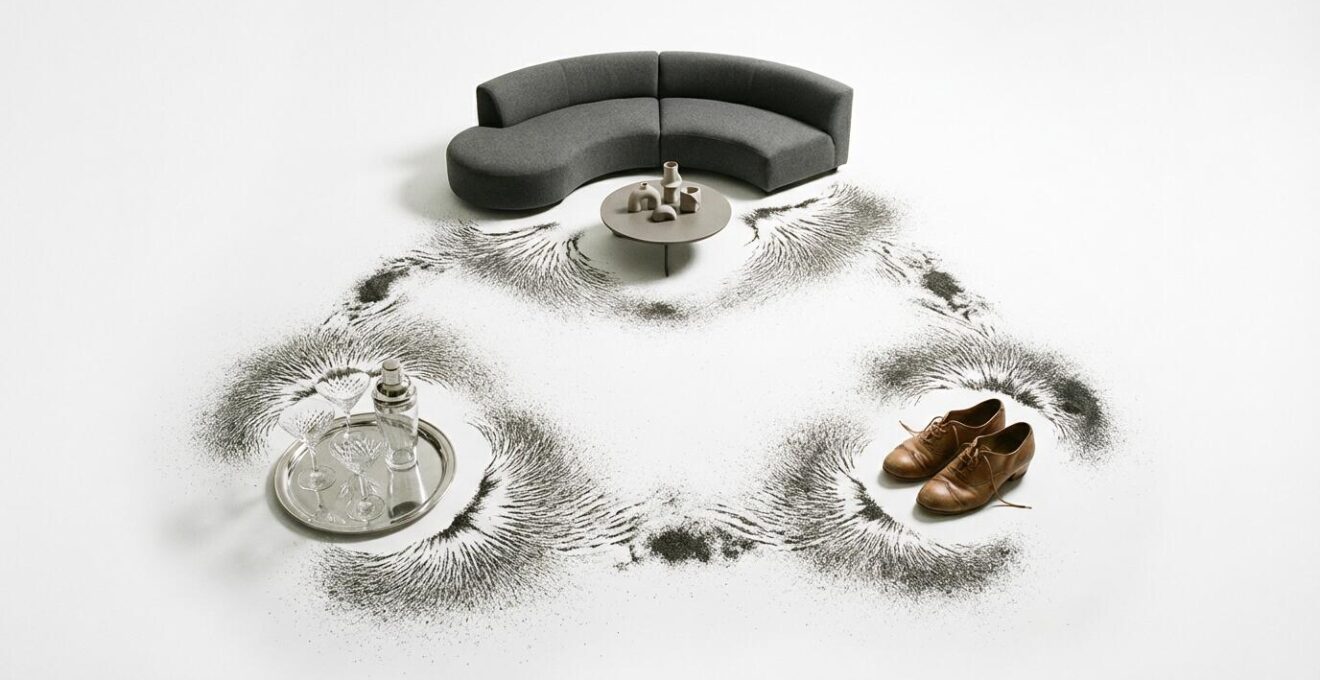
As the diagram shows, the ideal setup forms a triangle of energy. The lounge should maintain a clear visual connection to both the bar and the edge of the dance floor. This abides by the Proximity Principle: the lounge’s value is directly inverse to the effort required to get to it. A simple rule to follow is the 15-second walk rule. During your venue walkthrough, time the walk from your proposed lounge spot to the bar. If it takes longer than 15-20 seconds, it’s too far. This small distance is the psychological threshold that determines whether a guest will grab a drink and relax on the sofa or simply stay standing by the bar.
Sofa rentals: are they worth the $500 cost for a 5-hour event?
The price tag on lounge furniture can be daunting. When you see a beautiful sofa with a $500 rental fee for a five-hour event, it’s natural to question the value. After all, with sofas and lounge furniture ranging from $75 to $1000 each, this is a significant line item. To answer this question, you need to stop thinking about it as a simple cost and start evaluating it in terms of Return on Experience (ROX). The true measure of its worth is not its price, but the value it delivers per guest, per hour. An unused sofa has an infinitely high cost per use, while a popular one provides incredible value by enhancing guest comfort and interaction.
A cost analysis helps put this into perspective. A single, high-end sofa might seem extravagant, but a well-curated package of mixed seating can often provide a much better return. By offering a variety of seating, you cater to different group sizes and comfort preferences, maximizing usage throughout the event.
The following table, based on typical rental pricing, breaks down the “Cost per Guest Comfort Hour” to help you analyze your options not just on price, but on value.
| Furniture Option | Rental Cost | Seats | Cost per Guest (5hr event) |
|---|---|---|---|
| Premium Sofa | $500 | 3-4 guests | $25-33/guest/hour |
| Two Armchairs | $200 | 2 guests | $20/guest/hour |
| Poufs & Floor Cushions | $150 | 4-6 guests | $5-7.50/guest/hour |
| Mixed Lounge Package | $400 | 6-8 guests | $10-13/guest/hour |
As the data shows, a mixed lounge package offers a significantly lower cost per guest hour. This approach allows you to create a larger, more versatile, and more inviting space for less than the cost of a single statement piece. The goal is to provide comfort and encourage interaction, and a mix of sofas, armchairs, and poufs is far more effective at achieving this than one isolated sofa, ensuring your investment pays dividends in guest experience.
How many soft seating spots do you really need for 100 guests?
Once you’ve decided a lounge is worth it, the next question is one of scale. How much is enough? How much is too much? The fear of an empty lounge is matched only by the fear of a cramped one. The key is to remember that not all guests will use the lounge simultaneously. During a reception, people are constantly moving between the bar, the dance floor, and their dinner tables. For this reason, industry experts recommend providing lounge seating for 10-15% of your guest list. For a wedding with 100 guests, this means you only need to plan for 10 to 15 soft seating spots. This is a crucial guideline that prevents overspending and ensures the area feels populated and vibrant, rather than sparse and empty.
However, this simple percentage is just the starting point. A more sophisticated approach, fitting for a social dynamics expert, involves planning based on guest personas. Not everyone interacts with a lounge in the same way. An older relative seeking a quiet chat has different needs from a group of friends taking a break from dancing. A successful layout accounts for these different behaviors with a varied seating inventory. The ideal mix is about one-third anchor pieces (like a sofa), one-third flexible seating (like armchairs), and one-third easily movable seats (like poufs and ottomans). This creates a dynamic space that can be adapted by the guests themselves.
Your Seating Calculation Checklist: A Persona-Based Approach
- Start with assigned dinner tables for no more than 60% of your total guest count to encourage movement.
- Add at least one dedicated lounge seat for each elderly guest or known “comfort-seeker.”
- Factor in 0.25 lounge seats per “social butterfly” guest who is likely to float between groups.
- Integrate a mix of high-top tables for standing, bar stools, and lounge vignettes to create varied social zones.
- Aim for a 75% occupancy appearance at peak times; a few empty spots make the area look approachable, not deserted.
This method ensures you’re not just providing seats, but engineering a space that actively caters to the social dynamics of your specific guest list, making the lounge both efficient and effective.
The 10-20% rule: exactly how many lounge seats you need for 150 people?
As your guest list grows, the seating calculation becomes even more critical. For a wedding of 150 guests, applying the standard 10-15% rule means you should aim for 15 to 23 lounge seats. Some experts even suggest stretching this to 20% if your crowd includes a significant number of non-dancers or if the reception is particularly long. This creates a comfortable buffer and ensures the lounge can serve as a primary social hub. The logic remains the same: the odds of every guest being seated at once are extremely low. A dynamic event thrives on movement, and your seating plan should facilitate this, not hinder it.
To achieve this, event planners often use a zone-based approach. The entire reception space is not just one large area, but a collection of distinct environments. For optimal flow, event planning experts recommend a split of 60% sit-down tables and 40% alternative spaces, which include the bar area, high-top tables, and, of course, the lounge vignettes. This 60/40 split is a powerful tool. It intentionally leaves a portion of guests without a designated dinner seat at any given moment, which actively encourages mingling, exploring, and utilizing the alternative spaces you’ve so carefully designed.
For 150 guests, this means planning for around 90 traditional seats and dedicating the rest of your space and budget to these dynamic zones. A case study on modular seating for a 150-guest wedding highlights the success of this approach. By providing 15-23 lounge spots through a mix of sofas, chairs, and ottomans, the couple created a popular, fluid area that was consistently used without ever feeling overcrowded. This proves that a well-calculated lounge is not just “extra” seating; it’s an essential component of a modern, socially-engineered reception layout.
The layout error that turns a lounge area into a waiter’s obstacle course
A perfectly placed, beautifully styled lounge can be instantly ruined by one critical oversight: service flow. If your layout forces waiters to weave through a maze of furniture to serve drinks or clear plates, you haven’t created a relaxation zone—you’ve created an obstacle course. This not only frustrates the staff but also disrupts the very comfort you’re trying to provide for your guests. As event floor plan experts note, your layout must facilitate easy movement for staff to work efficiently. Before finalizing any arrangement, it’s crucial to consult your venue’s banquet manager to ensure the plan supports, rather than hinders, a smooth service.
This server is able to move with ease, a clear sign of a well-planned layout that respects service pathways.

The solution lies in respecting invisible but non-negotiable clearance zones. These are the pathways staff need to perform their duties. Blocking them with a poorly placed sofa or coffee table is a rookie mistake. A lounge that feels “trapped” or is difficult to navigate will be subconsciously avoided by guests and actively cursed by servers. Providing multiple, clear entry and exit points is just as important as the furniture itself.
To avoid this common pitfall, adhere to these industry-standard minimum clearances. This data provides a clear cheat sheet for designing a functional, service-friendly lounge.
| Space Type | Minimum Clearance | Purpose |
|---|---|---|
| Behind Sofa (Main Path) | 36 inches / 90 cm | Primary service route |
| Between Coffee Table & Sofa | 18 inches / 45 cm | Guest legroom |
| Side Passages | 24 inches / 60 cm | Secondary circulation |
| Emergency Exits | 48 inches / 120 cm | Safety compliance |
| Bar Access Routes | 42 inches / 105 cm | High traffic zones |
These numbers aren’t suggestions; they are the blueprint for a functional space. A 36-inch path behind a sofa allows a server with a tray to pass comfortably. An 18-inch gap between the sofa and coffee table is essential for guest legroom. Respecting these measurements ensures your lounge is a haven of relaxation, not a source of congestion.
When to move the furniture closer to the dance floor for late-night energy?
A truly expert lounge strategy embraces the concept of Dynamic Zoning. The function of your lounge area should not be static; it should evolve with the energy of the reception. What serves as a quiet conversation hub during cocktail hour can be transformed into a high-energy annex for the dance floor later in the evening. This planned transformation keeps the lounge relevant and utilized from the first drink to the last dance.
Seat high-energy groups near the music and dance floor so they can jump up and celebrate. Place older guests or those who prefer quiet conversation in calmer areas of the room. This thoughtful approach balances excitement and comfort.
– Rural Hill Farm Wedding Planning Team, 5 Wedding Seating Chart Tips
This expert advice from the Rural Hill Farm team perfectly captures the essence of thoughtful zoning. The key is a phased approach. During cocktail hour and dinner, position the lounge as a comfortable retreat, close enough to the action but buffered from the noise. However, once the party is in full swing (typically around 10 PM), it’s time to execute a pre-planned shift. Assign a “Lounge Master”—a coordinator or trusted groomsman—to lead the charge.
The process is simple but impactful. Start by moving the lighter, more modular pieces like poufs, ottomans, and even some armchairs to the edge of the dance floor. This does two things: it creates a new, soft perimeter for the dance floor, making it feel more inclusive for those taking a break, and it brings the energy of the lounge directly into the heart of the party. This strategic migration ensures that even as the night winds down for some, the lounge remains a central, vibrant part of the celebration for others, maximizing its utility to the very end.
Key takeaways
- The success of a lounge is about social dynamics, not just aesthetics. Place it within a 15-second walk of the bar.
- Calculate the Return on Experience (ROX). Aim for a low cost-per-guest-hour, often achieved with mixed seating packages.
- Follow the 10-20% rule: provide soft seating for 10-20% of your guest list (e.g., 15-23 seats for 150 guests).
The pantyhose test: checking vintage rattan before guests sit down
You’ve chosen the perfect vintage rattan chairs to complement your boho-chic theme. They look incredible, but there’s a hidden danger with vintage or heavily used rental furniture: wear and tear. A single splintered edge on a rattan chair or a loose spring in a velvet couch can snag a guest’s expensive outfit, cause discomfort, or even collapse. A beautiful lounge is useless if guests are afraid to sit in it. This is why a hands-on, pre-event furniture audit is not just recommended; it’s essential for protecting both your guests and your investment.
A close inspection of the material’s texture can reveal potential issues before they become a problem for your guests.

The most famous technique for this is the Pantyhose Test. Simply run a pair of pantyhose over all wooden and rattan surfaces. If it snags, you’ve found a potential hazard that could ruin a guest’s attire. This simple test is part of a larger “5-Sense Audit” you should perform on every piece of rental furniture upon its arrival. Check for stability with the “Wobble Test” on the actual venue floor. Use the “White Glove Test” to check for hidden dust on upholstery. Trust your nose with the “Musty-Smell Test” on vintage fabrics. This rigorous quality control ensures the furniture is not just visually appealing but genuinely comfortable and safe.
What if a piece fails the audit? This is where smart rental choices pay off. Opting for combinable separates allows you to mix and match pieces, making it easy to swap out a faulty item without disrupting your entire design. Always have an emergency fix-it kit on hand with felt pads for wobbly legs, double-sided tape for loose trim, and stylish throws to cover any last-minute stains or imperfections. This proactive approach ensures your lounge is a sanctuary of comfort, not a liability.
How to Use Lounge Seating to Direct Traffic Flow at Your Reception?
By now, it’s clear that a lounge is more than just seating. When used correctly, it is one of the most powerful tools at your disposal for directing guest flow and shaping the social experience of your reception. Strategic placement doesn’t just invite guests to sit; it tells them where to go, how to move, and where to congregate. By creating “zones” within your venue—a welcoming bar, a cozy lounge, a high-energy dance floor—you naturally guide guests’ movement and improve the overall aesthetic and experience. It’s about designing a journey, not just a room.
One of the most effective techniques is to use furniture to create “soft walls.” The back of a sofa, for example, can act as a subtle barrier, creating an intimate conversation zone without completely blocking sightlines to the rest of the party. In large, open-plan venues, a distinct lounge area can serve as a crucial visual landmark, helping guests orient themselves. Arranging furniture in a circular or semi-circular pattern creates natural “eddies” off the main traffic arteries, giving guests a place to pause and interact without causing bottlenecks. As one expert notes, a comfy lounge area gives non-dancing guests options to gather with others, preventing them from feeling stranded at their dinner tables.
To fully leverage your lounge as a traffic director, follow these advanced layout principles:
- Use Sofa Backs as Dividers: Position sofas perpendicular to main pathways to guide movement around them, creating distinct zones.
- Create Multiple Entry Points: Ensure every lounge vignette has at least two clear entry/exit points to prevent guests from feeling “trapped.”
- Establish Visual Anchors: In a large space, use a tall plant or a unique lamp within the lounge setup to make it a visible landmark from across the room.
- Think in Curves: Use curved sofas or arrange armchairs in an arc to create a more welcoming and organic “pocket” of space that naturally draws people in.
By applying these principles, your lounge seating transforms from passive furniture into an active director of your event’s social choreography, ensuring a smooth, engaging, and memorable experience for every single guest.
Now that you understand the principles of social dynamics that make a lounge successful, the next step is to apply them to your own floor plan. Start sketching out your layout with the bar and dance floor as your anchors, and design a lounge that bridges the two, ensuring your investment results in a vibrant, well-loved social hub for all your guests.