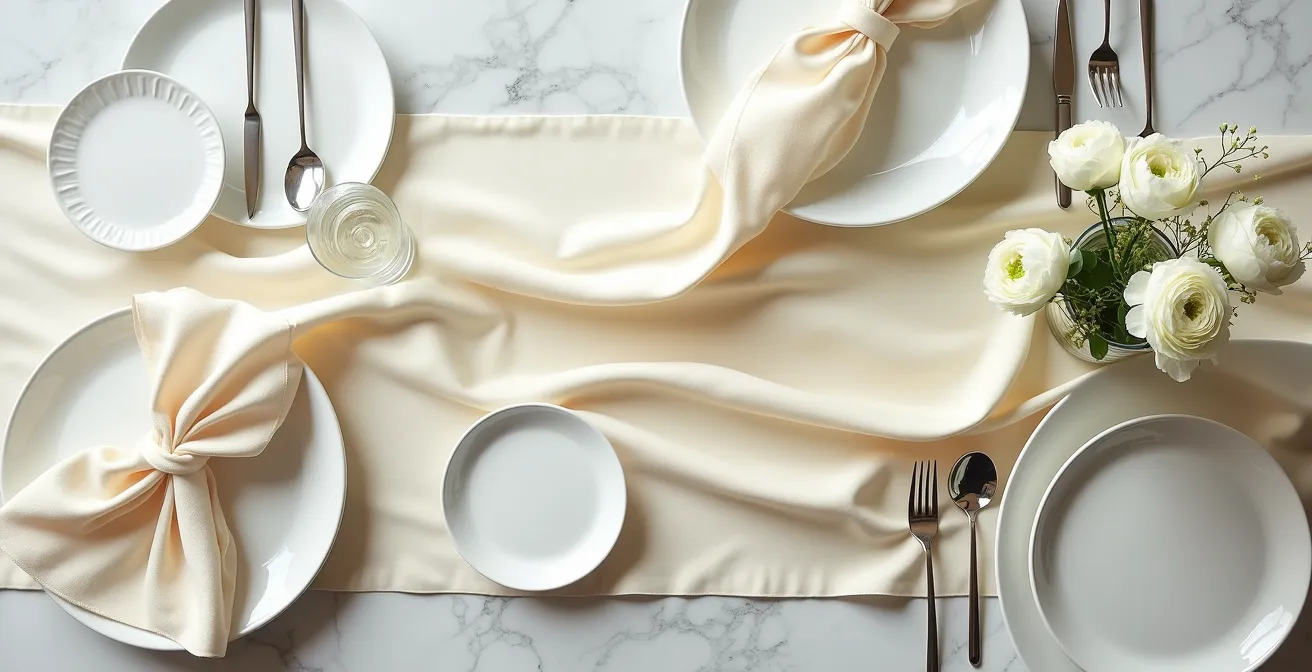
The secret to a dynamic monochromatic wedding isn’t the color itself, but how you sculpt light using varied materials and tones.
- Combining textures like matte, silk, and velvet manipulates light to create natural shadows and highlights.
- Strategic lighting and subtle tonal shifts (the ombré effect) prevent visual washout and add emotional warmth.
Recommendation: Stop thinking about color and start thinking about materiality. Before finalizing any decor, test fabric and floral samples under your venue’s actual lighting conditions to see how they truly interact.
For modern couples, the allure of a monochromatic wedding palette—an elegant “all-white” affair or a romantic “all-blush” dreamscape—is undeniable. It promises sophistication, cohesion, and a clean aesthetic. Yet, a nagging fear often accompanies this vision: the risk of creating a scene that is visually flat, uninspired, and ultimately, boring. The biggest challenge isn’t choosing the color; it’s preventing that single hue from washing out every detail, especially in photographs, resulting in a look that lacks the very depth and emotion you seek to create.
Many will suggest simple fixes like adding a pop of a different color or incorporating metallic accents. While these can work, they often dilute the purity of the monochromatic concept. The true mastery of a single-color theme doesn’t lie in breaking the rule, but in understanding how to bend it. It requires moving beyond color and into the realm of light, texture, and form. It’s about becoming a sculptor of light, using surfaces to create the interest that color variation typically provides.
The key is a shift in perspective. Instead of seeing a white tablecloth and a white flower as the same, a visual depth specialist sees two entirely different surfaces interacting with light. One diffuses it softly, while the other creates intricate micro-shadows within its petals. This article will guide you through this specialist approach. We will deconstruct how to layer textures, manipulate tones, and use lighting not just as illumination, but as a primary design tool to build a monochromatic wedding that is anything but one-dimensional.
This guide offers a complete framework for transforming a potentially flat palette into a rich, multi-dimensional experience. We will explore everything from the science of fabric finishes to the art of selecting textured florals, ensuring your day is remembered for its sophisticated depth.
Summary: A Deep Dive into Dynamic Monochromatic Wedding Design
- Why mixing velvet, silk, and matte finishes is crucial for single-color themes?
- The “Ombré Effect”: how slightly different tones prevent a visual washout
- Why all-white decor can make photos look blown out and how to fix it?
- Which white flowers have enough texture to stand out against white linens?
- How amber lighting changes the look of a blush monochromatic room?
- Why sticking to the “60-30-10” color rule prevents visual chaos?
- Amber vs. Smoke: using colored goblets to add depth to the palette
- How to Style a Modern Art-Inspired Wedding That Feels Warm and Welcoming?
Why mixing velvet, silk, and matte finishes is crucial for single-color themes?
The fundamental flaw in most monochromatic designs is treating all surfaces as equal. A single color can only achieve depth when it is applied across materials with different properties of light interaction. This is where the strategic mix of velvet, silk, and matte finishes becomes your most powerful tool. Think of it not as decorating, but as light sculpting. Matte surfaces, like linen tablecloths or uncoated paper, are the foundation of your design. They diffuse light, scattering it softly and evenly. This creates a calm, glare-free base that prevents the scene from feeling harsh and provides a perfect canvas for photography.
Next, you introduce silk or satin. These materials have a high sheen and act as reflectors. When light hits a silk ribbon or a satin bridesmaid dress, it bounces off, creating bright highlights. These points of reflection draw the eye and create a sense of vibrancy and luxury. They are the sparkle in your composition. Finally, velvet is introduced for its unique ability to absorb light. Its deep, plush pile creates rich shadows, adding a profound sense of depth and intimacy. A velvet lounge chair or ring box doesn’t reflect light; it swallows it, creating a point of deep, saturated color that grounds the entire palette.
By layering these three types of finishes, you create a full dynamic range within a single hue. You have soft, diffused light (matte), sharp, bright highlights (silk), and deep, rich shadows (velvet). This textural trio ensures that even in an all-white theme, the environment is filled with subtle visual variation. Your wedding no longer looks flat because it is actively playing with light from every angle, transforming a simple color choice into a sophisticated sensory experience.
The “Ombré Effect”: how slightly different tones prevent a visual washout
While texture provides micro-level depth, tonal variation creates macro-level flow and direction. The “Ombré Effect,” or a gradual gradient of color, is the perfect strategy to guide guests’ eyes and prevent a monochromatic scheme from feeling static. This technique involves using a spectrum of shades within the same color family, transitioning smoothly from dark to light. This isn’t about introducing new colors, but about exploring the full potential of your chosen one—from a deep burgundy to a soft blush, or from navy to powder blue.
This approach adds a layer of storytelling to your decor. As demonstrated in a recent wedding featuring a jade and blue ombré, the design can create a psychological journey. The couple used darker, more grounding tones at the venue’s entrance, which gradually lightened to ethereal, airy shades at the ceremony altar. This created an unconscious sense of movement and progression, focusing attention towards the most important part of the space. The gradient can be applied vertically, as on a floral arch to create a sense of height, or horizontally across a long head table to foster a feeling of connection.
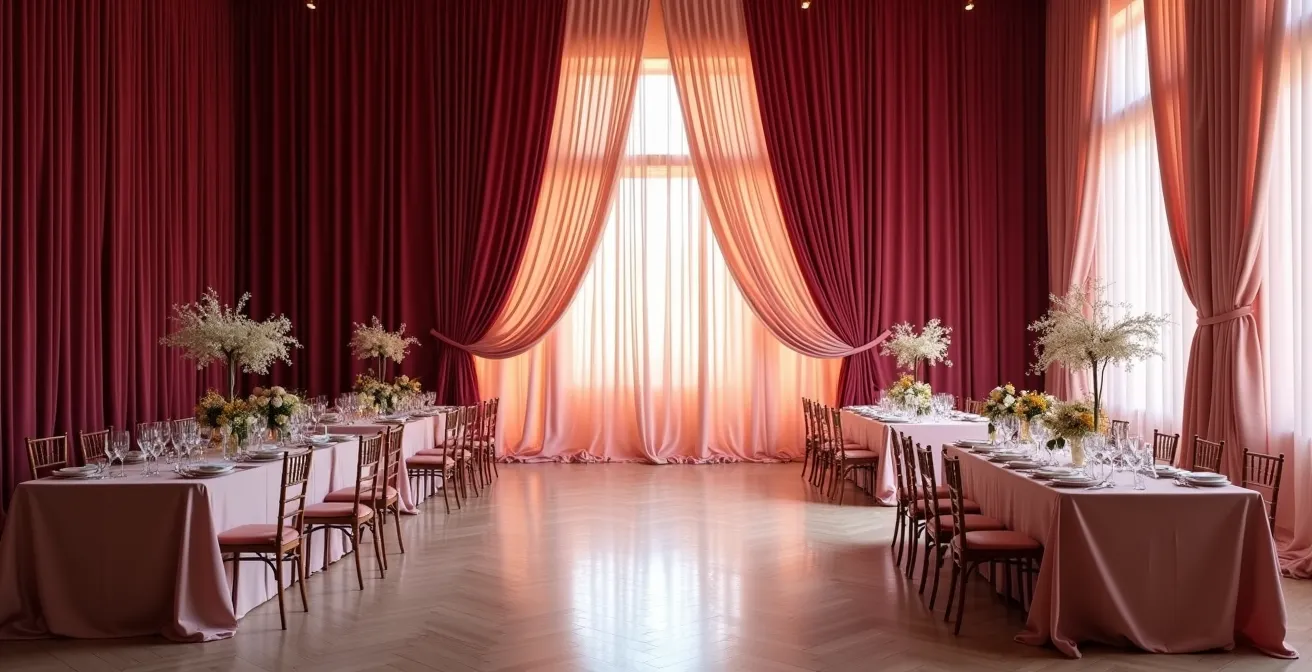
The key to a successful ombré effect is subtlety and intention. The transition between tones should be seamless, not jarring. This is often best achieved with elements that lend themselves to graduation, such as floral arrangements, stationery suites (from invitation to menu), or large-scale fabric installations. By embracing these tonal variances, you add a sophisticated, painterly quality to your wedding, ensuring the visual experience is fluid, dynamic, and far from a simple, flat washout.
Why all-white decor can make photos look blown out and how to fix it?
The classic all-white wedding is timeless, but it presents a significant technical challenge for photographers: managing high dynamic range. When a scene is dominated by highly reflective white surfaces, cameras can struggle to capture detail in both the brightest areas (the highlights) and the darkest areas (the shadows). This often results in “blown-out” highlights, where details in the wedding dress, white flowers, or cake icing are lost in a flat, overexposed mass of white. The romance is lost to a clinical glare.
The solution lies in breaking up the uniformity of the white with texture and softer tones. Instead of a stark, pure white, incorporate “non-white neutrals” like ivory, cream, and ecru. These shades reflect light more softly and have subtle undertones that the camera can easily distinguish, preserving detail. Furthermore, you must actively create shadows. This can be done by choosing venues with contrasting natural elements like exposed brick walls or dark wood floors, which provide a darker backdrop for your white elements to pop against. Transparent elements like ghost chairs or glass tables also help by creating negative space, allowing light to pass through rather than just reflecting off another white surface.
Most importantly, discuss lighting with your photographer. Professional photographers can use off-camera flash to create texture and dimension, sculpting shadows where they wouldn’t naturally occur. As the photography team at The Lodge at Bridal Creek notes in their guide to wedding photography trends, light is paramount. In their words:
Natural light creates a romantic and dreamy atmosphere in photos. Soft, natural light prevents harsh glares while creating beautiful, ethereal images that capture the enchanting beauty of your special day.
– The Lodge at Bridal Creek Photography Team, Top Trends in Wedding Photography for 2024
Scheduling portraits during the “golden hour,” when the sunlight is warm and soft, will also add natural color variation to white surfaces, bathing them in a beautiful, warm glow that is anything but flat.
Which white flowers have enough texture to stand out against white linens?
When placed against a white tablecloth, a simple white flower can visually disappear. To combat this, you must select florals based on their architectural form and textural qualities rather than just their color. A successful white-on-white floral arrangement is a study in shape and shadow. Certain flowers have an inherent structure and complexity that allows them to create their own depth, even in a monochromatic setting.
Think in categories of texture. For a modern, sculptural look, architectural flowers like Anthuriums and Calla Lilies offer smooth, heart-shaped, or trumpet-like forms that create clean lines and elegant silhouettes. For a softer, more romantic feel, ruffled flowers are essential. The multi-layered, voluminous petals of Ranunculus, Peonies, and Garden Roses are perfect for this, as each petal catches the light differently, creating a rich tapestry of soft shadows. To add a sense of movement and lightness, incorporate airy elements like Gypsophila (Baby’s Breath), Astilbe, or Sweet Peas, which provide a delicate, cloud-like filler that breaks up denser forms.
Don’t forget the power of foliage and other non-floral elements. Textured foliage like the silvery-toned Dusty Miller or the structural forms of bleached Ruscus and Pampas Grass can provide stunning contrast. The following table, based on expert advice from a comprehensive guide by Flower Moxie, categorizes these options to help you build a layered arrangement.
| Texture Category | Flower Types | Visual Impact | Best Use |
|---|---|---|---|
| Architectural | Anthuriums, Calla Lilies | Smooth, sculptural, heart-shaped | Modern focal points |
| Ruffled | Ranunculus, Peonies, Garden Roses | Multi-layered, soft, voluminous | Romantic centerpieces |
| Airy | Gypsophila, Astilbe, Sweet Peas | Delicate, cloud-like, movement | Filler and texture layers |
| Velvety | Certain Rose varieties, Gardenias | Dense petals, light-absorbing | Intimate bouquets |
| Textured Foliage | Dusty Miller, Bleached Ruscus, Pampas | Silver-toned, structural | Contrast elements |
By combining flowers from these different categories, you create a bouquet or centerpiece that is rich with detail. It becomes an intricate sculpture of light and shadow that will stand out beautifully against any white surface.
How amber lighting changes the look of a blush monochromatic room?
Lighting is not just for visibility; it is the single most transformative tool for manipulating color and mood in a monochromatic space. A static blush-pink room can be turned into a dynamic, evolving environment simply by changing the color temperature of the light. Amber lighting, which sits in the warm yellow-orange end of the spectrum (around 2700 Kelvin), has a particularly powerful effect on blush palettes.
When warm amber light washes over blush-colored surfaces—like draping, linens, or floral arrangements—it cancels out the cooler blue undertones in the pink. The result is a color shift towards warmer, richer hues like peach, coral, and soft terracotta. This creates an atmosphere that is instantly more intimate, romantic, and inviting. Instead of a single, flat pink, you now have a room filled with a warm, glowing spectrum of related tones. This “temporal color progression” can be used to guide the emotional arc of your event.
Case Study: Temporal Color Progression Through Lighting
A 2024 Richmond wedding, as highlighted by a leading wedding lighting company, showcased this masterfully. The event began with crisp, white LED light (5600K) for ceremony clarity. As guests transitioned to dinner, the lighting shifted to warm amber uplighting (2700K), transforming the blush decor into a cozy peach and coral ambiance. Finally, for the dancing portion, programmable LEDs introduced deeper rose and magenta hues, energizing the space. This demonstrated how lighting can make static decor feel alive and responsive to the event’s changing energy.
This level of control requires professional coordination and, most importantly, testing. You cannot predict exactly how a specific fabric or flower will react to colored light. A pre-wedding lighting test on-site with your material samples is non-negotiable for achieving a high-end look.
Your Action Plan: Professional Lighting Test Protocol
- Schedule an on-site lighting test 2-4 weeks before the wedding with your actual material samples (fabrics, flowers, stationery).
- Document the color shifts of your samples under different lighting: natural daylight, golden hour, and the planned evening uplighting.
- Work with your lighting technician to map out specific lighting zones: uplighting for architectural elements, pin-spotting for centerpieces, and gobo patterns for dance floors.
- Coordinate directly with your photographer on their preferred color temperatures for key moments like the first dance and cake cutting.
- Create a detailed lighting timeline that shows the planned color and intensity transitions between the ceremony, dinner, and dancing phases of the event.
Why sticking to the “60-30-10” color rule prevents visual chaos?
Even within a monochromatic scheme, a sense of balance and hierarchy is essential to guide the eye and prevent the design from feeling overwhelming or chaotic. The classic 60-30-10 rule, a principle borrowed from interior design, provides a simple yet powerful framework for achieving this balance. It dictates how you should distribute the different elements of your palette, whether they are different tones or, more importantly for this context, different textures.
Here’s how to apply it to a monochromatic wedding:
- 60% Main Tone/Texture: This is your dominant element, setting the overall mood. In a texture-based white palette, this would be your primary matte surfaces, such as the table linens, walls, and major draping. This foundational 60% should be the most visually restful component.
- 30% Secondary Shade/Texture: This is the accent that adds interest. It could be a slightly darker or lighter shade of your main color, or it could be your secondary texture, like silk or satin elements. Think of bridesmaid dresses, napkins, or chair sashes. This 30% is meant to create contrast and guide the eye.
- 10% Highlight: This is the “wow” factor. This small percentage is reserved for the most impactful elements, like a deep velvet texture, a metallic finish, or a bold architectural flower. These are your focal points: the head table decor, the cake accents, or statement jewelry.
This rule prevents any single element from overpowering the others. According to the design team at VistaPrint, this structure is key to a cohesive look, noting that the 60% sets the mood, the 30% adds interest, and the 10% provides the photogenic “wow” moments. By assigning your chosen textures and tones to these percentages, you create a visual rhythm that feels intentional, sophisticated, and perfectly balanced, even within the constraints of a single color.
Amber vs. Smoke: using colored goblets to add depth to the palette
The smallest details on a tablescape can have the biggest impact on depth, and nowhere is this truer than with glassware. Colored goblets are a sophisticated and relatively simple way to introduce layers of tone and light play into your monochromatic palette. The choice between transparent amber and opaque smoke goblets, however, creates two dramatically different effects.
Amber goblets are all about interacting with light and color. Because they are transparent, they create layered hues. When an amber goblet is placed on an ivory linen, the color you perceive is a soft, warm blend of the two. They act like a filter, transforming the drinks within them; water with a slice of lemon can catch the light with silvery reflections, while champagne or a rosé wine will glow with a warm, peachy light. Fluted, vintage-style amber goblets are particularly effective, as their facets catch and refract light, adding a brilliant sparkle to the table.
Case Study: Interactive Glassware Color Theory in Practice
A sophisticated monochromatic wedding, detailed by the team at byDesign Photo + Film, used a mix of glassware to create depth. Transparent amber goblets at the head table created beautiful layered colors against the linens, while opaque smoke goblets at guest tables served as solid, graphic anchors. The couple cleverly reserved the colored goblets for the champagne toast, creating a single, highly photogenic moment while managing rental costs—a brilliant strategy for maximizing impact on a budget.
Smoke goblets, on the other hand, are typically opaque or semi-opaque and serve a different purpose. They don’t layer color; they provide a solid block of it. A modern, stemless smoke gray goblet acts as a graphic anchor on a light-colored table. It absorbs light rather than refracting it, creating a moody, contemporary contrast. It’s a bold statement that adds a solid, grounding element to an otherwise airy tablescape. The choice between the two depends on your desired mood: amber for warm, layered sparkle, and smoke for cool, graphic modernity.
Key Takeaways
- Mastering a monochromatic palette is about sculpting light, not just picking a color.
- Combine light-diffusing (matte), light-reflecting (silk), and light-absorbing (velvet) textures to create inherent depth.
- Use strategic lighting (like amber uplighting) and subtle tonal shifts (ombré) to transform static decor into a dynamic experience.
How to Style a Modern Art-Inspired Wedding That Feels Warm and Welcoming?
Taking the monochromatic concept to its highest level involves drawing inspiration from modern art, where masters have long explored the power of a single color. An art-inspired wedding moves beyond simple decoration and into the realm of thoughtful composition, focusing on form, line, and texture. The challenge, however, is ensuring this minimalist, artistic approach still feels warm, personal, and welcoming to guests, rather than cold or sterile.
One of the most powerful examples is translating the “Outrenoir” (or “beyond black”) concept of French artist Pierre Soulages into an all-black wedding theme. The focus shifts entirely to how light interacts with different black textures: a glossy charger plate, a matte menu card, a grooved vase. The depth comes not from color, but from the interplay of reflection and absorption. To counter the potential coldness of such a stark palette, the key is to introduce organic materials and warm lighting. Raw wood tables, unglazed stone plates, and natural linen napkins provide a tactile, earthy warmth that balances the sleekness of the modern elements. Most importantly, an abundance of candlelight—hundreds of pillar candles and warm Edison bulbs—bathes the entire space in a soft, flickering glow that creates intimacy and life.
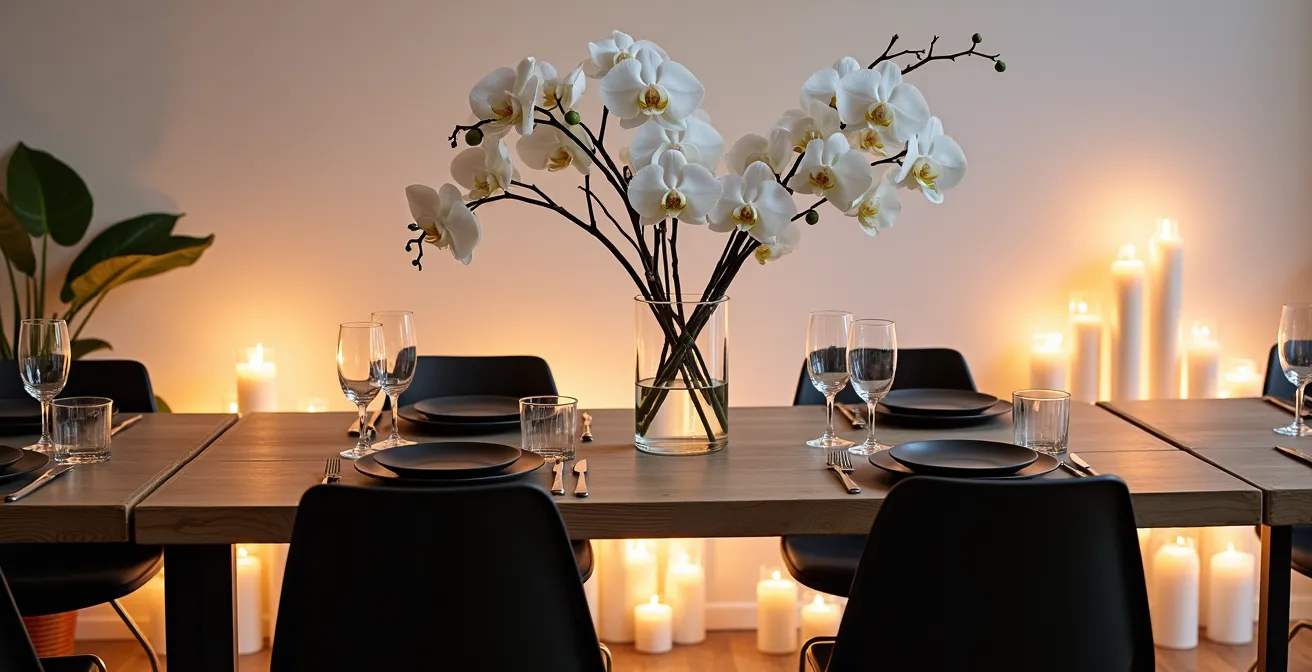
The “art” is further expressed through three-dimensional forms. Instead of traditional round bouquets, opt for asymmetrical, sculptural floral arrangements using flowers chosen for their unique shapes. The wedding cake can become a piece of edible architecture with sharp, geometric lines and unexpected angles. In this context, the venue itself—especially one with striking architectural features like a modern art gallery—becomes the main art piece. The decor should complement, not compete with, the space. This approach proves that minimalism doesn’t have to be cold. By masterfully balancing clean lines with organic textures and warm light, an art-inspired monochromatic wedding can be the ultimate expression of sophisticated, personal, and deeply welcoming design.
By shifting your focus from color to the interplay of texture, tone, and light, you unlock the true potential of a monochromatic theme. Your wedding becomes more than just a pretty picture; it becomes an immersive environment, rich with depth and feeling. The next step is to start gathering samples and seeing for yourself how these materials come to life under the light.