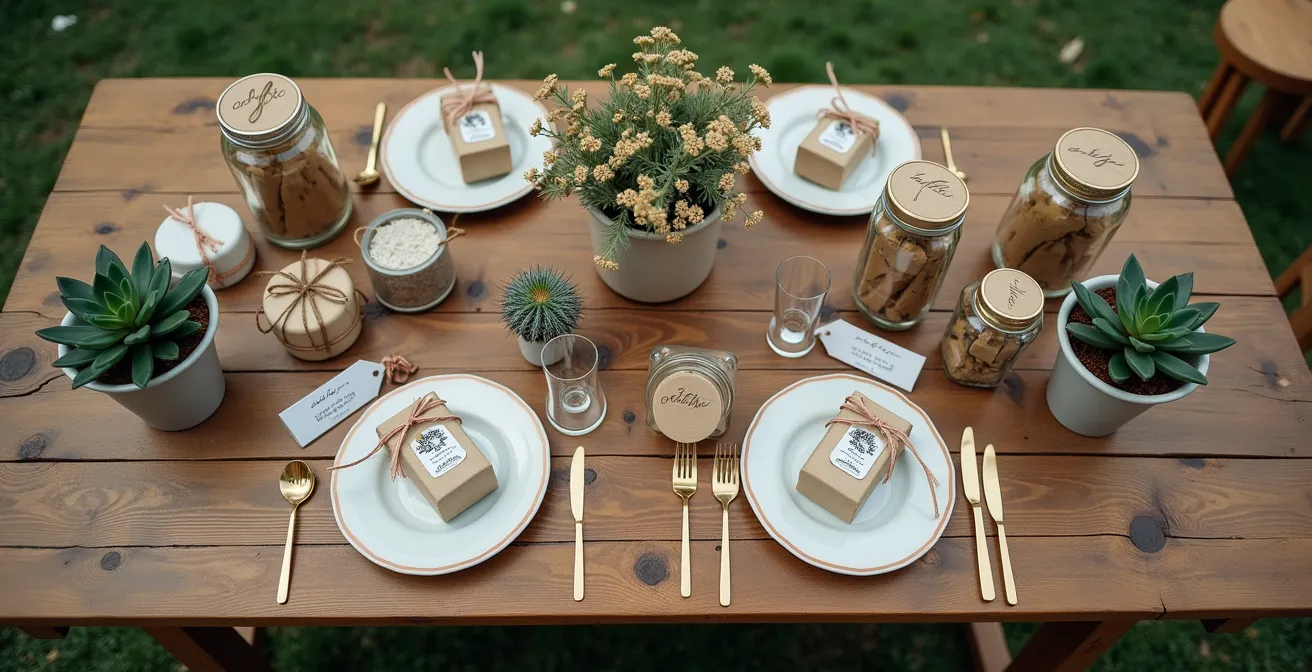
Contrary to popular belief, the key to a successful wedding favor isn’t slapping your names on it—it’s choosing something intentionally consumable or truly functional.
- Edible favors have the highest take-home rate because they don’t create long-term clutter for guests.
- Solving a guest’s immediate problem (like being cold or having sore feet) is more memorable than a personalized trinket.
Recommendation: Focus on the guest experience and the favor’s ‘disposability’ to ensure your gift is a cherished memory, not future landfill.
The scene is a familiar one: the wedding reception is over, the lights are coming up, and scattered across the beautiful tables are dozens of little boxes, bags, and trinkets. These are the wedding favors, chosen with care, but now destined for a junk drawer or, more likely, the venue’s trash can. For couples who are thoughtful about waste and budget, this is a painful sight. You want to thank your guests with a meaningful token of appreciation, but the thought of your money and effort being discarded is disheartening.
The conventional wisdom about favors often revolves around two ideas: make it “personal” by adding your names and wedding date, or choose something “useful” like a bottle opener or a keychain. But this approach is flawed. Over-personalization often renders an item useless to anyone but the couple, and one person’s “useful” is another’s clutter. The result is what we call favor friction—the subtle resistance a guest feels to taking something they know they won’t use.
But what if we reframed the entire concept? Instead of thinking about what gift you want to *give*, consider what experience you want to create and what problem you can solve for your guests. The secret to a successful favor lies not in its permanence, but in its intentional consumability. It’s about choosing something that will be happily eaten, used up, or will serve a direct purpose during the event itself, leaving behind only a fond memory. This guide will walk you through a new way of thinking about favors—one that respects your guests, your budget, and the planet.
This article provides a complete roadmap for selecting thoughtful favors. We will explore everything from the power of edible gifts to the practicalities of design, DIY projects, and venue rules, ensuring your gesture of thanks is both appreciated and responsible.
Summary: How to Choose Personalized Favors That Don’t End Up in the Trash?
- Why food is the only favor with a 90% take-home rate?
- On the plate vs. Above the fork: where does the favor look best?
- Stickers vs. Engraving: is it worth paying $2 extra for a name?
- What to do with 50 leftover personalized jars at 2 AM?
- The 10-hour weekend: realizing how long it takes to tie 150 bows
- How to design a wedding crest that works on napkins and dance floors?
- Biodegradable rules: ensuring your venue doesn’t charge a cleaning fee
- How to Use Design to Solve Guest Frustrations Before They Happen?
Why food is the only favor with a 90% take-home rate?
The single most effective way to ensure your wedding favor isn’t left behind is to make it edible. Unlike a personalized trinket that creates an obligation for the guest, a delicious treat is a moment of pure, guilt-free enjoyment. It’s a gift that asks for nothing in return and creates zero long-term clutter. This principle of intentional consumability is why take-home rates for food and drink favors far exceed any other category. Whether it’s a bag of custom-blend coffee, a small jar of local honey, or a late-night snack for the ride home, the gift is experienced and then vanishes, leaving only a positive association.
The cost doesn’t have to be prohibitive. While every budget is different, a recent analysis shows that most couples spend around $2 to $3 per guest on favors, a price point that easily accommodates high-quality edible options. The key is to choose something that reflects you as a couple. For her 2014 wedding, Lauren Conrad famously gave out 50 homemade apple pies, a nod to her favorite dessert. This gesture was deeply personal yet universally appealing, a perfect blend of sentiment and practicality. Your choice could be a small bag of your favorite popcorn, a cookie from the bakery where you had your first date, or a spice blend you both love to cook with.
However, choosing an edible favor requires logistical planning. You must consider:
- Venue Policies: Check with your venue about their rules for outside food, especially regarding temperature control and licensed vendors.
- Allergies: It’s wise to clearly label ingredients or offer an alternative for common allergies like nuts, dairy, or gluten.
- Timing: Decide if the favor is for immediate consumption (like a hot pretzel at the end of the night) or a take-home item (like jam or olive oil).
- Distribution: Will they be at each place setting, on a dedicated “favor bar,” or handed out as guests depart? Each choice impacts the guest experience.
On the plate vs. Above the fork: where does the favor look best?
Once you’ve chosen the perfect favor, its placement becomes a critical part of your table design and guest experience. The location of the favor directly influences its visibility and how likely it is to be taken home. Placing a small, beautifully wrapped item at each setting adds an immediate “wow” factor as guests find their seats. It acts as a deliberate part of the tablescape, a personal welcome before the meal even begins. The best spot is often just above the fork or on the charger plate, where it commands attention without interfering with the glassware or cutlery.
This strategy guarantees 100% visibility. However, it can also contribute to favor friction if guests forget it at the end of an evening filled with dancing and celebration. For smaller, lightweight items, this is often the best approach. An alternative that boasts a higher take-home rate is the exit station. By placing favors on a dedicated table near the exit, you catch guests when they are actively thinking about departing, making the favor a final, memorable touchpoint. This is especially effective for “hangover kits” or late-night snacks.
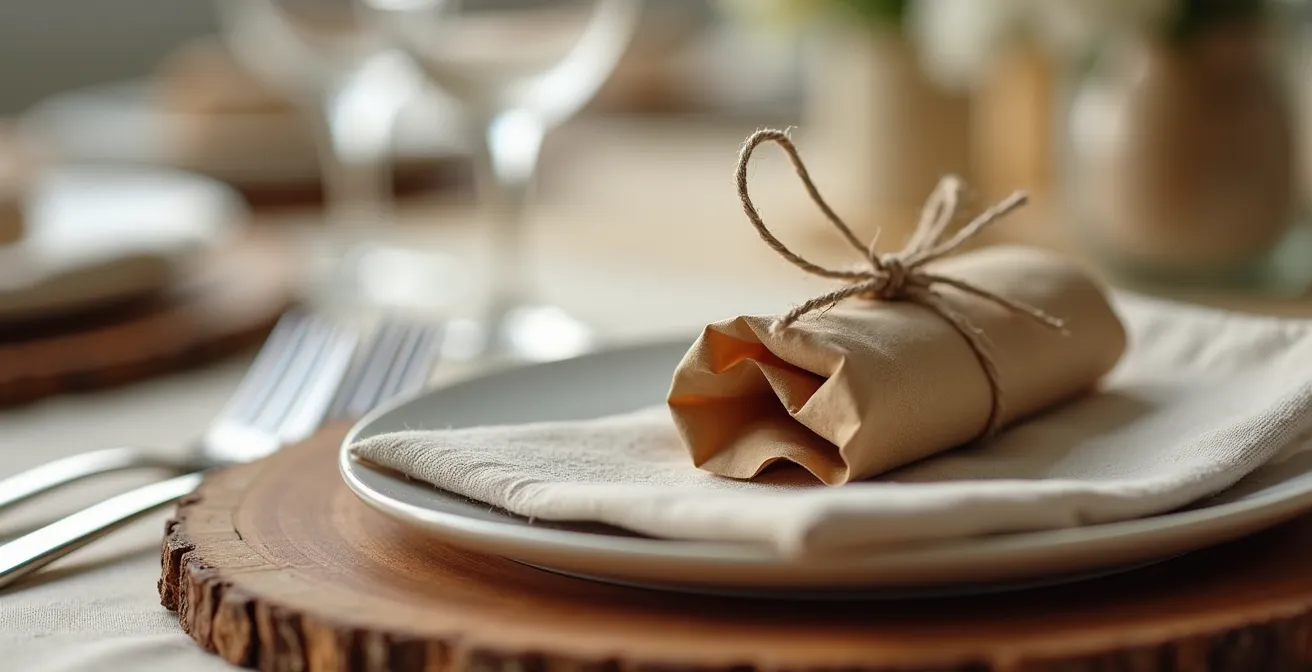
Choosing the right strategy depends on your favor’s nature and your event’s flow. An interactive “favor bar”—where guests can build their own trail mix bag or select a donut—creates engagement and becomes an activity in itself. The following table breaks down the pros and cons of the most common placement strategies.
This table, based on common wedding planning observations, illustrates how placement affects guest interaction. A study on favor strategies shows that visibility and timing are key, as detailed in this comparative analysis of favor placement.
| Placement Option | Visibility | Take-Home Rate | Best For |
|---|---|---|---|
| At Each Place Setting | 100% guaranteed | 60-70% | Small, lightweight items (under 4oz) |
| Exit Station | 75% (tired guests may miss) | 85-90% | Hangover kits, late-night snacks |
| Favor Bar/Interactive Station | 90% (creates engagement) | 80% | Build-your-own items, variety options |
| As Escort Cards | 100% (functional) | 75% | Dual-purpose items like luggage tags |
Stickers vs. Engraving: is it worth paying $2 extra for a name?
The impulse to personalize a wedding favor is strong. After all, it’s a gift from *you*. But this is where many couples fall into the trap of creating something that is meaningful to them but has zero reusable value for their guests. A glass jar engraved with “John & Jane, 10.26.24” is destined for the recycling bin. The same jar with a subtle, elegant monogram or even a beautiful paper tag that can be easily removed has a much higher chance of being used for years to come. The question isn’t whether to personalize, but *how* to do it with the guest in mind.
The key is to think in terms of a reusability hierarchy. The more specific the personalization is to your wedding day, the less likely the item is to be kept. A sticker is almost always better than engraving, as it allows the guest to remove the personalization and keep a perfectly good item. If you want something more permanent, opt for a design element that is beautiful and abstract, like a custom wedding crest or a meaningful symbol, rather than your names and date. This adds a layer of sophistication and sentiment without sacrificing the item’s utility.
Before committing to an expensive personalization method like engraving, ask yourself: “Would I use this in my own home if it had someone else’s name on it?” If the answer is no, you’ve found your answer. The extra cost for permanent, hyper-specific personalization is rarely worth it, as it actively works against the goal of giving a gift your guests will actually want to keep. It’s better to invest that money in the quality of the favor itself.
Your Action Plan: The Reusability Hierarchy for Personalization
- Level 1 (Most Reusable): A subtle, elegant crest or monogram that acts as a beautiful design element. Guests are very likely to use these items.
- Level 2: A meaningful quote, poem, or phrase without any names. This adds sentiment without reducing the item’s utility.
- Level 3: The couple’s initials only. This offers some reusability but is less universal and may still be discarded by some guests.
- Level 4: The couple’s first names. The item now has very limited reuse potential outside of close family.
- Level 5 (Least Reusable): Full names and the wedding date. This essentially turns the favor into a disposable souvenir, likely to be discarded.
What to do with 50 leftover personalized jars at 2 AM?
Picture this: your wedding was perfect, but now it’s 2 AM, and you’re faced with a box of 50 leftover favors. This is the leftover liability—the financial, environmental, and emotional cost of uneaten cookies and untaken trinkets. It’s a common problem, especially when you consider that studies show the average RSVP declines run from 15 to 20 percent, and that’s before accounting for guests who simply forget their favor. Planning for this inevitability is a crucial part of a sustainable favor strategy.
The best way to manage leftovers is to minimize them from the start. Instead of placing a favor at every single seat, consider an “opt-in” approach. An elegant sign at a favor station that says “Please take one!” empowers guests to choose whether they want the item, drastically reducing waste from no-shows or uninterested attendees. You should still order enough for about 85-90% of your confirmed guest count, but this strategy prevents the automatic surplus.
If you do end up with leftovers, have a plan in place. Designate a trusted friend or family member to collect any unclaimed favors before the venue staff clears the tables. If the items are personalized with a tag or sticker, they can be easily removed, making the item ready for a second life. Unclaimed, non-perishable food items can often be donated to local nursing homes, shelters, or community centers (check their policies beforehand). You can also use them as supplemental thank-you gifts for your vendors or save them for a first-anniversary celebration. By planning ahead, you can transform a potential waste problem into another opportunity for thoughtful giving.
The 10-hour weekend: realizing how long it takes to tie 150 bows
The allure of DIY wedding favors is powerful. It promises a personal touch and significant cost savings. However, the reality is often a weekend marathon of cutting, gluing, and tying, transforming a fun project into a major source of pre-wedding stress. The hidden cost of DIY is your time and sanity. Before you commit to a project, it’s essential to do a realistic time and cost calculation. One couple who created 100 wildflower seed packets found it took about an hour to stamp, fill, and seal them, a manageable task. But a more complex project can quickly spiral.
The only way to know for sure is to do a test run. Create a small batch of 5-10 favors from start to finish and time the entire process accurately. Now, multiply that time by your guest count, and then add a 10-15% buffer for mistakes and interruptions. Is the total number of hours something you can realistically handle in the week before your wedding? Then, calculate the true cost: materials, plus a “sanity rate” for your own time, plus a 15% contingency for wasted materials. Compare this total to the cost of a pre-made or partially assembled option. If the difference is less than a few hundred dollars, buying them might be the better investment in your peace of mind.
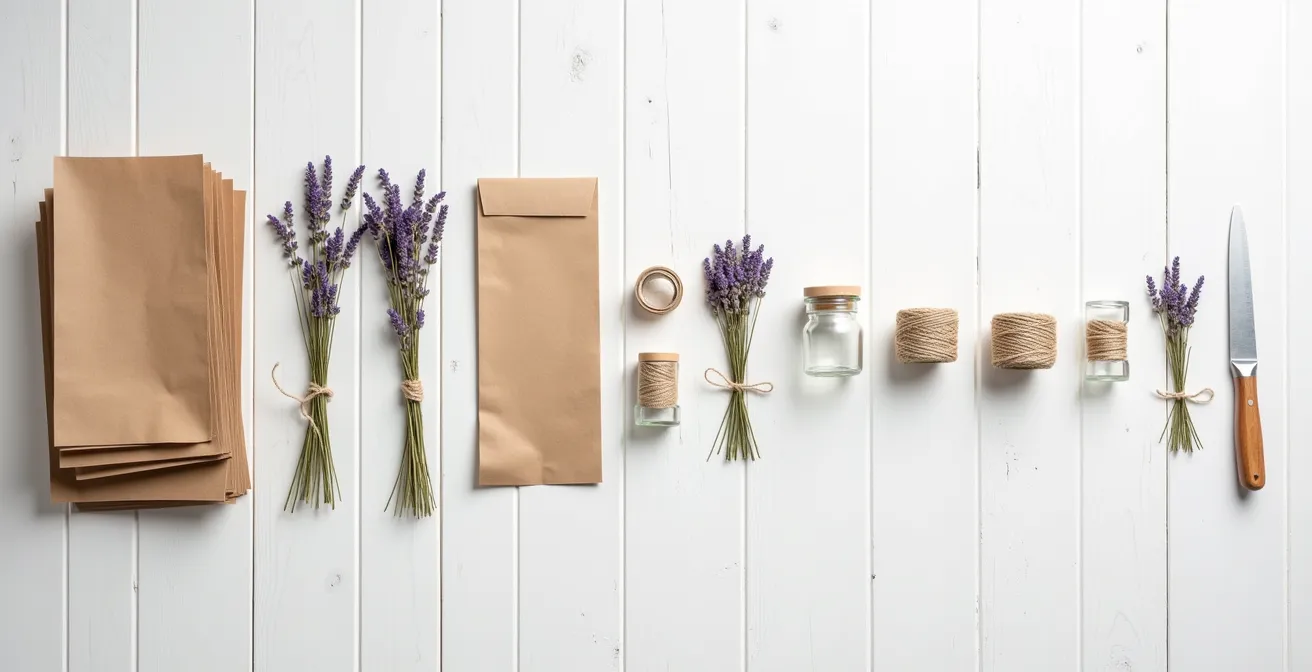
If you still want to proceed with a DIY project, make it a party! Invite your wedding party or close friends over for an “assembly party.” Turn a chore into a fun, memorable afternoon with music and snacks. However, be mindful of quality control; ensure everyone understands the steps to maintain a consistent look. The goal is to create a beautiful, heartfelt favor, not to add another item to your pre-wedding stress list. Always choose simplicity over complexity when it comes to DIY. A simple, beautifully executed project is far more impressive than a complicated one that’s rushed and sloppy.
How to design a wedding crest that works on napkins and dance floors?
A wedding crest or monogram can be a beautiful, timeless way to personalize your wedding. It’s more subtle and versatile than using your full names and can be applied across various elements, from invitations to favors to day-of decor. However, a common mistake is designing a crest that is too detailed. A complex design that looks stunning on a large invitation may become an unrecognizable smudge when embroidered on a napkin or printed on a small favor tag. The key to a successful crest is design scalability.
Before finalizing your design, you must test its versatility. The first step is to create the crest as a vector file (e.g., in Adobe Illustrator), which allows it to be scaled to any size without losing quality. Always design it in black and white first. A strong design relies on its form, not on color. Once you have the black and white version, test it at its extremes. Print it out at a tiny 1-inch size. Are the details still legible? If not, you need to simplify it. Then, imagine it projected as a 3-foot gobo light on the dance floor. Will its simple lines still have an impact? The “squint test” is also useful: step back 10 feet from the design and squint your eyes. The main elements should still be clear and recognizable.
Different applications have different technical requirements. A wax seal can only handle very simple shapes, while digital printing can accommodate much more complexity. Embossing on a napkin requires clean lines and a single color. Knowing where you plan to use your crest will dictate the necessary level of detail. The following guide provides a technical overview for various common applications.
This data, based on printing industry standards, is crucial for discussions with your stationer or designer. Ensuring your design file is a vector format (.ai or .eps) is the most important step, as highlighted in this wedding crest application guide.
| Application | Max Detail Level | Minimum Size | File Requirements |
|---|---|---|---|
| Dance Floor Gobo | Simple (2-3 elements) | 3 feet diameter | Vector .eps or .ai |
| Embossed Napkins | Medium (4-5 elements) | 2 inches | Vector, single color |
| Wax Seal | Simple (1-2 elements) | 1 inch | Vector, high contrast |
| Foil Stamping | Medium (3-4 elements) | 1.5 inches | Vector, single color |
| Digital Printing | Complex (unlimited) | 0.5 inches | Vector or high-res raster |
Biodegradable rules: ensuring your venue doesn’t charge a cleaning fee
Your eco-conscious intentions can unfortunately lead to unexpected costs if you’re not careful. Many couples opt for “biodegradable” confetti or send-off items like birdseed, believing they are making a responsible choice. However, many venues have strict rules against these items. “Biodegradable” doesn’t mean “instantaneously disappears.” Loose glitter (even the eco-friendly kind), rice, and seeds require significant cleanup, and most venues will pass that cost directly on to you in the form of a hefty cleaning fee. In fact, a recent report notes that while 47% of engaged couples now have plant-based confetti, many venues are banning it altogether.
Before you purchase any send-off item or favor that could create a mess, have a direct conversation with your venue coordinator. Don’t just ask if biodegradable confetti is allowed; ask for their specific list of prohibited items and the exact amount of their cleaning fees. You should also review your contract for clauses related to “decorations,” “guest items,” or “cleanup responsibilities.” Knowledge is your best defense against surprise charges.
There are many beautiful and mess-free alternatives that still create a magical moment. Consider these safe options:
- Ribbon wands: They add color and movement to your exit photos without leaving anything behind.
- Small bells: The sound of ringing bells is a charming and traditional way to celebrate.
- Bubbles: A classic for a reason, bubbles are fun for all ages and leave no trace (just confirm with your venue that they are allowed on their property).
- LED candles: For an evening exit, they create a beautiful, warm glow without the fire hazard of real flames.
The ultimate zero-impact favor is one that is consumed, worn, or experienced. By choosing food, drink, or a functional item, you sidestep the cleanup issue entirely, ensuring your sustainable choice doesn’t backfire on your budget.
Key takeaways
- The best favors are intentionally consumable (eaten, used up) to avoid creating long-term waste for your guests.
- Subtle personalization (like a crest) is more reusable and elegant than favors with full names and dates.
- Always factor in the hidden costs of DIY projects—your time and stress—before committing.
How to Use Design to Solve Guest Frustrations Before They Happen?
The most thoughtful favor isn’t a gift *from* you, but a solution *for* your guests. This concept, which we can call functional empathy, involves anticipating your guests’ potential needs or discomforts and using the favor as a way to solve them. This approach transforms the favor from a simple “thank you” into a genuinely helpful and memorable gesture. Instead of a generic trinket, you’re providing comfort, care, and a seamless experience. This is the pinnacle of thoughtful hosting.
Think about the context of your wedding day. Are you having a summer ceremony outdoors in the blazing sun? A personalized fan or a paper parasol on each chair isn’t just a favor; it’s a moment of relief. Is your reception likely to go late into a cool evening? A basket of pashminas or fleece blankets will be gratefully snatched up. For a reception with a packed dance floor, providing a basket of flip-flops in the restrooms is a game-changer for guests with sore feet. These functional gifts are almost always used and appreciated because they serve an immediate, tangible purpose.
Welcome bags, especially for destination weddings or events with many out-of-town guests, are the ultimate expression of functional empathy. They can include a weekend itinerary, a local map, snacks, bottled water, and “emergency” items like aspirin or eye masks. The key is to match the solution to a potential problem, ensuring your gift is not only wanted but needed. This table illustrates how to connect common guest problems with effective, functional favor solutions.
| Guest Problem | Functional Favor Solution | Timing | Success Rate |
|---|---|---|---|
| Hot outdoor ceremony | Personalized fans or parasols | On ceremony chairs | 95% used |
| Cold evening reception | Pashminas or blankets | Basket at entrance | 88% taken |
| Sore feet from dancing | Flip-flops or roll-up flats | Bathroom baskets | 76% used |
| Late night hunger | Snack boxes or food truck tokens | Exit station | 92% taken |
| Morning-after headache | Hangover kit with water/aspirin | Exit bags | 89% appreciated |
Ultimately, choosing a favor that won’t be thrown away is an act of empathy. By focusing on consumable joys and functional solutions, you give your guests a gift they will genuinely appreciate while honoring your budget and values. Begin planning your favors with this intentional, waste-conscious mindset to create a final, perfect note for your wedding day.