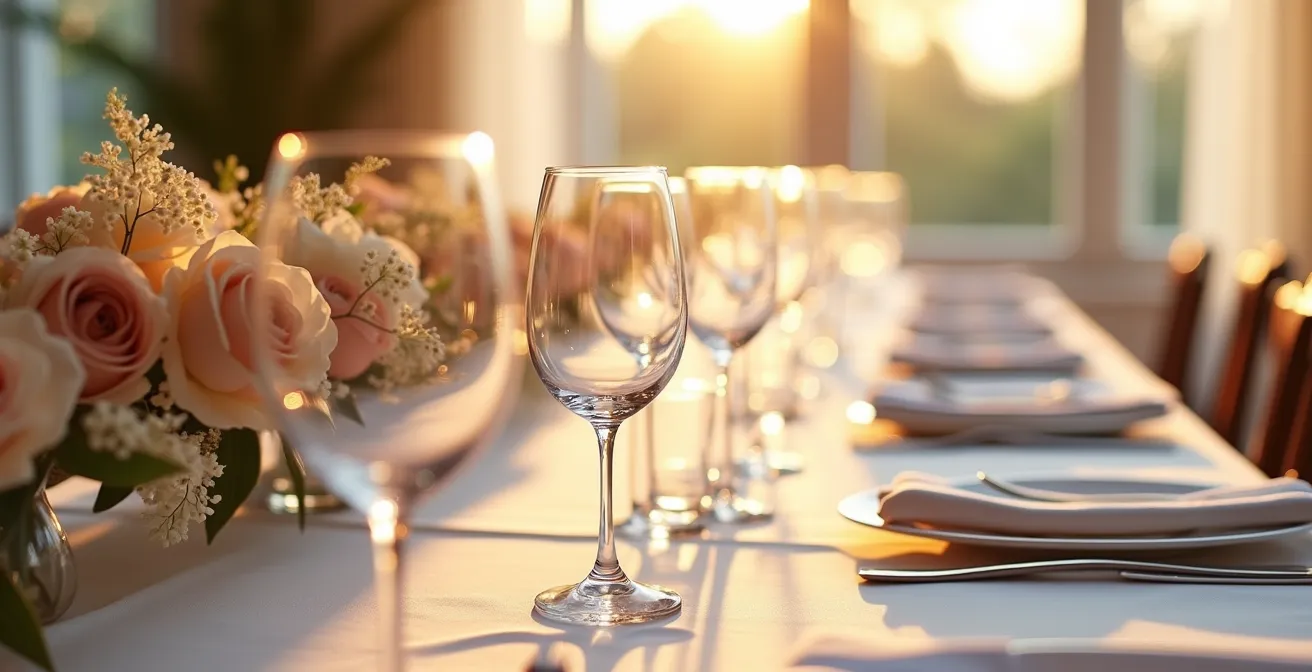
The perfect crystal glassware for your wedding does more than just sparkle; it functions as sensory architecture, elevating the wine’s character and completing your table’s story.
- A thin, laser-cut rim delivers wine more precisely to the palate, significantly improving the taste perception, even for more modest wines.
- Mixing vintage-cut crystal with modern stems creates a sophisticated, curated look that tells a personal story.
Recommendation: Prioritize function (rim thickness, bowl shape) as the foundation of your aesthetic choice, and use rental services to access high-quality options without the long-term investment.
For oenophile couples, selecting wedding glassware is more than just another item on a sprawling checklist. It’s a critical decision that sits at the intersection of taste and style. The internet is filled with basic advice to “match your theme” or “set a budget,” but this guidance often overlooks the most crucial element: the profound impact glassware has on the wine itself and the overall sensory experience of your guests. It treats crystal as mere decoration, a missed opportunity for couples who appreciate the nuances of a well-chosen vintage.
The common approach focuses on appearance alone, leading to tables that look pretty but may feature clunky, thick-rimmed glasses that dull the bouquet and cheapen the palate. We believe the choice is not between function and form, but in finding the beauty where they meet. This decision isn’t about simply acquiring objects; it’s an act of sensory architecture. It’s about designing an experience where the vessel is as thoughtfully considered as the wine it holds and the décor it complements.
So, how do you move beyond the sparkle to select glassware that truly performs? The key is to adopt the dual mindset of a sommelier and a stylist. It’s about understanding why a certain shape makes a Cabernet sing, while another adds the perfect textural note to your tablescape. This guide is built on that principle. We will explore the science of a thin rim, the art of mixing styles, the logistics of sourcing and setup, and how to create a cohesive “table narrative” that turns every sip into a memorable moment.
This article provides a detailed roadmap for choosing glassware that serves both the wine and the table with elegance and intelligence. Explore the sections below to master each aspect of this crucial wedding detail.
Summary: A Guide to Curating Your Wedding Glassware
- Why a thin rim makes cheap wine taste better?
- Amber vs. Smoke: using colored goblets to add depth to the palette
- The $500 bill: budgeting for the inevitable broken glasses
- The polishing check: ensuring the venue polishes glasses before setup
- How to mix cut crystal with sleek modern stems for a curated look?
- Thrifting vs. Renting: where to find 150 vintage goblets efficiently?
- Water, Red, White, Champagne: fitting 4 glasses without a breakage risk
- How to Choose Personalized Favors That Don’t End Up in the Trash?
Why a thin rim makes cheap wine taste better?
The single most important feature of a quality wine glass is not its intricate pattern or its weighty base, but the fineness of its rim. As a sommelier will attest, a thin, laser-cut edge is the secret to elevating any wine, from a grand cru to a more modest table selection. This isn’t wine snobbery; it’s based on the psychophysics of taste. A thick, rolled rim creates a physical and psychological barrier. As you sip, the clumsy edge dumps the wine unceremoniously onto your tongue, distracting your senses and disrupting the delicate flavors.
In contrast, a thin rim is virtually unnoticeable. It allows the wine to flow smoothly and precisely onto the optimal parts of your palate, letting you perceive the full spectrum of its character—fruit, acidity, tannins, and finish—without interference. This seamless delivery system makes the glass feel like a natural extension of your hand, focusing all your attention on the aroma and taste. For a less expensive wine, this is a game-changer. The refined presentation minimizes any potential harshness and accentuates its best qualities, making it taste more balanced and elegant.
Choosing high-quality, thin-rimmed crystal is an investment in your guests’ sensory experience. It communicates a level of care and intention that elevates the entire meal. While the global crystal glass market is experiencing significant expansion with a projected 6.20% yearly growth, quality remains paramount. The true value lies not in the price tag, but in the glass’s ability to disappear, leaving only the pleasure of the wine.
Amber vs. Smoke: using colored goblets to add depth to the palette
While classic clear crystal is timeless, incorporating colored glassware is a powerful tool for building a rich and layered table narrative. Hues like amber, smoke, moss green, or soft blush do more than just add a pop of color; they manipulate light and mood, creating depth and personality. An amber goblet can cast a warm, golden-hour glow across a white linen tablecloth, while a smoke-gray glass can lend a sophisticated, modern edge to a floral centerpiece. This is where the stylist’s eye becomes as important as the sommelier’s.
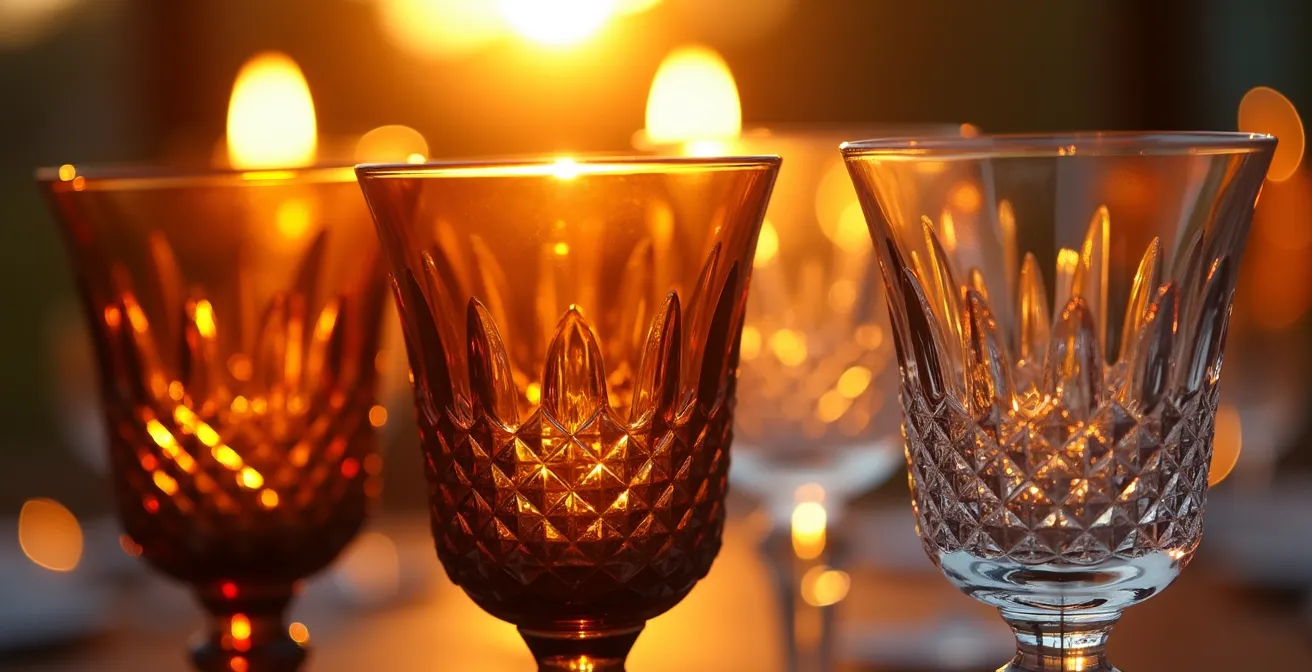
The key is to use color with intention. Are you aiming for a romantic, bohemian vibe? Amber and rose tones will enhance that feeling. A dramatic, moody atmosphere? Deep blues and smoky grays will be your allies. As detailed in a case study from a leading crystal brand, this strategy can be highly effective. The experts at Waterford demonstrate how centrally placed colored glassware and crystal bowls capture surrounding light, especially candlelight, to create a magical and dynamic ambiance. The reflections and refractions add a layer of visual interest that a completely clear setup might lack.
When choosing colored crystal, consider how it will interact with your other table elements. A colored water goblet can be a stunning anchor piece, paired with clear crystal stems for wine to avoid altering the visual perception of the wine itself. This allows you to add a stylistic flourish without compromising the oenological experience. The goal is to create a cohesive palette that feels curated and intentional, telling a story that is uniquely yours.
The $500 bill: budgeting for the inevitable broken glasses
No matter how careful your guests or staff are, breakage is an unavoidable reality at any large event. Factoring this into your budget from the start prevents last-minute financial surprises and stress. The “breakage bill” is a standard part of any glassware rental contract, typically charging for the replacement cost of each lost or damaged item. Instead of viewing this as a potential disaster, consider it a predictable operational cost. A good rule of thumb is to set aside a contingency fund—your metaphorical “$500 bill”—specifically for this purpose.
The choice between renting crystal, buying disposable plastic, or a hybrid approach has significant budgetary implications. Renting offers unparalleled elegance but comes with the responsibility of breakage fees. High-quality hard plastic eliminates this worry but can detract from the sophisticated experience you’re curating. As a wedding planner’s guide points out, rental companies offer a distinct advantage. As stated in the Curated Events Wedding Planning Guide, “Many event rental companies provide a wide selection of styles, from elegant crystal to modern designs, allowing couples to elevate their table settings without breaking the bank.” This access to high-end collections is often more cost-effective than purchasing outright.
To make an informed decision, a cost-benefit analysis is essential. This table breaks down the typical financial and logistical trade-offs for a wedding of 100 guests, based on data from wedding planning forums.
| Option | Cost per 100 guests | Pros | Cons |
|---|---|---|---|
| Crystal Glass Rental | $155-$220 | Elegant appearance, professional look | Breakage fees, washing/transport logistics |
| Clear Hard Plastic | $50-$80 | No breakage concerns, easier cleanup | Less elegant, environmental impact |
| Mixed Approach | $100-$150 | Glass for dinner, plastic for dancing | Requires timing coordination |
A popular and savvy compromise is the mixed approach: use elegant, rented crystal for the seated dinner and switch to high-quality disposable ware once the dancing begins. This contains the highest risk of breakage to the most informal part of the evening, preserving the integrity of the dining experience while protecting your budget.
The polishing check: ensuring the venue polishes glasses before setup
You’ve spent months curating the perfect glassware, but all that effort can be undone in an instant by a single fingerprint, water spot, or speck of lint. The final presentation of your stemware is critical. A gleaming, flawless glass signals quality and care, while a smudged one can cheapen the entire place setting and even affect the taste of the wine. This is why a final polishing check is a non-negotiable step in your wedding day timeline.
Do not assume that “clean” means “polished.” Glassware returned from a rental company or stored at a venue may be hygienically washed but is rarely table-ready. Watermarks from drying, dust from storage, or fingerprints from handling during setup are common. The responsibility for the final polish should be clearly defined in your contract with your venue or caterer. Insist on a clause specifying that all glassware must be “table-ready and polished” before being placed.
On the day of the wedding, delegate a trusted person—a wedding coordinator, a detail-oriented bridesmaid, or a family member—to perform a spot check before guests enter the reception area. This small quality control measure can have a huge impact on your photographs and the guest experience. A perfectly polished glass catches the light beautifully, adding to the sparkle and magic of the room. This checklist provides a simple but effective protocol for ensuring every glass is pristine.
Your Pre-Setup Glassware Inspection Checklist
- Hold each sample glass up to a light source to spot watermarks or smudges.
- Check for lint or fingerprints on the bowl, stem, and base of the glass.
- Verify rim cleanliness, as any spots will be highly noticeable when backlit during toasts.
- Confirm that the “table-ready, polished” specification is explicitly stated in rental and catering contracts.
- Assign a trusted person to perform final spot checks on the tables before guest arrival.
How to mix cut crystal with sleek modern stems for a curated look?
The most compelling wedding tablescapes are often those that feel personal and collected over time, rather than generically matched. One of the most effective ways to achieve this is by artfully mixing different styles of glassware, particularly pairing ornate, vintage-inspired cut crystal with clean, sleek modern stems. This juxtaposition creates a dynamic visual dialogue between tradition and contemporary taste, resulting in a look that is both sophisticated and deeply personal.
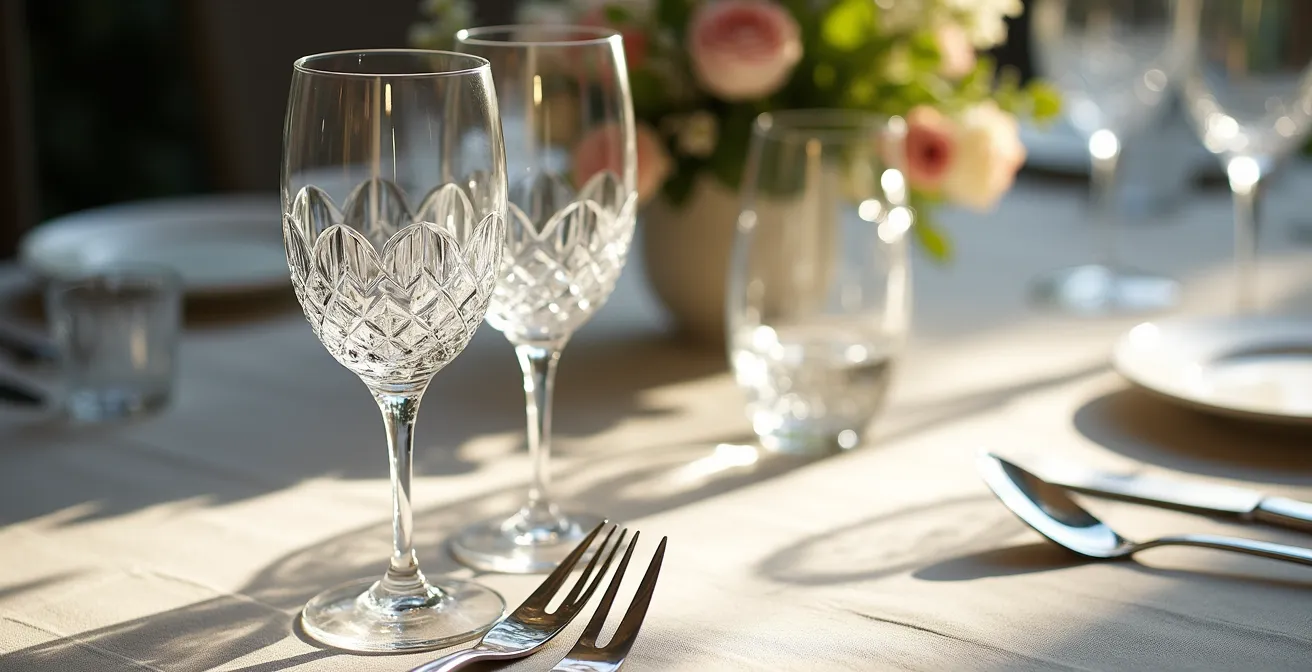
The secret to a successful mix is to find a unifying element. Don’t just throw different glasses on the table; create a curated collection. This can be achieved in several ways. You might unify the collection through scale, ensuring all glasses have a similar height and presence. Alternatively, you could use a consistent color palette, such as pairing clear cut-crystal with clear modern stems, letting the texture and shape be the main points of contrast. Another approach is to assign roles: use the more decorative, heavy-bottomed cut crystal for water goblets, and the lighter, minimalist stems for wine, creating a clear functional hierarchy.
Case Study: Heirloom Events’ Mixed-Style Strategy
To achieve a “California modern coastal” feel, the rental specialists at Heirloom Events demonstrate a masterful approach to mixing styles. They successfully combine vintage-style hobnail glasses in soft blush and mossy green tones with the sleek, technical forms of modern Schott Zwiesel crystal. Their Twilight collection, featuring weighty pieces with organic rims, is expertly paired with traditional Stella gold-footed goblets. This strategy shows that by focusing on a cohesive mood and color story, you can blend seemingly disparate styles into a harmonious and memorable tablescape.
This approach allows you to incorporate meaningful pieces, perhaps heirloom crystal from a grandmother, alongside practical and elegant modern rentals. It transforms your table from a simple dining surface into a canvas for storytelling, reflecting your journey as a couple.
Thrifting vs. Renting: where to find 150 vintage goblets efficiently?
The allure of a full set of mismatched vintage goblets is strong for couples seeking a unique, bohemian, or eclectic aesthetic. The two primary paths to achieving this look are thrifting and renting, each with its own set of challenges and rewards. Sourcing a large quantity—such as 150 identical or coordinating vintage goblets—is a significant logistical undertaking that requires careful planning.
Thrifting offers the thrill of the hunt and the potential for creating a truly one-of-a-kind collection. However, it is an extremely time-intensive process. Finding 150 goblets that work together stylistically requires scouring countless thrift stores, flea markets, estate sales, and online marketplaces over many months. The costs can also add up unexpectedly when you factor in the time spent searching, cleaning, and transporting the fragile items. For this to be successful, a clear vision is essential.
Renting is by far the more efficient and less stressful option. Specialized vintage rental companies have done the hard work for you, curating large, cohesive collections of glassware. They offer complete, matching sets of 100+ pieces in specific colors and styles, like blush pink hobnail or green Depression glass. This guarantees a consistent look and saves you countless hours of searching and cleaning. While the per-item cost may be higher than a thrift store find, the overall value in time, effort, and guaranteed quality is often well worth it.
To source vintage goblets effectively, whether thrifting or renting, a strategic approach is key:
- Create a shareable digital mood board with desired colors, patterns, and styles to keep your sourcing efforts focused.
- For large quantities, contact specialized vintage rental companies that curate and maintain 100+ piece matched collections.
- If thrifting, monitor estate sale networks and local auction houses, which are more likely to offer bulk lots than individual thrift stores.
- Always calculate the true cost of thrifting: include your time investment, plus the cost of cleaning supplies and secure transportation.
Water, Red, White, Champagne: fitting 4 glasses without a breakage risk
A formal place setting with four glasses—water, red wine, white wine, and a Champagne flute—is the peak of traditional elegance. However, it also presents a significant logistical challenge: space. With professional event planners calculating that you may need up to 300 wine glasses for a 150-guest wedding, plus additional glasses for water and toasts, the tabletop can quickly become a crowded and precarious landscape. Arranging four stems per guest without it feeling cluttered or increasing the risk of breakage requires strategic placement.
Before committing to four glasses, consider a sommelier’s elegant compromise: the universal wine glass. As Ryan Harmon, a sales representative at a leading event rental company, advises, “For wine service, choose a universal wine glass that you can serve both red or white in. With an average pour of 5-6 ounces, using an 11-13 oz glass will allow wine to be fully enjoyed.” This single, high-quality glass is designed with a bowl shape versatile enough to accommodate the aromatic profiles of most wines. Opting for a universal glass plus a water goblet and Champagne flute reduces the setting to a more manageable three stems, saving space and simplifying service.
If your heart is set on the full four-glass setting, the arrangement is key. Servers need clear access, and guests need comfortable eating space. The following table outlines common arrangements and their respective trade-offs, helping you choose the best fit for your table size and service style.
| Arrangement Style | Space Required | Server Access | Guest Comfort |
|---|---|---|---|
| Arc Above Plate | Minimal table width needed | Easy from behind guest | Clear eating space |
| Diamond Pattern (Top Right) | More lateral space required | Accessible from side | Traditional, familiar layout |
| Triangle Formation | Compact footprint | Moderate accessibility | Visually balanced |
| Linear Arrangement | Maximum width needed | Most accessible | Modern aesthetic |
The “Arc” or “Triangle” formations are generally the most space-efficient and safest options for crowded round tables, while the “Linear” arrangement offers a striking modern look on long, rectangular tables with ample width.
Key takeaways
- Function First: A thin, laser-cut rim is the most critical feature of a wine glass, as it directly enhances the sensory experience of the wine.
- Curate, Don’t Match: Mixing vintage and modern styles, or clear and colored glass, creates a more personal and sophisticated table narrative than a uniform set.
- Rent for Efficiency: For large quantities of specialty or high-quality glassware, renting is almost always more efficient and cost-effective than buying or thrifting.
How to Choose Personalized Favors That Don’t End Up in the Trash?
The ultimate goal for any wedding favor is for it to be cherished and used long after the last dance. Too often, trinkets with names and dates end up forgotten in a drawer or, worse, in the trash. The secret to a successful favor lies in the combination of utility and permanence. A personalized item that is both beautiful and functional is far more likely to become a treasured memento. This is where personalized glassware truly shines.
Engraving a high-quality wine glass, whiskey tumbler, or Champagne flute with a subtle monogram, a meaningful quote, or your wedding crest transforms it from a simple object into a lasting keepsake. Every time your guests use it for a future celebration or a quiet evening at home, they will be reminded of your special day. Unlike edible favors that are quickly consumed or decorative items with no practical purpose, an engraved glass has a long and useful life ahead of it.
Case Study: Crystal Imagery’s Lasting Keepsakes
Specialty engraving companies like Crystal Imagery have built their business on this principle. They use a deep sandcarving technique that creates a permanent, 3D-like engraving in the crystal. Unlike surface-level etching, this method creates a design that won’t fade or wear away with use or washing. Their success with personalized wedding glassware, featuring everything from couple’s names and dates to custom monograms, shows a clear demand for favors that are also functional heirlooms. These glasses are not just for the wedding toast; they are designed to be used for anniversary toasts for years to come.
When choosing a personalized glassware favor, opt for a timeless design over something overly trendy. A simple, elegant engraving on a classic shape will ensure your gift remains stylish and relevant. By giving a gift that is both practical and deeply personal, you are giving your guests a tangible piece of your wedding story that they can integrate into their own lives.
Frequently Asked Questions on Wedding Crystal Glassware
Should crystal glassware be washed in a dishwasher?
You should avoid using a dishwasher for fine crystal. The high heat and harsh detergents will dull the brilliance of the glass over time. It is always best to hand-wash crystal using only warm, soapy water to maintain its clarity and sparkle.
How should crystal glasses be stored to prevent chipping?
To preserve the fine, delicate rims, always store and dry your crystal glasses in an upright position (rim-up). Storing them rim-down on a shelf can put stress on the weakest point of the glass and lead to small chips or cracks over time.
What are the most popular engraved wedding gift glasses?
According to engraving specialists, Champagne flutes remain a classic and popular choice for wedding favors. However, high-quality whiskey glasses, universal wine glasses, and even small decanters are increasingly requested as they offer great utility for guests after the event.
Will sandcarved engravings on glasses fade over time?
No, a key benefit of deep sandcarving is its permanence. Unlike printed or lightly etched designs, a sandcarved engraving is cut into the glass itself and will not fade, peel, or wash away, even with regular use and hand-washing.