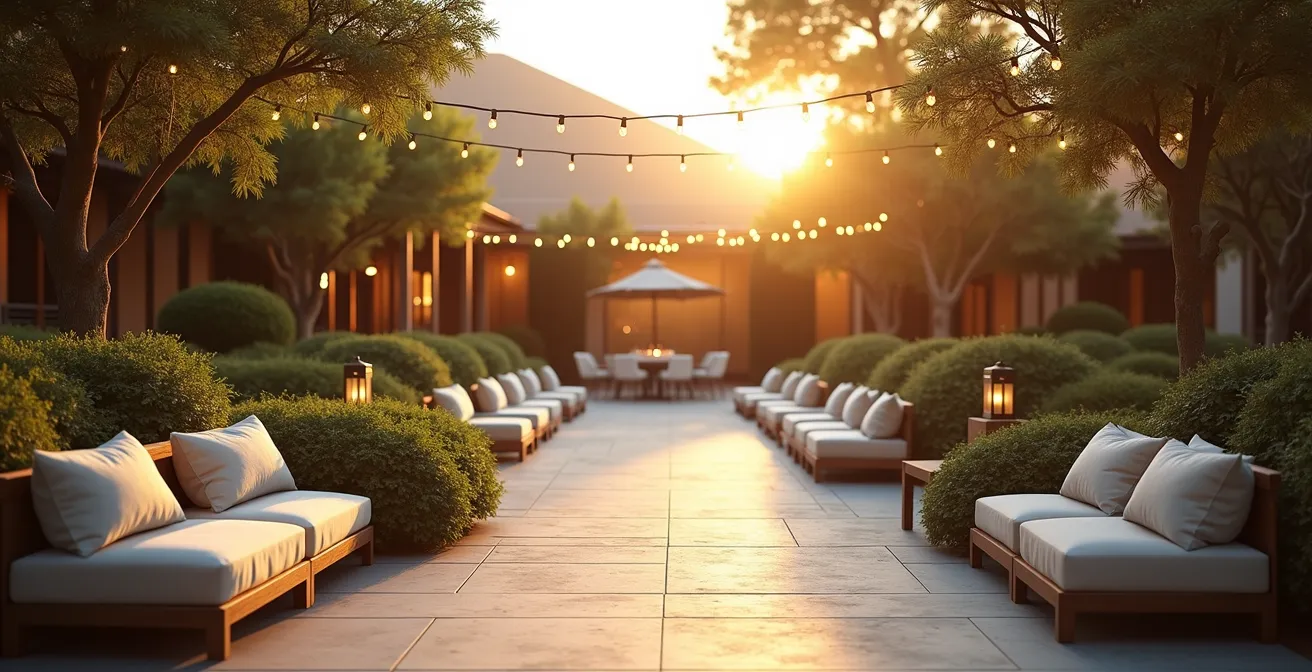
A flawless guest experience isn’t about lavish extras, but about proactively eliminating moments of friction and discomfort through thoughtful design.
- A chaotic arrival sets a negative tone for the entire event due to the psychological Primacy Effect, making first impressions disproportionately important.
- Physical comfort, such as cushioned chairs and adequate table space, is not a luxury; it’s a strategic tool that directly impacts how long guests stay engaged and enjoy themselves.
Recommendation: Audit every guest touchpoint—from parking and arrival flow to seating and signage—to identify and solve for potential bottlenecks and discomforts long before the wedding day.
As a couple dedicated to your guests’ happiness, you’ve likely spent countless hours perfecting the most visible elements of your wedding. The menu is curated, the playlist is set, and the floral arrangements are breathtaking. You’ve followed the standard advice, focusing on the big, memorable moments. But what if the secret to a truly exceptional wedding—the kind your friends and family talk about for years—isn’t found in what you add, but in what you expertly remove?
This is the core of hospitality-focused design: the art of eliminating “guest friction.” Friction is any moment, big or small, that causes confusion, discomfort, or stress. It’s the long, unexplained wait at the coat check, the desperate search for a bathroom, or the subtle ache from a hard chair during a long speech. These moments, though often overlooked in planning, can quietly undermine the joyful atmosphere you’ve worked so hard to create. They are the invisible pain points of an otherwise perfect day.
Instead of just layering on more perks, a guest-first approach requires you to think like a hospitality consultant. It’s about anticipatory design—solving problems before your guests even notice them. This guide shifts the focus from aesthetics alone to the seamless flow of the guest experience. We will dissect the most common friction points of a wedding day and provide concrete, design-led solutions that ensure your guests feel cared for, comfortable, and completely immersed in the celebration from the moment they arrive.
By understanding the logistics and psychology behind guest comfort, you can orchestrate an event that feels effortlessly elegant and deeply considerate. The following sections provide a blueprint for identifying and designing out these frustrations, ensuring your wedding is remembered for all the right reasons.
Summary: A Blueprint for a Flawless Guest Experience
- Why a chaotic arrival ruins the romantic mood before the ceremony even starts?
- Why renting cushioned chairs keeps guests at the table 45 minutes longer?
- 10 chairs at a 60-inch round: is it too tight for a formal dinner?
- How to make bathroom and bar signage visible without being ugly?
- The bar placement mistake that traps guests in the corner
- Beyond mints: what emergency items save the night for female guests?
- The arrival logistics that prevents a 20-minute line at the coat check
- How to Use Lounge Seating to Direct Traffic Flow at Your Reception?
Why a chaotic arrival ruins the romantic mood before the ceremony even starts?
The guest experience doesn’t begin with the processional; it begins in the parking lot. A confusing, stressful, or disorganized arrival can irrevocably taint a guest’s perception of the entire event, long before a single vow is exchanged. This isn’t just a matter of inconvenience; it’s rooted in a powerful psychological principle known as the Primacy Effect. This cognitive bias means that we place greater emphasis on information presented early in a sequence. For a time-bound event like a wedding, this effect is even more potent, as research confirms that for shorter durations, initial attractions have a more pronounced influence on our overall judgment.
When guests arrive flustered from a lack of parking signs, a long trek in uncomfortable shoes, or confusion about where to go, their initial emotional state is negative. This frustration becomes the lens through which they view the rest ofthe day. As experts in guest-forward planning note:
First impressions matter; make your guests feel like VIPs the moment they arrive! If you’ve ever heard someone talk about their most horrible wedding experience as a guest, it usually starts with confusion, lack of signage, or long walks from the parking lot.
– Laur, Plan With Laur
To combat this, you must design a “decompression zone” at the entrance. This transitional space should be multi-sensory and intentionally calming, guiding guests from the stress of travel into the celebratory atmosphere. Clear, elegant signage, welcoming staff, a simple refreshment station, and soft ambient music all work together to reset their emotional state. This isn’t an extravagance; it’s a crucial buffer that protects the romantic mood of your ceremony.
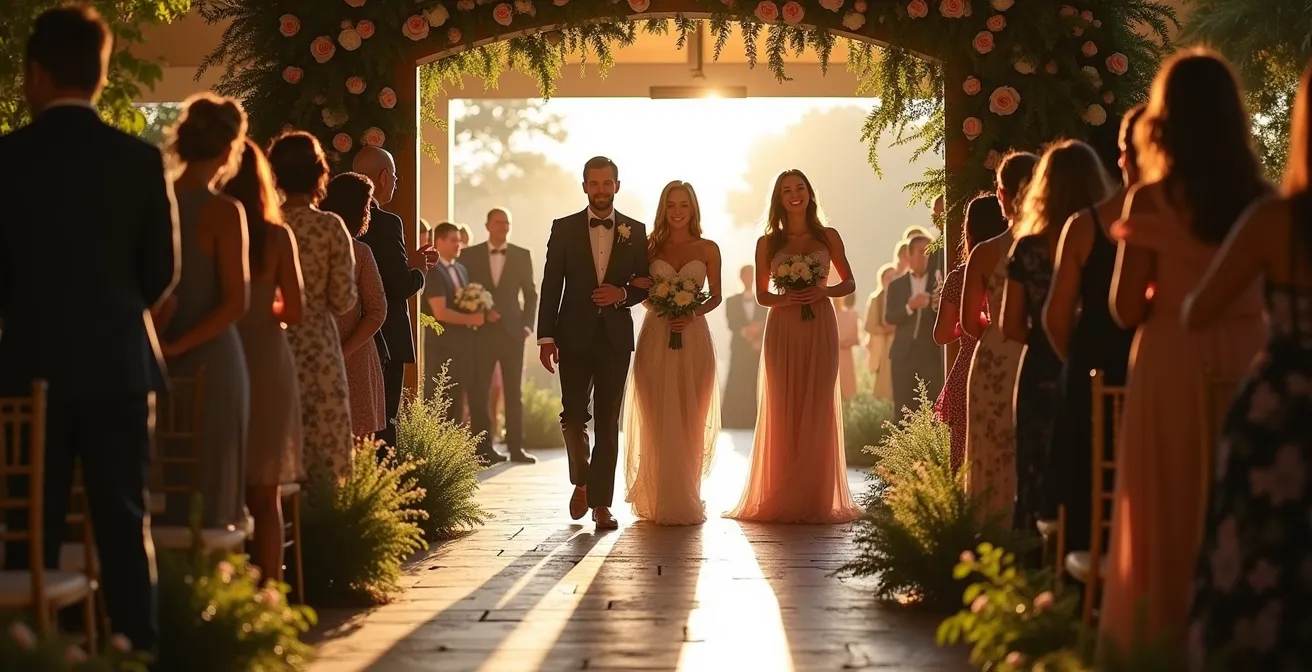
As this visual demonstrates, the goal is to create an intuitive and welcoming path. By engineering a seamless arrival, you tell your guests they are valued and have been thoughtfully anticipated. This positive first impression establishes a foundation of goodwill and comfort that will carry through the entire celebration, allowing them to fully immerse themselves in the joy of the moment.
Why renting cushioned chairs keeps guests at the table 45 minutes longer?
The choice of reception seating is one of the most underestimated factors in guest experience design. While a stylish Chiavari chair might look perfect in photos, its impact on physical comfort can directly dictate how your guests spend their evening. An uncomfortable chair shortens attention spans, encourages frequent breaks from the table, and can prematurely end conversations. This is not about luxury; it’s about comfort engineering—the practice of choosing functional elements that positively influence guest behavior.
The difference between a standard folding chair and an ergonomically designed or properly cushioned one is dramatic. Guests seated on hard, unsupportive surfaces begin to experience discomfort in as little as 30-45 minutes. They start to fidget, shift their weight, and look for reasons to stand up and walk around. This physical restlessness translates into mental distraction, pulling them away from speeches, toasts, and the dinner conversation you hoped they’d enjoy. To understand the impact, let’s look at the data. A comparative analysis from Cornell University’s Department of Ergonomics highlights the stark difference:
| Chair Type | Comfort Duration | Guest Behavior Impact |
|---|---|---|
| Standard Folding | 30-45 minutes | Higher fidgeting rates correspond to higher discomfort rates |
| Cushioned/Ergonomic | 90+ minutes | Reduced need to stand and move, enhanced conversation engagement |
| Chiavari with Cushion | 75+ minutes | Balance of elegance and comfort for extended seating |
As the table shows, investing in cushioned seating can more than double the amount of time a guest can remain comfortably seated. That extra 45 minutes or more isn’t just about physical ease; it’s 45 more minutes of your friends catching up, your families bonding, and your guests being fully present for the key moments of the reception. When guests aren’t preoccupied with their own discomfort, they are free to engage, laugh, and celebrate with you. Therefore, upgrading your chair rental is one of the highest-impact investments you can make for a lively, engaged, and long-lasting reception.
10 chairs at a 60-inch round: is it too tight for a formal dinner?
The short answer is yes, for a formal seated dinner, placing ten guests at a 60-inch round table is almost always too tight. While it might be mathematically possible to fit the chairs, you are creating a significant point of guest friction that undermines the dining experience. From a hospitality perspective, guest comfort at the table is defined by more than just a seat; it’s about personal space, ease of movement, and an uncluttered dining environment.
A 60-inch (152 cm) round table has a circumference of approximately 188.5 inches. When you divide this by ten guests, each person is allocated a mere 18.8 inches of table frontage. The industry standard for comfortable formal dining is a minimum of 24 inches per person, with 30 inches being ideal. This space allows for “elbow room” and accommodates a full place setting—including a charger plate (typically 12-13 inches wide), multiple glasses for water and wine, and cutlery for several courses. At 18.8 inches, guests’ elbows will be bumping, and place settings will feel precariously crowded.
This cramped environment has several negative consequences. It makes it difficult for guests to eat gracefully, creates a sense of being trapped, and can even feel claustrophobic. It also poses a logistical challenge for serving staff, who will struggle to place and clear plates without disturbing guests. While a ten-person setup at a 60-inch round might be acceptable for a brief, informal cocktail-style gathering with minimal tableware, it is unsuitable for a multi-course meal where comfort and conversation are paramount.
For a truly guest-first experience, the optimal number of guests at a 60-inch round table is eight. This provides each person a comfortable 23.5 inches of space. Nine is the absolute maximum, and should only be considered if necessary to keep a specific group together. Prioritizing adequate space is a silent gesture of hospitality that allows your guests to relax and fully enjoy their meal.
How to make bathroom and bar signage visible without being ugly?
The challenge of directional signage is a classic conflict between function and aesthetics. You need to guide your guests efficiently, but a standard, office-style sign can feel jarring and detract from the carefully curated ambiance. The key is to treat signage not as an afterthought, but as an integrated component of your decor. Instead of generic signs, think about creative, beautiful, and on-brand solutions.
First, consider the materials and typography. Instead of paper or plastic, opt for materials that match your wedding’s theme. A rustic wedding could use elegantly engraved wooden signs, while a modern event might feature sleek acrylic or minimalist metal lettering. The font should be consistent with your wedding invitations and other stationery, creating a cohesive visual language. The goal is for the sign to feel like it belongs in the space, rather than being tacked onto it.
Lighting is your most powerful tool for making signs both visible and elegant. A well-placed spotlight or subtle backlighting can draw the eye to a sign without it needing to be large or brightly colored. This is particularly effective in dimly lit reception venues, turning a simple sign into a chic decorative element. For a touch of drama, consider using a gobo projector to display directions or a monogram on a wall or floor.
Finally, think beyond traditional wall-mounted signs. Here are a few sophisticated alternatives:
- Stylish A-Frame or Easel Signs: Placed at key decision points (e.g., the entrance to the reception area), these can be beautifully designed with calligraphy and floral accents.
- Integrated Directions: Include a small, elegantly designed map or a line with directions (“The Bar & Dance Floor await you to the left”) at the bottom of the dinner menu or program.
- “Human Signage”: Instruct your wedding planner, venue staff, or designated ushers to proactively and politely guide guests, especially during peak transition times. A friendly “The restrooms are just down this hall to the right” is the most personal signage of all.
These methods ensure your guests are never left feeling lost, all while enhancing the beauty and thoughtful design of your event.
The bar placement mistake that traps guests in the corner
The placement of the bar is one of the most critical decisions in designing your reception’s “experience flow.” A poorly positioned bar can create a massive bottleneck, leading to long waits, frustrated guests, and a stagnant party atmosphere. The single most common mistake is placing the bar in a dead-end corner or a narrow hallway. This creates a “one-way-in, one-way-out” situation that is a recipe for congestion.
Imagine the scenario: the bar is tucked into an alcove. A line forms, blocking the entrance. Guests who already have their drinks cannot easily leave, and those trying to get to the bar can’t get past the crowd. This “bar trap” effectively removes a large number of guests from circulation, packing them into a small, uncomfortable space. It discourages mingling and can make the room feel much more crowded than it actually is. This is especially problematic if the corner is also near other high-traffic areas, like the restrooms or a photo booth, compounding the gridlock.
The solution is to think of your bar as a central hub that requires open space and multiple access points. The ideal placement is in a location with a wide-open front and clear pathways on either side. This allows guests to approach the bar, order, and then easily move away in several different directions, promoting a natural and continuous flow of traffic. Placing the bar along a long wall in the main reception space is often a safe and effective choice.
For larger weddings (over 150 guests), a single bar, no matter how well-placed, will likely be insufficient. In this case, consider implementing a satellite bar. This could be a smaller, secondary bar on the opposite side of the room offering a limited selection of beer, wine, and a signature cocktail. This simple addition splits the crowd, drastically reduces wait times, and encourages guests to explore and utilize the entire reception space, keeping the energy dynamic and fluid throughout the evening.
Beyond mints: what emergency items save the night for female guests?
Providing a “hospitality basket” in the restrooms is a thoughtful touch that shows you’ve anticipated your guests’ needs. However, a truly exceptional basket goes beyond the expected mints and travel-sized hairspray. It contains items that solve genuine, night-ruining emergencies, turning a moment of panic into one of relief and gratitude. Thinking from a guest’s perspective, these are the small items that can make a huge difference.
A great emergency kit focuses on wardrobe malfunctions, beauty touch-ups, and minor discomforts that can derail an evening. These are the things a guest would never think to bring, but will be eternally grateful to find. A truly helpful collection includes:
- Stain Remover Pen: A godsend for a rogue drop of red wine or a splash of sauce. It can save a favorite outfit and prevent a guest from feeling self-conscious all night.
- Safety Pins and a Mini Sewing Kit: For a broken dress strap, a popped button, or a hem that has come undone. This is a simple fix that can be a complete lifesaver.
- Blister Balm or Moleskin: New or uncomfortable shoes are a common wedding guest plight. Providing blister protection allows guests to stay on the dance floor longer and in greater comfort.
- Clear Nail Polish: Not for manicures, but for stopping a run in a pair of stockings or tights in its tracks.
- Individually Wrapped Makeup Remover Wipes: Perfect for fixing smudged mascara or eyeliner after an emotional ceremony.
- Dry Shampoo: A small can of dry shampoo can refresh a hairstyle that has wilted in the heat or after hours of dancing.
- Backup Phone Chargers: A portable power bank with multiple cord types can be a hero for a guest with a dying phone who needs to coordinate a ride home.
These items demonstrate a deep level of care and foresight. You’re not just providing amenities; you’re providing solutions. By anticipating these specific, real-world problems, you communicate a powerful message to your guests: “We’ve thought of everything so you can relax and have a wonderful time.”
The arrival logistics that prevents a 20-minute line at the coat check
A long line at the coat check is a classic example of arrival friction. It forces guests, who are eager to join the celebration, into a frustrating holding pattern. This delay is almost always a predictable and preventable problem caused by a mismatch between guest arrival patterns and operational capacity. The solution lies in a proactive logistical plan that addresses staffing, process, and systems.
Most weddings have a “peak arrival window”—a 20-to-30-minute period where the majority of guests arrive simultaneously. Your plan must be scaled to handle this surge, not the slow trickle of early or late arrivals. The first step is adequate staffing. A single attendant for 150 guests is a recipe for disaster. A good rule of thumb is to have one dedicated staff member for every 50-75 guests you anticipate arriving during that peak window. This ensures multiple guests can be served at once, keeping the line moving.
Next, optimize the process. Instead of a static station where guests must line up, consider a more dynamic approach. A “roving” coat check attendant can meet guests as they enter, taking their coats before they even reach the line. Furthermore, the system for tagging and retrieving coats must be swift. Pre-printed, easy-to-read, and sequentially numbered tags that can be quickly looped onto a hanger are far superior to handwritten tickets that can cause confusion and delays during the equally important “peak departure” at the end of the night.
Your 5-Point Arrival Flow Audit
- Identify Points of Contact: List every touchpoint in the arrival sequence: parking area, venue entrance, welcome station, gift table, and coat check. Are the pathways between them clear and intuitive?
- Collect Guest Data: Inventory the crucial numbers: total guest count, the time of the ceremony, and the typical arrival window (usually 30 mins before start time). This defines the “peak” you must plan for.
- Audit for Coherence: Walk the path yourself. Is the signage clear and consistent? Is the lighting adequate? Confront the experience with a critical eye, looking for moments of potential confusion.
- Assess the Emotional Journey: Evaluate the experience from a guest’s perspective. Does the arrival feel welcoming and seamless, or confusing and stressful? Identify where delight can be injected versus where friction exists.
- Create an Integration Plan: Based on your audit, determine where to add resources. Do you need more staff at the coat check for the first 30 minutes? An extra sign in the parking lot? Prioritize the fixes with the biggest impact on guest comfort.
Key Takeaways
- The guest journey begins before the ceremony; a smooth and welcoming arrival is critical due to the psychological Primacy Effect.
- Physical comfort (e.g., cushioned chairs, adequate table space) isn’t a luxury; it’s a strategic tool to increase guest engagement and enjoyment.
- Smart layout and flow management (bar placement, lounge areas) prevent friction and guide the guest experience invisibly, creating a more dynamic and comfortable atmosphere.
How to Use Lounge Seating to Direct Traffic Flow at Your Reception?
Lounge seating is more than just a comfortable place for guests to rest their feet; it’s a powerful tool for strategic event design. When placed thoughtfully, lounge areas can actively direct traffic, create distinct zones of energy, and prevent the kind of aimless wandering or crowding that can deaden a reception’s atmosphere. By creating inviting “destinations” within the larger space, you can guide your guests’ experience and encourage different forms of social interaction.
Think of your reception space in terms of “rivers and eddies.” The main walkways, the path to the bar, and the dance floor are the high-energy “rivers” of traffic. Lounge areas act as the calm “eddies” where guests can pull away from the main flow for quieter conversation. Placing a lounge area in a location that is visible but not directly in a major walkway creates an inviting social hub. It breaks up large, empty spaces and gives guests a clear objective—a comfortable place to gather with friends away from the loud music.
You can also use lounge furniture to subtly define zones and manage flow. For example, arranging a few couches and armchairs with their backs to the dance floor can create a natural sound buffer, establishing a quieter conversation zone without building actual walls. Conversely, placing a few high-top tables and stools near the dance floor encourages guests to linger on the periphery, making them more likely to jump in and dance when their favorite song comes on. This prevents an “empty dance floor” syndrome and keeps the energy high.
Finally, a strategically placed lounge can solve layout problems. If you have an awkwardly shaped room or a corner that feels disconnected, a small, well-lit lounge grouping can turn that dead space into one of the most popular spots at the reception. It gives the area a purpose and draws people in, ensuring every square foot of your venue is being used effectively to enhance your guests’ enjoyment.
To apply these principles effectively, the next step is to walk through your venue layout with a guest’s eye, identifying and designing solutions for every potential point of friction, from the moment they park their car to the final farewell.