Flowers
Flowers transform wedding venues from simple spaces into memorable environments. Yet behind every stunning centerpiece and romantic arch lies a complex web of decisions about freshness, safety, budget, and design. For couples planning their celebration, understanding these foundational elements can mean the difference between wilted disappointment and blooms that remain beautiful from the first kiss to the final dance.
The world of wedding florals extends far beyond simply choosing pretty varieties. It encompasses hydration science, structural engineering, color theory, seasonal availability, and guest experience considerations. Whether you’re working with a professional florist or taking a DIY approach, grasping these core concepts empowers you to make informed choices that align your floral vision with practical realities. This comprehensive look at wedding flowers will equip you with the knowledge to navigate everything from foam-free mechanics to petal staining risks.
How Do Wedding Flowers Stay Fresh from Ceremony to Last Dance?
The journey from morning setup to midnight celebration can span 12-16 hours, during which flowers face heat, movement, and stress. Understanding durability begins with variety selection—not all blooms are created equal when it comes to stamina.
Hardy choices like roses, orchids, and carnations naturally retain their structure and color throughout extended events. Conversely, delicate varieties such as sweet peas and certain ranunculus may show visible fatigue by reception time. Think of flower stamina like athletic endurance: some are marathon runners, while others are sprinters best saved for short ceremonies or late-day installations.
Modern foam-free hydration techniques have revolutionized floral longevity. Traditional floral foam, while convenient, raises environmental concerns and can actually restrict water uptake in some stem types. Contemporary methods using chicken wire, pin frogs, or water tubes allow stems to drink freely while providing necessary structure. For suspended installations or arches, individual water sources—small vials attached to each stem—ensure continuous hydration even when arrangements can’t sit in standing water.
Temperature management plays an equally critical role. Flowers stored in climate-controlled environments until the last possible moment, then strategically placed away from direct sunlight or heating vents, demonstrate dramatically better performance. One practical approach involves repurposing ceremony flowers for the reception rather than installing everything simultaneously, giving some arrangements a “break” in cool storage during cocktail hour.
Balancing Floral Budget with Visual Impact
The tension between volume and quality represents one of the most common dilemmas couples face. A room filled with mediocre blooms rarely photographs as beautifully as fewer, impeccably fresh premium arrangements. The secret lies in strategic allocation rather than across-the-board compromise.
Consider creating focal point installations—a spectacular arch, dramatic head table arrangement, or show-stopping entry piece—while keeping surrounding elements simpler. This approach draws the eye exactly where you want it, effectively “distracting from basic elements” elsewhere. Guests remember standout moments, not the precise flower count on every cocktail table.
Smart substitution extends budgets without sacrificing beauty. Garden roses, for example, offer the romantic, ruffled aesthetic of peonies at a fraction of the cost and with year-round availability. When peonies are in season (typically late spring), their strict availability window and premium pricing make them a calculated splurge rather than a foundational element. The “explosion” timing risk—when peonies open too quickly or not enough—adds another layer of unpredictability that backup varieties can mitigate.
Mixing faux and real flowers strategically maximizes both budget and design possibilities. High-quality silk greenery or filler flowers are nearly indistinguishable in photographs and eliminate weight concerns for suspended installations. Reserve fresh blooms for eye-level arrangements where guests can appreciate their texture and fragrance. This hybrid approach can reduce costs by 30-40% while maintaining visual richness.
- Premium focal points: Invest in statement pieces that anchor the design
- Strategic faux integration: Use artificial elements where touch and scent aren’t factors
- Repurposing plans: Design ceremony flowers to transition seamlessly to reception spaces
- Seasonal flexibility: Build your palette around what’s naturally abundant during your wedding date
Installing Statement Florals Safely and Successfully
Ambitious floral designs create unforgettable moments, but they also introduce real risks that require engineering mindfulness. Suspended installations over guest tables and dance floors demand particular attention to structural integrity and potential hazards.
Overhead Installation Considerations
Ceiling-mounted arrangements must account for both weight distribution and the risk of dripping water or falling petals onto guests below. Professional installations typically use aircraft cable or steel chain rated for significantly more weight than the arrangement itself, with multiple anchor points to distribute load. Foam-free mechanics become essential here, as saturated floral foam adds substantial weight and increases drip risk.
Water containment systems—sealed reservoirs rather than open vessels—prevent the dreaded mid-reception shower. Even a small drip can ruin a guest’s outfit or create slip hazards on dance floors. Testing installations the day before, allowing time for excess water to drain, mitigates this risk considerably.
Fire Safety with Candles
Tall candelabras paired with flowing greenery or ribbon create romantic ambiance but pose genuine fire risks. Maintaining minimum clearances—typically 12 inches in all directions from open flames—is non-negotiable. Flame-treated or naturally fire-resistant foliage should surround any candle installation, and venue fire codes must be verified before finalizing designs.
Large-Scale Arch Engineering
Floral arches, particularly freestanding structures, require proper counterbalancing and anchoring. Wind becomes a significant factor for outdoor installations—even seemingly calm days can produce gusts that topple inadequately secured pieces. Professional installations often use weighted bases of 40-50 pounds per leg for standard arches, increasing for taller or asymmetrical designs. The combination of structural framework, strategic flower placement to avoid top-heaviness, and environmental assessment ensures these stunning backdrops remain safely vertical throughout your ceremony.
Designing with Color, Height, and Focal Points
Visual impact stems from intentional design choices about color relationships, vertical dimension, and strategic emphasis. Understanding these elements allows you to create cohesive, photographable spaces that feel thoughtfully composed rather than randomly decorated.
Blending contrasting colors injects energy and personality into floral designs. Rather than matchy-matchy pastels, consider unexpected pairings: deep burgundy with blush pink, cobalt blue with warm coral, or emerald green with lavender. The key is balance—use one color as the dominant tone (approximately 60% of the arrangement), a secondary color for support (30%), and contrasting pops as accents (10%). This prevents visual chaos while maintaining playful sophistication.
Selecting flowers that hold their color definition throughout the day ensures your carefully chosen palette doesn’t fade into washed-out sameness. Certain varieties—particularly those in the orange and yellow families—can oxidize or brown at petal edges as they age. Roses, dahlias, and calla lilies maintain crisp color boundaries far better than cosmos or certain tulips.
Height strategy dramatically affects both aesthetics and function. Tall centerpieces maximize vertical space and create drama, but they must respect the golden rule of conversation: arrangements should either sit below eye level (under 14 inches) or rise well above it (over 20 inches) to avoid blocking sightlines across tables. Using ceiling height to your advantage means scaling arrangements proportionally to the room—towering installations in spaces with high ceilings feel appropriately grand, while the same pieces can overwhelm intimate venues with standard 8-foot ceilings.
Creating focal points that guide the eye requires both prominent placement and distinctive design. Consider scale, color intensity, or unique varieties to differentiate these statement pieces from surrounding arrangements. A cascading installation at the bar, an unexpected color combination at the sweetheart table, or dramatic height variation on the escort card display draws attention and creates those must-photograph moments guests remember.
Practical Matters: Allergies, Petals, and Guest Comfort
Beyond aesthetics, wedding flowers interact directly with guests in ways that require thoughtful planning. Managing these practical considerations demonstrates care for attendee experience and protects against preventable mishaps.
Navigating Guest Allergies
Severe floral allergies are relatively uncommon, but highly fragrant varieties like lilies, freesia, and hyacinths can trigger sensitivities in enclosed spaces. For guests with known allergies, seating placement away from major installations and choosing low-pollen varieties (roses, orchids, peonies, and hydrangeas) minimizes reactions. Communicate with your florist about removing stamens from lilies—the primary pollen source—if you’re committed to including them.
Using Petals Responsibly
Colorful petal exits and aisle treatments create magical visuals but come with staining and safety considerations. Fresh petals, particularly from deeply pigmented flowers like red roses or orange marigolds, can transfer color to light-colored fabrics or leave residue on certain floor surfaces. Freeze-dried petals virtually eliminate staining risks while providing better texture underfoot—they’re less slippery than fresh petals, which can become treacherously slick, especially on smooth surfaces.
Creating patterns on aisle runners requires petals with enough body to hold their placement. The “flat runner” problem occurs when wind or foot traffic immediately disrupts designs. Slightly dampening freeze-dried petals just before application helps them adhere temporarily without creating slip hazards, maintaining patterns through processionals.
- Test surface compatibility: Confirm petals won’t stain your specific venue flooring or fabrics
- Time the distribution: Place petals immediately before use to maintain patterns and freshness
- Choose appropriate varieties: Select petal types based on whether you need durability or quick biodegradability
- Plan for cleanup: Coordinate with venue staff about petal removal timing and methods
These seemingly minor details prevent disappointment and demonstrate respect for both your venue and your guests’ experience, allowing everyone to appreciate the beauty you’ve created without unexpected complications.
Wedding flowers represent far more than decoration—they’re living elements that require scientific understanding, safety consciousness, budget strategy, and design intentionality. By mastering these foundational concepts, you’ll approach floral decisions with confidence, creating environments that remain stunning and safe from your first walk down the aisle through your final celebration moments. Whether you’re drawn to the romance of peonies, the drama of suspended installations, or the practical beauty of well-chosen substitutes, this knowledge empowers you to bring your vision to life thoughtfully and successfully.
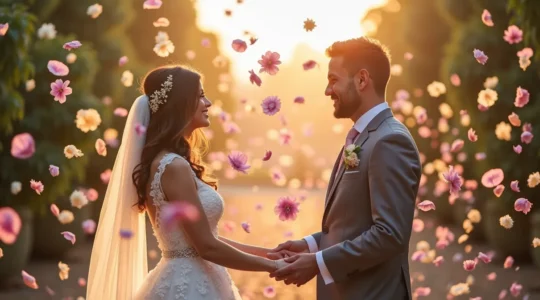
How to Use Colorful Petals for a Confetti Toss Without Staining Dresses?
Achieving a stunning, photogenic petal toss without staining a wedding dress or incurring venue cleaning fees is entirely possible with logistical precision. Fresh, deeply colored petals (like red roses) contain water-soluble pigments that can permanently stain fabric under pressure. Venue…
Read more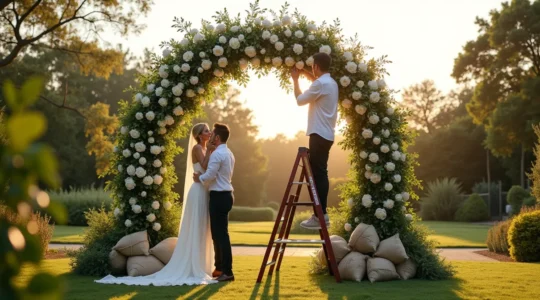
How to Build a Large-Scale Floral Arch That Won’t Topple Over in the Wind?
A magnificent floral arch’s success isn’t determined by its flowers, but by the unseen engineering that keeps it standing against the elements. Prioritize counterweight mechanics and structural load calculations over simple aesthetics. Understand the physics of the “sail effect” to…
Read more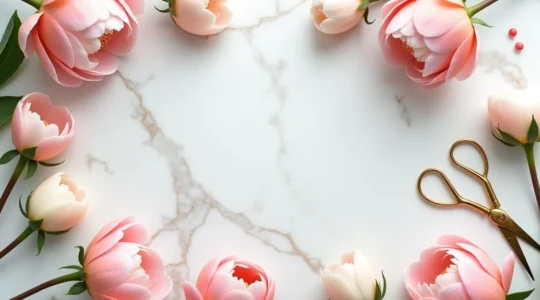
Why Peonies Cost So Much and How to Get the Look When They’re Out of Season
Your dream of an August peony wedding isn’t impossible, but it requires strategy, not just a bigger budget. The high cost is driven by a global supply chain gap in late summer, where available blooms are often poor-quality “dregs” from…
Read more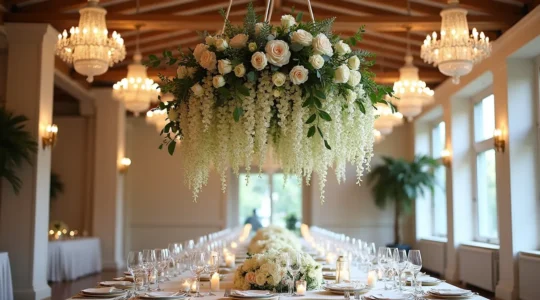
How to Install Suspended Florals Without Risking Safety or Budget?
Safely hanging a floral cloud is an engineering project, not just a decorating task. Success depends on verifying the venue’s structural load capacity and using multiple, properly rated anchor points. Strategic use of high-quality artificial flowers significantly reduces weight and…
Read more
How to Select Floral Arrangements That Won’t Wilt Before the Cake Cutting?
The longevity of your wedding flowers depends more on structural mechanics and plant biology than on aesthetics. Strategic flower selection based on environmental resilience, not just color, is the primary defense against wilting. Professional hydration techniques and modular construction are…
Read more