Atmospheres & Themes
A wedding atmosphere transcends mere decoration. While centerpieces and color palettes provide visual foundation, true ambiance emerges from the orchestration of multiple sensory layers that evolve throughout your celebration. The difference between a beautifully decorated space and a genuinely immersive experience lies in how thoughtfully you engage sight, sound, scent, and spatial flow to guide your guests through an emotional journey.
Creating a cohesive atmosphere requires understanding that your wedding isn’t a static tableau—it’s a living, breathing event that shifts from the anticipation of a ceremony to the intimacy of dinner, then transforms into the energy of celebration. This comprehensive approach to atmospheric design considers not just what your guests see, but what they hear in quiet moments, what fragrances transport them emotionally, and how the physical space adapts to support each phase of your day.
Orchestrating the Temporal Flow of Your Wedding
Think of your wedding day as a symphony rather than a single note. The atmosphere at your cocktail hour should feel distinctly different from your reception’s peak dancing moment, yet both must connect through intentional design threads. This temporal progression prevents monotony and creates memorable punctuation marks throughout your celebration.
The visual evolution begins with lighting. Ceremony spaces often benefit from soft, natural or warm-toned illumination that emphasizes solemnity and romance. As guests transition to cocktails, lighting can brighten slightly, encouraging social interaction. Dinner invites a return to intimate, focused lighting at tables with dramatic uplighting on architectural features. Finally, the dance floor demands dynamic, responsive lighting that energizes rather than calms.
Strategic timing of key moments amplifies this progression. Your grand entrance gains maximum impact when it arrives at the precise intersection of guest anticipation and energy level—typically after guests have settled with drinks and appetizers but before restlessness sets in. Similarly, the transition from dinner to dancing benefits from deliberate cues: a lighting shift, a tempo change in background music, or even the physical reconfiguration of lounge furniture to open the dance floor and signal a new chapter of the evening.
Multi-Sensory Design: Beyond What Meets the Eye
While visual elements dominate most wedding planning conversations, the most memorable atmospheres engage all five senses in careful coordination. This multi-sensory approach creates emotional resonance that photographs alone cannot capture.
Visual Elements and Lighting Dynamics
Lighting serves as your most versatile atmospheric tool. Unlike static floral arrangements, lights can shift color temperature, intensity, and direction throughout your event. Synchronizing lighting changes with musical cues creates dramatic moments—imagine uplighting that pulses subtly with your first dance song, or a color shift from warm amber to cool blue as your reception transitions into late-night celebration. These coordinated moments telegraph emotional shifts to your guests on a subconscious level.
Auditory Layers and Soundscapes
Sound design extends far beyond your DJ’s playlist. Consider the acoustic character of pre-ceremony moments: nature sounds like rustling leaves or gentle water features can calm nervous energy and create a sense of place, particularly in outdoor settings. During dinner, background music should sit at a volume that encourages conversation without forcing guests to raise their voices—a detail often overlooked but crucial for intimacy. Even silence, strategically deployed during key ceremony moments, becomes a powerful atmospheric element.
The Often-Overlooked Power of Scent
Fragrance operates on a primal level, triggering memory and emotion more directly than any other sense. A subtle scent profile can anchor your wedding in your guests’ memories for years. However, this remains the most delicate sensory element to manage, requiring careful attention to concentration, diffusion methods, and potential conflicts with food service.
Crafting a Scent Experience Without Overwhelming Guests
Scent design walks a fine line between imperceptible and overpowering. The goal is subliminal enhancement rather than obvious presence—guests should feel the atmosphere without consciously identifying its source.
Navigating Fragrance Sensitivities
Fragrance sensitivity affects a significant portion of the population, ranging from mild headaches to severe allergic reactions. In enclosed venues, this concern intensifies. The solution isn’t to abandon scent entirely, but to embrace restraint and strategic placement. Position diffusers away from seating areas and ventilation intake points. Choose cleaner, lighter scent profiles over heavy, complex fragrances. Consider offering a completely fragrance-free zone, perhaps a outdoor terrace or designated lounge area, where sensitive guests can retreat without missing the celebration.
Balancing Floral, Food, and Ambient Scents
The most common scent mistake involves competing fragrance sources. Heavily perfumed centerpiece flowers, aromatic dinner courses, and ambient candles can create an olfactory cacophony. Plan your scent strategy holistically: if your menu features herb-forward dishes, complement rather than compete with rosemary or lavender-based ambient scents. If your floral designer proposes garden roses or stargazer lilies—both intensely fragrant—reduce or eliminate additional scenting. The principle is layering, not multiplication.
Seasonal and Spatial Considerations
Scent behaves differently depending on temperature, humidity, and space volume. Summer weddings in warm climates need lighter, more citrus-based profiles that won’t become cloying. Winter celebrations can support richer notes like pine, cinnamon, or vanilla. Large venues like industrial warehouses require different diffusion strategies than intimate restaurant spaces—consider multiple smaller scent sources rather than one powerful diffuser. In expansive spaces, scent can define zones: perhaps a fresh linen fragrance in lounge areas and a subtle floral note near the ceremony backdrop, creating distinct atmospheric pockets within a single venue.
Sound Design: Creating Acoustic Environments
Your wedding’s auditory landscape shapes guest behavior and emotional state more than most couples realize. Music selection represents just one component of comprehensive sound design.
A thoughtfully curated playlist builds intimacy during dinner by starting with familiar, nostalgic selections at low volume, gradually introducing more personal or unexpected choices as guests relax. This progression demonstrates intentionality—guests unconsciously recognize that every detail has been considered. Beyond the dance floor, soundscapes serve functional purposes: nature sounds mask awkward silences during cocktail hour, while acoustic instrumental music during dinner provides conversational cover without lyrical distraction.
The often-neglected acoustic environment in lounge areas and outdoor spaces deserves equal attention. These zones offer respite from high-energy dance floors, and their sound character should reflect that purpose. Lower tempos, minimal percussion, and perhaps jazz or ambient electronic music signal that these spaces serve different functions. This acoustic zoning helps guests self-select their experience—extroverts can dance while introverts enjoy meaningful conversation in thoughtfully quieter environments.
Advanced sound design includes synchronization with other sensory elements. When lighting shifts from warm to cool tones, a corresponding musical transition from acoustic to electronic arrangements reinforces the atmospheric change. These coordinated moments create cohesive experiences that feel professionally orchestrated rather than haphazardly assembled.
Spatial Transformation and Guest Flow
The physical space itself becomes an atmospheric element when you consider how guests move through and occupy it throughout your celebration. Transforming a venue means more than decoration—it requires reimagining how the architecture serves different moments.
Creating intimate pockets within massive spaces like industrial warehouses presents a unique challenge. Large volumes can feel impersonal without strategic interventions. Define smaller zones using lighting rather than physical barriers: pool lights create “rooms” within open spaces without obstructing sight lines or airflow. Furniture groupings positioned perpendicular to walls rather than against them encourage circulation and conversation while making vast square footage feel purposeful rather than empty.
The reconfiguration of lounge areas for after-party phases demonstrates atmospheric adaptability. As formal dinner ends, removing a few cocktail tables and repositioning lounge furniture into more casual, conversation-oriented clusters signals a shift in tone. This physical transformation gives guests permission to relax formal behavior without explicit announcement. Some couples even introduce new design elements during this transition—perhaps string lights that weren’t illuminated earlier, or casual floor seating with pillows that appears only after cake cutting.
Guest flow patterns deserve equal consideration. Bottlenecks at bars or restroom corridors disrupt atmosphere regardless of how beautiful your design. Map expected traffic patterns and ensure multiple access points to high-traffic areas. Consider how guests will move from ceremony to cocktails to dinner—ideally this progression feels natural and inevitable rather than confusing or forced.
Balancing Style and Tone Throughout
Perhaps the most sophisticated atmospheric challenge involves maintaining stylistic coherence while allowing emotional evolution throughout your event. Many couples struggle particularly with balancing whimsical elements against elegant sophistication when hosting adult guests.
The solution lies in understanding that whimsy and elegance aren’t opposites—they’re different expressions that can coexist through thoughtful integration. Playful elements gain sophistication through execution quality and context. For example, an interactive cocktail garnish station with artisanal bitters and specialty ice becomes whimsical through novelty but maintains elegance through premium ingredients and refined presentation. Similarly, unexpected seating like vintage furniture creates visual surprise while quality upholstery and careful arrangement preserve formal atmosphere.
Color palette serves as your primary coherence tool when blending tones. A restrained base palette with strategic accent colors allows personality without chaos. Perhaps your dinner space features sophisticated neutral tones with metallics, while lounge areas introduce one or two playful accent colors through pillows or art pieces. This creates variety within unity—different zones feel distinct yet clearly part of the same event.
Consistency in finish quality also maintains elevated atmosphere even when introducing playful concepts. If your overall aesthetic skews elegant, ensure whimsical touches share the same production values. Hand-lettered signs printed on premium stock with professional mounting feel intentional; hastily written chalkboard signs undermine sophistication regardless of content.
Ultimately, atmospheric design succeeds when guests feel rather than analyze your choices. The most effective wedding atmospheres operate subtly, guiding emotional experience without demanding attention. By orchestrating sensory elements, spatial transformation, and temporal progression with intention and restraint, you create not just a beautiful event, but a truly immersive experience that resonates long after the final dance ends.
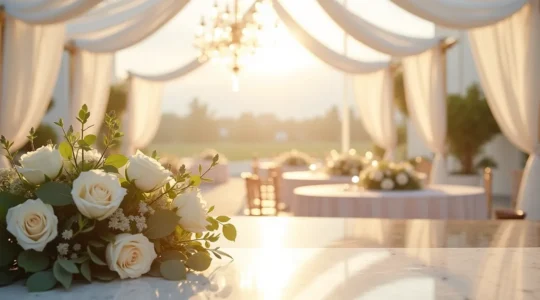
How to Design a Wedding Scent That Creates Memories, Not Allergies
The secret to a memorably scented wedding is not adding more fragrance, but strategically controlling it with professional technology and a guest-centric mindset. Heat from candles damages fragrance and creates overwhelming “hot spots,” while cold-air diffusion ensures a subtle, even,…
Read more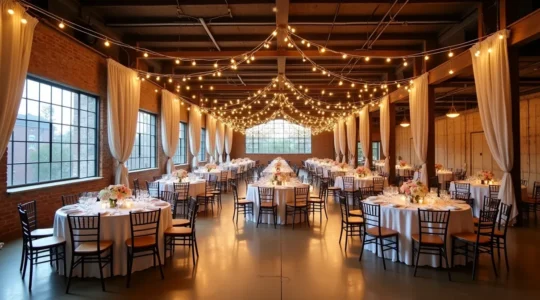
How to Create Intimate Pockets in a Giant Warehouse Venue?
The secret to an intimate warehouse wedding isn’t filling the space with decor, but strategically sculpting your guests’ perception of it. Create a lower “visual horizon” with lighting to make the ceiling feel closer and the room cozier. Use soft…
Read more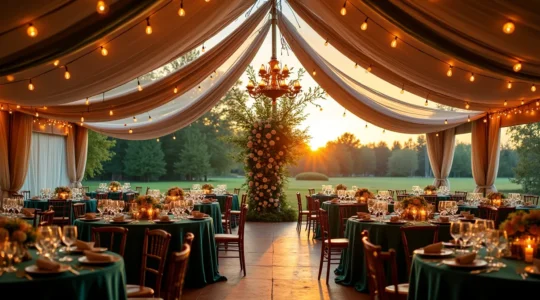
How to Create a Whimsical Vibe That Doesn’t Look Like a Child’s Birthday Party
Contrary to popular belief, an elegant whimsical wedding isn’t achieved by collecting quirky trinkets; it’s born from the deliberate curation of a mature, fantasy atmosphere. Ground your playful vision with sophisticated, deep jewel-toned color palettes instead of relying solely on…
Read more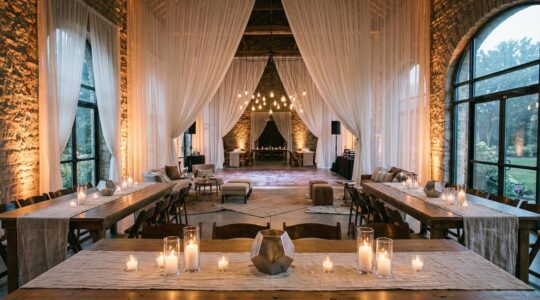
How to Design an Immersive Wedding Experience That Engages All 5 Senses?
Designing an immersive wedding is not about adding more elements, but about scripting the guest’s sensory journey to control the event’s emotional arc. Strategic zoning of sound, light, and scent creates distinct emotional chapters throughout the event. The layout of…
Read more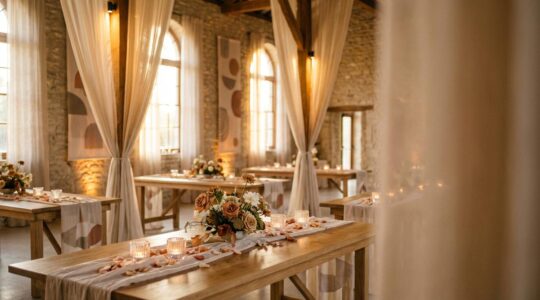
How to Engineer a Romantic Wedding Mood That Feels Authentic, Not Cliché
The secret to an authentic romantic atmosphere is not adding more ‘romantic’ items, but intentionally engineering a multi-sensory experience that guides your guests’ emotions. Lighting temperature and quality dictate mood more than any other element; warm, high-CRI light is non-negotiable…
Read more