Spaces & Scenography
The moment your guests step into your wedding venue, they’re entering more than just a decorated room—they’re crossing the threshold into a carefully orchestrated experience. Wedding scenography goes far beyond selecting pretty centerpieces or elegant linens. It’s the art and science of shaping physical space to guide movement, influence mood, and create moments that linger in memory long after the last dance.
From the welcome area that sets the emotional tone to the dance floor that captures celebratory energy, every spatial decision creates ripple effects throughout your event. Understanding how guests move through spaces, how architectural elements can be enhanced or disguised, and how technical considerations impact your creative vision will transform you from a decorator into a true spatial designer. This comprehensive exploration reveals the foundational principles that separate forgettable venues from unforgettable experiences.
Why Spatial Design Shapes the Entire Wedding Experience
The first five minutes of your guests’ arrival carries disproportionate psychological weight. Research in environmental psychology confirms that initial spatial impressions establish an emotional baseline that colors the entire event. A cramped, confusing entrance creates anxiety and disconnection, while a thoughtfully designed welcome area communicates care, intention, and sets expectations for the celebration ahead.
Scenography operates on multiple sensory and psychological levels simultaneously. The visual transition between indoor and outdoor spaces, the acoustic quality of a ceremony hall, the intimate scale of lounge seating—each element sends subtle signals to your guests about how to feel and behave. When spatial design aligns with your wedding’s emotional intent, guests instinctively relax into the experience. When it conflicts, even beautiful décor can’t overcome the underlying spatial dissonance.
Think of your venue as a three-dimensional narrative. Each zone tells part of your story, and the transitions between them create the rhythm of the day. A successful scenographic approach considers not just individual moments but the cumulative journey from arrival through departure, ensuring coherence and intentionality at every turn.
Mastering Guest Flow and Traffic Dynamics
Guest flow is the invisible architecture of your wedding. Poor circulation patterns create frustration, bottlenecks, and missed connections. Exceptional flow feels effortless—guests naturally discover each area without confusion or congestion.
Preventing Bottlenecks Before They Form
The classic wedding bottleneck occurs at predictable pressure points: the guest book table, the bar entrance, and the transition from cocktail hour to reception. These congestion zones stem from a mismatch between guest volume and spatial capacity. A single guest book station for 150 guests creates a queue that blocks the welcome area for the first 30 minutes. Strategic solutions include multiple signing stations, repositioning tables away from main circulation paths, or reimagining the guest book entirely as a spatial installation guests can approach from multiple angles.
Furniture Placement as Traffic Control
Every piece of furniture either facilitates or obstructs movement. Lounge seating during cocktail hour serves dual purposes: it provides comfort for guests who prefer sitting, and it strategically manages circulation patterns by creating intentional pathways. Placing lounge groupings perpendicular to the bar rather than directly in front of it prevents the common mistake of blocking access. Similarly, rug placement defines zones without physical barriers, using visual cues to organize space and guide guest distribution across large areas.
Creating Transition Zones Between Activity Pockets
Dead zones—those awkward, empty spaces guests avoid—typically result from poor transition design. The area between the dance floor and dining tables needs careful consideration. If it’s too narrow, guests feel squeezed. Too wide, and it becomes a barren no-man’s-land. Effective transition zones incorporate elements that justify their existence: a dramatic floral installation that doubles as a photo backdrop, strategic lighting that defines the boundary, or low cocktail tables that invite lingering between activities.
Working With (or Against) Your Venue’s Architecture
Every venue arrives with inherent gifts and challenges. Mastering scenography means recognizing which architectural features to celebrate, which to disguise, and which constraints to accept.
Low Ceilings and Creating Vertical Lift
A low-ceiling venue can feel oppressive if not addressed thoughtfully. The solution isn’t to ignore the limitation but to work with optical principles. Vertical lines draw the eye upward, creating the perception of height even when physical space is limited. Tall, slender centerpieces, floor-to-ceiling drapery with strong vertical pleating, and uplighting that washes walls from floor to ceiling all employ this principle. Conversely, reducing furniture density prevents the space from feeling cluttered, which compounds the low-ceiling effect.
Taming Large Halls Without Emptying Your Budget
Oversized ballrooms present the opposite challenge—how to create intimacy and fullness without quintuple floral budgets. Strategic drapery is your most powerful tool, literally shrinking the room by creating fabric walls that redefine boundaries. Pipe and drape systems hide unsightly airwalls while simultaneously reducing perceived square footage. Careful layout mapping identifies dead zones before setup begins, allowing you to concentrate decorative impact where guests actually gather rather than trying to fill every corner.
Disguising Venue Imperfections
Ugly carpet patterns, visible marquee structures, and uneven outdoor terrain are common scenographic obstacles. Each requires specific solutions: patterned carpets can be neutralized with edge-to-edge floor coverings or large area rugs that establish new visual foundations. Marquee weddings demand fabric treatments that soften industrial framing and create romance from utilitarian structure. Outdoor flooring options range from temporary dance floors to interlocking deck tiles that create stable, level surfaces over grass. The principle remains consistent: address imperfections structurally before layering decorative elements.
Ceremony Spaces: Designing for Emotion and Sightlines
Ceremony design balances solemnity with visibility, creating a space that honors the moment while ensuring every guest feels included.
Sightlines matter profoundly. A ceremony beautiful from the couple’s perspective but invisible to half the guests fails its primary purpose. Designing from every guest angle means considering not just the altar focal point but the viewing experience from the back row, the side sections, and even standing room areas. Aisle width calculations impact both aesthetics and function—too narrow feels cramped and complicates processionals, while excessively wide aisles create distance between the couple and their community.
Environmental factors introduce real constraints. Sun glare during outdoor vows can ruin both the experience and photographs. Timing your ceremony relative to sun angle, positioning the altar to avoid direct backlighting, or incorporating architectural shade elements transforms a potential disaster into a comfortable, photogenic moment. Indoor ceremonies require attention to acoustics and temperature; a solemn atmosphere depends partly on appropriate sound quality and thermal comfort.
The optimal aisle width typically ranges from 4 to 6 feet, balancing processional dignity with spatial intimacy. Wider aisles suit larger venues and formal aesthetics, while narrower paths create closeness in smaller settings.
Reception Layouts That Energize and Connect
Reception spatial design serves competing goals: facilitating conversation during dinner while maximizing energy when dancing begins. The layout must work across multiple phases of the evening.
Banquet Configurations for Connection and Service
Table arrangement impacts conversation quality and service efficiency simultaneously. Mixing table shapes—combining rounds with a few long farm tables—adds visual interest while creating varied social dynamics. Rounds encourage full-table conversation; long tables foster intimacy with immediate neighbors. Regardless of shape, calculating adequate service corridors (typically 6 feet minimum) allows waitstaff to move efficiently without disrupting guests. Poor corridor planning creates awkward server-guest collisions and slowed service.
Dance Floor Positioning and Energy Dynamics
The dance floor’s relationship to the DJ, bar, and dining tables determines reception energy flow. Positioning the DJ adjacent to rather than across from the dance floor concentrates sound where it belongs while reducing noise bleed into conversation areas. The bar should be near but not blocking the dance floor—thirsty dancers will create congestion if the only path to drinks cuts through the dance area. Ceiling height profoundly impacts party atmosphere; higher ceilings disperse energy and require more powerful lighting and sound to create excitement, while lower ceilings naturally intensify and contain celebratory energy.
Managing the Ceremony-to-Reception Transition
Flipping a space from ceremony to reception configuration requires careful choreography. Furniture removal strategies depend on guest management—ideally, cocktail hour occurs in a separate space, allowing your setup team to work efficiently. When that’s impossible, strategic furniture placement during ceremony allows quick transitions: chairs designed to stack rapidly, aisle décor that converts to reception focal points, and pre-set tables covered by removable ceremony draping all minimize transition time and labor.
Vertical Drama: Ceilings as Your Fifth Wall
Most couples focus on table-level design, leaving the ceiling—often 60% of visible surface area—completely neglected. Vertical scenography transforms ordinary rooms into immersive environments.
Hanging installations create focal points that command attention from every angle. Whether suspended floral clouds, geometric installations, or romantic fabric treatments, installation height determines visual impact. Too high, and the piece disappears into the ceiling architecture. Too low, and it obstructs sightlines and feels oppressive. The sweet spot typically places the bottom of installations 7 to 9 feet from the floor—high enough to clear heads comfortably, low enough to feel present and intentional.
Engineering hanging décor requires understanding rigging points and weight limits. Identifying structural rigging points in your venue during early planning prevents last-minute design revisions. Permanent ballroom rigging systems support specific weight loads; tents require different calculations based on frame strength and installation methods. Weight distribution for large installations must account not just for the décor itself but also hardware, safety factors, and dynamic loads if elements move or sway.
Ceiling treatment patterns create different spatial effects. Radial designs emanating from a central chandelier enhance focal points. Linear installations emphasize room length or guide eyes toward specific areas. Cloud-like organic arrangements soften rigid architecture. Each pattern choice communicates different aesthetic intentions and works better with certain venue styles—be mindful of clashing with traditional venue architecture when introducing contemporary installation art into historic spaces.
Technical Foundations: Rigging, Weight and Installation
Creative vision must rest on technical feasibility. Understanding the practical constraints of installation ensures your scenographic ambitions can actually be executed safely and beautifully.
Heavy furniture—solid wood farm tables, acrylic pieces, large lounge elements—presents logistical challenges beyond aesthetics. Moving heavy wood tables requires adequate labor, equipment, and time. A single 10-foot solid wood table can weigh 200+ pounds, necessitating four strong people and careful coordination to avoid injury or venue damage. Acrylic furniture, while stunning, scratches easily during setup and requires protective handling and specific cleaning protocols.
Outdoor installations introduce durability concerns absent from climate-controlled ballrooms. Draping weights must be calculated for wind conditions—a romantic outdoor fabric treatment becomes dangerous if not properly secured. Fresh floral installations wilt rapidly in heat and direct sun without water sources or shade. Eco-friendly outdoor cleanup protocols ensure your celebration doesn’t harm the natural environment, requiring biodegradable materials and thorough post-event site restoration.
Tent rigging carries unique weight limits based on frame type, age, and installation quality. Unlike permanent venues with engineered load-bearing points, tent rigging must distribute weight carefully across the frame structure. Placement decisions—particularly elements over the dance floor—require coordination with tent providers to verify attachment points and load capacities. The “elbow room” calculation for guest comfort (typically 10-12 square feet per person for seated dining, 6-8 for cocktail hour) ensures adequate density without overcrowding.
Wedding scenography transforms empty venues into emotional landscapes. By mastering spatial flow, embracing architectural realities, and grounding creative vision in technical understanding, you create environments that don’t just look beautiful—they feel intentional, guide experience, and elevate every moment of your celebration. Each decision, from aisle width to ceiling treatments, contributes to a cohesive spatial story that your guests will move through, remember, and treasure.
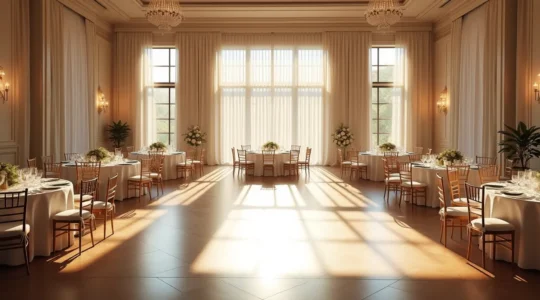
How to Choose a Banquet Layout That Maximizes Guest Interaction?
Stop designing your wedding layout for photos; start engineering it for human connection and seamless flow. The choice between round and rectangular tables dictates conversational dynamics, not just aesthetics. Proper spacing (the “60-inch rule”) is non-negotiable for efficient service and…
Read more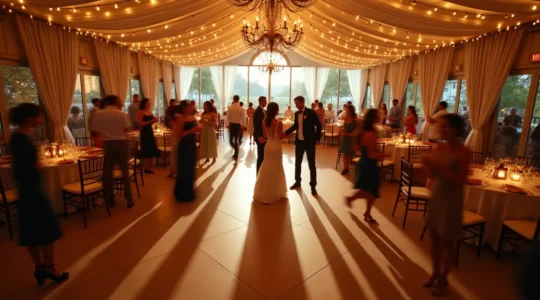
How to Configure a Reception Space That Keeps the Dance Floor Packed?
The energy of your wedding party is not random; it’s engineered by the layout of your reception space. Minimize “travel friction” by placing the bar close to the dance floor, creating a self-sustaining energy loop. Use lighting and decor to…
Read more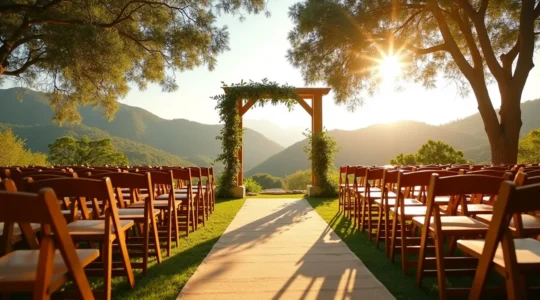
How to Design a Ceremony Area That Is Both Solemn and Photogenic
A truly memorable ceremony space is engineered for emotion and light, not just decorated. Prioritize functional design, like aisle width and sun orientation, to ensure comfort for guests and optimal conditions for photographers. Frame the couple intentionally with structures that…
Read more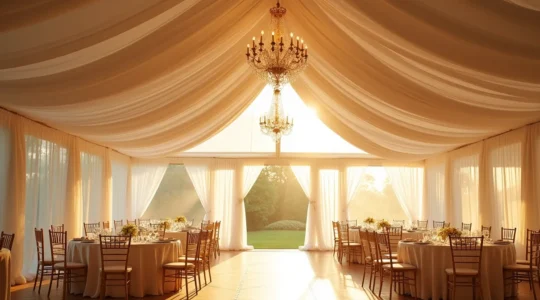
How to Decorate a Marquee Tent so It Doesn’t Look Like a Camping Trip?
Transforming a tent into a luxury venue isn’t about covering it in flowers; it’s about mastering its underlying structure first. Draping choices, specifically full ceiling liners, are what truly define the interior architecture and hide the metal skeleton. A solid,…
Read more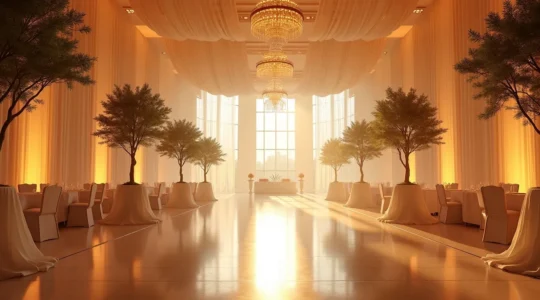
How to Decorate a Massive Hall Without Spending a Fortune on Flowers?
In summary: Stop trying to fill a huge hall with small decor; it’s a losing battle. Instead, use strategic architectural and lighting tricks to control the space. Leverage “volume over surface.” A few tall trees or hanging installations have more…
Read more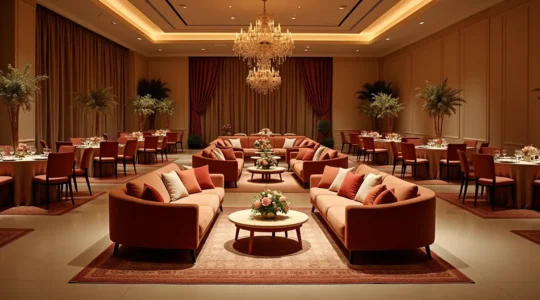
How to Use Lounge Seating to Direct Traffic Flow at Your Reception?
A large guest list doesn’t have to mean chaos; the key is using lounge furniture not as passive decoration, but as a strategic tool for guest engineering. Define clear “destinations” with area rugs and focused lighting to subconsciously guide guests…
Read more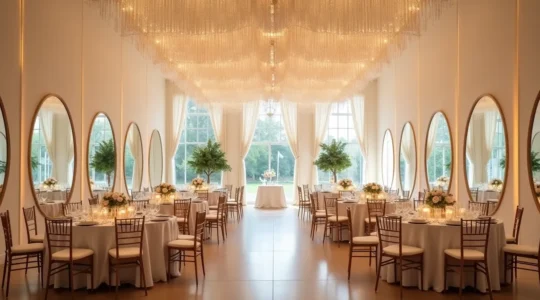
How to Create an Airy Spatial Dynamic in a Low-Ceiling Room: A Spatial Illusionist’s Guide
Creating an airy feel in a low-ceiling room isn’t about minimal decor; it’s about the strategic manipulation of vertical space and perception. Drawing the eye upward with strong vertical lines is the most powerful illusion for creating perceived height. Reducing…
Read more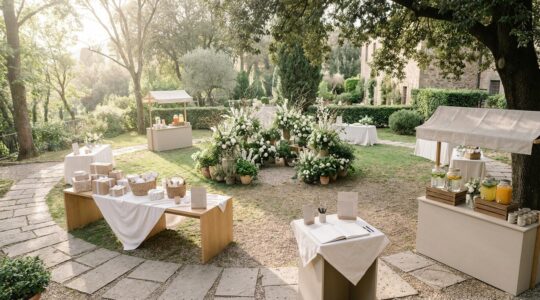
How to Design a Welcome Area That Eliminates Bottlenecks for 150+ Guests?
The secret to a smooth wedding arrival for 150+ guests isn’t more decoration; it’s treating your welcome area as a sophisticated guest-flow management system. A chaotic start ruins the guest experience, which 75% of couples prioritize above all else. Strategic…
Read more