Plants & Nature
Incorporating natural elements into wedding decor has evolved from simple floral centerpieces to sophisticated botanical installations that transform entire venues. Plants and nature-based decor now serve as architectural elements, color palettes, and even as the central design philosophy for ceremonies and receptions. Yet working with living materials presents unique challenges that synthetic alternatives never pose: wilting, weather sensitivity, structural limitations, and the constant need for hydration.
Understanding how to select, prepare, and maintain botanical elements throughout your wedding day requires both horticultural knowledge and design expertise. From choosing varieties that can withstand outdoor heat to mastering the mechanics of soil-free installations, successful plant-based decor balances aesthetic ambition with practical reality. This comprehensive resource explores the fundamental considerations every couple and decorator must understand when working with fresh flowers, ferns, eucalyptus, dried elements, and living trees to create stunning, resilient natural wedding decor.
Planning for Environmental Conditions
The single most common failure in wedding floral design stems from ignoring environmental realities. A centerpiece that looks perfect in a climate-controlled studio can collapse within hours when exposed to outdoor heat, direct sunlight, or unexpected weather shifts.
Understanding Seasonality and Heat Tolerance
Seasonality affects both availability and performance. Flowers forced to bloom out of season often lack the structural integrity of those harvested at their natural peak. Spring blooms like peonies and ranunculus struggle in summer heat, while hardy fall varieties like dahlias and chrysanthemums can withstand temperature fluctuations. Roses, despite their year-round availability, show marked differences in petal thickness and resilience depending on growing conditions.
Heat tolerance varies dramatically between species. Tropical flowers such as orchids and anthuriums actually thrive in warmth, while delicate sweet peas and lisianthus can wilt within 30 minutes of exposure to temperatures above 85°F (29°C). Think of heat-sensitive flowers like ice cream—they require constant cooling or rapid consumption.
Hydration Strategies for Hot Days
On warm days, floral water consumption can increase by 200-300%. Adequate hydration requires more than simply adding water to vases. Stems must be freshly cut at an angle to maximize water uptake, and any foliage below the waterline should be removed to prevent bacterial growth that blocks vascular systems.
For outdoor ceremonies, consider these hydration approaches:
- Water tubes attached to individual stems in bouquets and boutonnieres
- Floral foam soaked in water and preservative for arrangements without direct water access
- Misting stations where arrangements are lightly sprayed every 30-45 minutes
- Shaded staging areas where florals rest between ceremony and reception setup
Choosing Hardy and Impactful Varieties
Not all beautiful flowers make practical wedding flowers. The gap between visual appeal and structural durability requires careful navigation, especially for events lasting eight hours or more.
Selecting Resilient Flower Varieties for Outdoor Use
Hardy outdoor flowers share common characteristics: thick petals, woody stems, and low moisture content in their blooms. Roses with tightly packed petals, succulents, proteas, and sunflowers can endure direct sunlight and temperature variations that would destroy more delicate options.
Conversely, avoid hydrangeas (which wilt rapidly despite thick appearance), gardenias (prone to browning when touched), and stephanotis (extremely heat-sensitive). If you love a delicate variety, reserve it exclusively for indoor spaces or shaded areas with controlled temperatures.
Creating Large Focal Points with Trees
Trees provide instant architectural drama that flowers alone cannot achieve. A mature olive tree, fig tree, or birch can anchor a ceremony space or frame an entrance, creating vertical impact without requiring hundreds of individual stems.
Renting live trees offers several advantages over cut branches: roots keep foliage fresh throughout multi-day events, trees can be repositioned as needed, and the environmental impact is minimal since they return to the nursery. Potted trees do require special considerations—adequate container size (minimum 15-gallon for visual proportion), reinforcement for wind stability, and watering schedules that account for increased stress during transport.
Silver Dollar vs. Seeded Eucalyptus
These two eucalyptus varieties dominate wedding decor, yet their characteristics differ significantly. Silver Dollar eucalyptus features round, flat leaves with a dusty blue-gray finish—ideal for creating full, textured arrangements with a modern aesthetic. The broad leaves provide excellent coverage, meaning you need fewer stems to achieve volume.
Seeded eucalyptus presents elongated leaves with visible seed pods along the stem, offering a more organic, wild appearance. The seeds add dimensional interest but can drop as they dry, potentially creating cleanup concerns for indoor venues. Seeded varieties work beautifully in cascading arrangements where the natural drape enhances movement.
Working with Ferns for Texture and Volume
Ferns serve as the workhorses of botanical wedding design, providing lush greenery that softens harder floral elements and creates depth in arrangements. Yet their tropical origins make them simultaneously beautiful and demanding.
Using Cascading Ferns Effectively
Cascading ferns—particularly leather leaf and tree ferns—excel at adding vertical dimension and softening rigid structures like chuppahs, arches, and table edges. Their natural downward growth creates elegant movement without appearing messy or overgrown.
To maximize their impact, position cascading ferns at elevated points where gravity can showcase their draping quality. Attach them securely to frameworks using floral wire, ensuring stems remain in contact with water sources. A single well-placed cascading fern can visually extend an arrangement by 12-18 inches, creating the illusion of abundance without additional cost.
The Unique Challenge of Maidenhair Ferns
Maidenhair ferns represent both peak delicacy and maximum maintenance. Their fine, lace-like fronds create an ethereal texture unmatched by any other greenery, but their wilting speed is notorious—often showing stress within 2-3 hours without proper humidity.
These ferns require near-constant moisture and humidity levels above 60%. For wedding use, maidenhair works best in sheltered applications: tucked into bouquets with water tubes, featured in boutonnières that remain cool against fabric, or incorporated into arrangements that will be refrigerated until the last possible moment. Avoid using maidenhair in ceremony decor that must be installed hours in advance or in any outdoor setting without shade and misting.
Managing Humidity for Fern Freshness
Creating appropriate humidity for ferns requires environmental modification. Simple approaches include:
- Store arrangements in bathrooms with hot showers running to create steam
- Use humidity domes or plastic sheeting to trap moisture around installations
- Place water-filled trays near arrangements to increase ambient humidity
- Schedule delivery as close to event start as possible to minimize exposure time
Incorporating Dried and Preserved Elements
Dried botanicals have surged in popularity as couples seek decor that can be prepared weeks in advance and repurposed after the wedding. Unlike fresh materials, dried elements improve with age, developing richer colors and more interesting textures as they cure.
Installing Hanging Dried Palms for Boho-Chic Impact
Dried palm leaves—especially fan palms and date palm fronds—create bold, geometric statements overhead. Their architectural quality works particularly well suspended above dance floors, head tables, or entrance walkways where they frame spaces without obstructing sightlines.
Installation requires secure attachment points capable of supporting weight (dried palms can weigh 2-5 pounds each) and planning for air circulation. Unlike fresh palms that remain flexible, dried fronds are brittle and can snap if bent too sharply. Use monofilament fishing line for invisible suspension, and position palms at varying heights to create layered depth.
Sourcing Moss for Naturalistic Details
Moss adds organic texture to everything from table runners to escort card displays. Preserved sheet moss remains the most practical option for events—it’s lightweight, doesn’t require watering, and maintains its green color through glycerin treatment.
When sourcing moss, verify whether it’s preserved or dried. Dried moss is less expensive but appears brown and brittle, while preserved moss retains flexibility and vibrant color. Ethical sourcing matters here—ensure suppliers harvest moss sustainably, as wild moss ecosystems recover slowly from over-collection.
Styling Eucalyptus Runners Without Flatness
Eucalyptus runners have become ubiquitous on wedding tables, but many appear disappointingly one-dimensional. The key to dimensional runners lies in layering multiple eucalyptus varieties at different heights rather than laying stems flat.
Create depth by establishing a base layer of Silver Dollar eucalyptus, then adding seeded varieties that arch upward, and finishing with delicate Baby Blue eucalyptus that spills over table edges. Incorporate occasional floral clusters or taper candles at varying heights to break the horizontal plane. This approach transforms a flat greenery strip into a dynamic landscape that photographs beautifully from any angle.
Structural and Technical Solutions
The most impressive botanical installations succeed not through floral artistry alone, but through sound engineering. Understanding the mechanics behind soil-free structures, wind resistance, and volumetric illusion separates amateur attempts from professional results.
Mechanics of Soil-Free Structures
Soil-free installations—such as living walls, suspended gardens, or floral chandeliers—rely on alternative growing media and hydration systems. Floral foam remains the industry standard, providing both structural stability and water retention. High-density foam can support heavy blooms like hydrangeas and peonies, while maintaining moisture for 12-18 hours.
For longer events or living installations, hydroponic systems with concealed water reservoirs and wicking materials provide continuous hydration. These systems require planning for water weight (one gallon weighs 8.3 pounds), drainage to prevent dripping, and access points for refilling without dismantling arrangements.
Wind Resistance Strategies for Outdoor Arches
Outdoor floral arches face constant wind challenges that can topple structures or strip blooms from stems. Effective wind resistance combines weight distribution, flexible materials, and strategic placement.
Base structures should be weighted with sandbags or concrete blocks (minimum 40 pounds per leg for standard arches), positioned low to create stability. Use chicken wire or flexible netting as the foundation for attaching florals—these materials move with wind rather than creating rigid resistance that can snap. Orient arches perpendicular to prevailing winds when possible, and avoid top-heavy designs that create sail effects.
Creating Volume with Fewer Stems
Budget-conscious couples often need to maximize visual impact while minimizing stem counts. Strategic techniques include:
- Choosing naturally full blooms like hydrangeas, peonies, or garden roses that provide substantial coverage per stem
- Incorporating greenery and branches to create structural framework that fills space inexpensively
- Clustering arrangements rather than distributing them evenly—three abundant centerpieces create more impact than six sparse ones
- Using mirrors or reflective surfaces beneath arrangements to double their apparent volume
Sustainable and Eco-Friendly Approaches
Environmental consciousness increasingly influences wedding design decisions. Plant-based decor offers inherent sustainability advantages, but thoughtful implementation amplifies these benefits while creating meaningful design statements.
Creating Living Plant Sculptures as Decor Statements
Living plant sculptures—topiaries, shaped hedges, or potted arrangements designed for post-wedding use—represent the pinnacle of sustainable decor. Unlike cut flowers that last days, living sculptures can thrive for years, serving as lasting reminders of the celebration.
These installations require advance planning to ensure plants reach desired maturity and shape. Rosemary topiaries, boxwood spheres, and succulent wreaths can be started months before the wedding, then transported to the venue in containers concealed by decorative cache-pots or natural fiber wrapping. After the event, they become guest favors, home garden additions, or donated to community spaces.
Renting Live Trees for Perimeter Decor
Tree rental services have emerged as sustainable alternatives to purchasing cut branches or artificial alternatives. Renting eliminates waste while providing professional-quality specimens that would be prohibitively expensive to purchase outright.
Rental trees typically arrive in transport containers, pre-shaped and healthy. Coordinate delivery timing to minimize plant stress—ideally 24-48 hours before the event to allow acclimation, but not so early that extended indoor time weakens the trees. Communicate clearly about venue conditions (indoor vs. outdoor, lighting, temperature) so rental companies can select appropriate species.
Integrating plants and natural elements into wedding decor requires balancing aesthetic vision with botanical realities. By understanding seasonality, selecting resilient varieties, mastering care techniques for delicate specimens, and implementing sound structural practices, you create celebrations that honor both beauty and nature’s inherent characteristics. Whether choosing fresh flowers that peak at ceremony time, dried elements that endure throughout multi-day celebrations, or living installations that continue growing long after guests depart, thoughtful plant selection and preparation ensure your natural decor performs as beautifully as it appears.
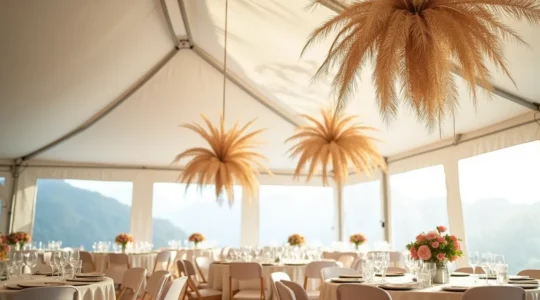
How to Install Hanging Dried Palms Safely and Stylishly?
In summary: Prioritize safety by treating all dried botanicals with fire retardant to meet venue compliance. A professional three-stage cleaning process is essential to prevent debris from falling on guests and tables. Use multiple, independent, and structurally sound attachment points…
Read more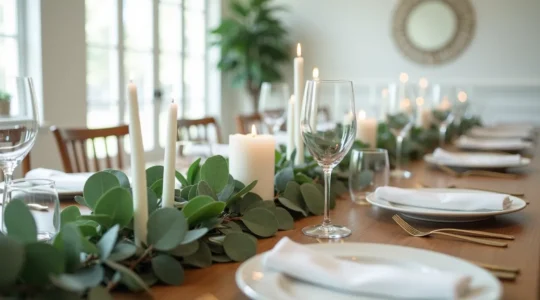
How to Style Eucalyptus Runners That Look Lush and Don’t Dry Out?
The secret to a lush eucalyptus runner isn’t just adding more greenery; it’s building it with architectural intention. Create volume by selecting the right varieties and building height with hidden structures, not just laying a flat garland. Plan your table’s…
Read more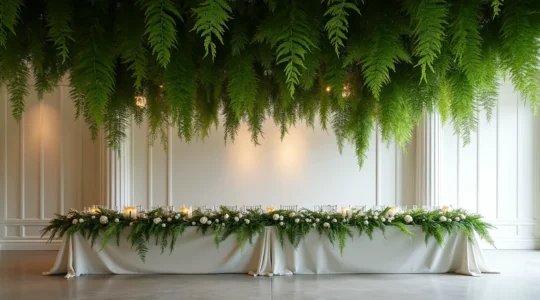
How to Use Cascading Ferns to Create Lush Volume on a Budget?
For couples craving a lush, garden-like wedding atmosphere without an extravagant floral budget, the challenge seems immense. The solution, however, doesn’t lie in buying more plants. Achieving that luxurious, high-volume look with cascading ferns is about mastering a professional’s trifecta:…
Read more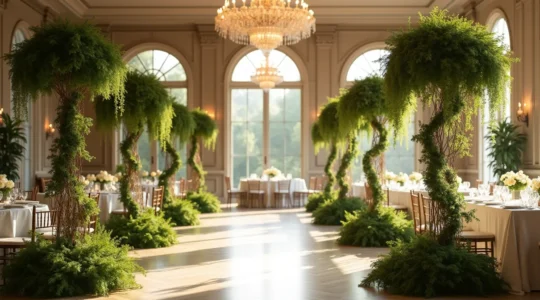
How to Design Living Plant Sculptures That Wow Guests and Minimize Waste?
Sustainable wedding decor isn’t about replacing cut flowers with potted plants; it’s about mastering architectural horticulture to create living art with a lasting legacy. Success lies in the engineering: lightweight frameworks, structural load calculations, and leak-proof water systems are non-negotiable….
Read more